Bank tells staff: Don't forget the lipstick, girls
Anger over seminar where women employees are given advice on what to wear and how to wear it
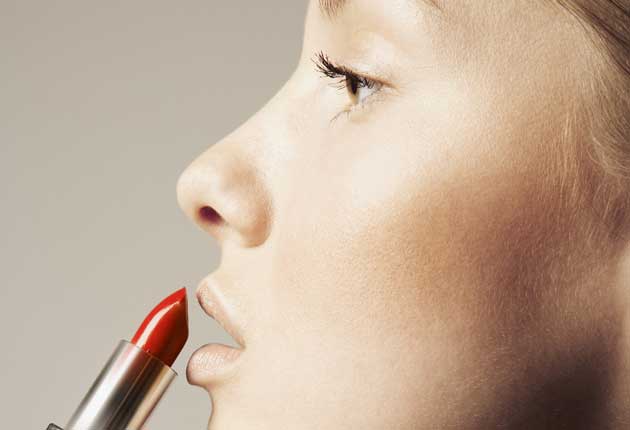
photolibrary.com
While dress codes are standard in many professions, specifying the colour of heels that should be worn and insisting on make-up is interpreted by many as sexist
The Bank of England came under fire last night for "institutional sexism", after it held a seminar for female staff to advise them on what clothing, shoes and make-up to wear.
In a week when the IMF announced that the British economy will be the hardest hit of all the developed nations, when strikes erupted across the country and as world leaders gathered in Davos to discuss global recession, senior figures at the Bank turned their minds to lipstick and high heels.
On Wednesday, Bank of England employees gathered for a Dress for Success summit, at which female employees were lectured on the importance of wearing appropriate jewellery and make-up in the workplace.
A memo leaked from the meeting details the advice given to staff, including the warning that wearing certain accessories would make women workers look like prostitutes.
"Look professional, not fashionable; be careful with perfume; always wear a heel of some sort – maximum two inches; always wear some sort of makeup, even if it's just lipstick," read the memo. It was distributed by the professional image consultancy firm hired by the bank for the event.
"Shoes and skirt must be the same colour. No-nos include ankle chains – "professional, but not the one you want to be associated with" – white high heels; overstuffed handbags; an overload of rings, and double-pierced ears," it continued.
The Bank of England confirmed yesterday that the session had taken place, but refused to comment further.
Leading equal opportunities solicitors said last night that female employees would have a potential case for legal action against the Bank of England for sexual discrimination. "It is indicative of an institutionally sexist environment. If women are being judged by what they wear, then it suggests that they are being treated differently to male employees," said Lawrence Davies of solicitors Equal Justice .
"The fact that they are putting the responsibility on independent consultants doesn't absolve the bank of any sexist behaviour or attitudes that arise from this," said Mr Davies.
The bank's actions sparked widespread criticism, with leading City economists, MPs and women's rights groups all speaking out.
"What the Bank of England is doing is appalling," said Ruth Lea, economic advisor to the Arbuthnot Banking Group and former director of the Centre for Policy Studies. "They are spending our money on these things. It is farcical.
"Surely it is up to men and women, and their peers at work to decide for themselves what is suitable to wear. If you can get a well-paid job, surely you have the nous to choose the right clothes," said Ms Lea.
The Fawcett Society, the leading women's rights group, said that the Bank of England's actions were sexist, and run contrary to equal opportunity legislation. "Not only will eyebrows be raised that an event like this has been held just as we are entering recession, but it sends out damaging messages to women working at the Bank of England," said Katherine Rake, director of the society.
"Setting down codes in this way sends a message to women employees that they have to look a certain way to be successful in business, and this is absolutely contra equal opportunities practice."
Corporate image consultants can cost anything up to £5,000 for a 30- minute session. While dress codes are standard in many professions, specifying the colour of heels that should be worn and insisting on make-up is interpreted by many as sexist.
But Pippa Rees, director of Naked Ambition Personal Branding Consultants, and a member of the Federation of Image Consultants, said: "How you dress can make you have more authority and command more respect. Women struggle with what to wear for business and formal wear, and image consultants can make women aware of how clothes can add to their credibility, and how they can diminish it.
"If you are a banker, a lawyer or an accountant you are a professional, and your client will expect you to look like one. A pilot's uniform denotes his ability to do the job, and professional dress does the same," said Ms Rees.
Accountancy firm Ernst & Young also courted controversy last November when it sent 400 female employees on a course to learn how to dress.
The backlash
'What the Bank of England is doing is appalling. They are wasting our money'
Ruth Lea
'[This tells] women employees that they have to look a certain way to be successful'
Katherine Rake
'If this is not a hoax, then they should be ashamed. It is not what they should be focusing on'
Patricia Hewitt MP
'I hope that there is no assumption that how you look dictates how you can do your job'
Baroness Morris
View all comments that have been posted about this article.
Offensive or abusive comments will be removed and your IP logged and may be used to prevent further submission. In submitting a comment to the site, you agree to be bound by the Independent Minds Terms of Service.
- Print Article
- Email Article
-
Click here for copyright permissions
Copyright 2009 Independent News and Media Limited


Comments
Control-freak scum.
Personally it's men I feel sorry for - ok they don't have to fret about fashion choices in the same way women do but in most jobs they probably feel they have to shave daily which (judging from my husband's experiences) is a tiresome and rather painful process.
So spake Pippa Rees. Mind you with a name like that what can you expect.
Ms Rees obviously hasn't a clue. Actions & attitude are the key factors to authority & respect.
If a person is a clueless, ill mannered numptie then no amount of fancy dressing is going to change that or how other people behave towards that person.
Oh Gods, to think companies pay good money to people like Ms Rees. No wonder Britain's in a mess.
I'm not saying it's right, but it's the way things are.
Seems to be a typical sign of an organisation going into denial and panicking. They can't solve the real problems they are facing, so they go about doing some menial stuff.
The world is coming apart - and they advise on lipstick colour. Does say it all, doesn't it.
But I agree with the point that this course wasn't a very good use of money.
Most importantly, there are women who dress themselves in a "business-fashion" mode which may be appropriate for an advertising agency or a media firm, and may be promoted by women's magazines, but which is inappropriate for the more conservative world of finance. Guidelines here are helpful and necessary. Many women will have few female role-models at higher levels and so may be flying blind, hoping to look their best but unaware that their appearance has caused comment.
Finally, the assumption that "if this is what the Bank is concentrating on, no wonder we're all doomed" is fatuous. I was rather hoping that the Bank of England might be able to do a variety of things at once, and was not unduly concerned that all recession-busting activity had been put on hold whilst the biggest brains had a three-week conference about thongs and kitten heels.
I work in an international public organisation which lacks a dress code. In ten years, I have never seen lack of make-up or a heel above two inches make the slightest difference to whether a woman is taken seriously. Professionalism is in your job performance, not your attire. I agree with petegilbert, it's men who need to be liberated!
Has the bank forgotten that it is our obsession with consumerism that has led us to this path of economic disaster fueled with obsession for cheap credit? This chapter of "how should you look" is just an extension of the fashion junkie programmes that has got hold of our TV and lead a number of young girls astray with their obsession to look like the Celebs.
If the BOE was concerned about the appearance of its employees, why weren't the men "taught" about their attire. The whole episode stinks of sexism and patronizing attitude by the Bank.
One last request to The Independent - would appreciate (on behalf of all the readers) if you can stop giving any platform for the likes of Pippa Rees. They have got enough takers in the likes of HELLO and OK. By the way, can anyone make a living out of advising others as to how to dress. Sucks big time!
PS Pippa, I can dispense valuable advice as how to make your life worthwhile. Fancy taking it up?
I very much look forward to the Independent publishing photographs of Mervyn King, Charles Bean, Sir John Gieve, Graham Nicholson and Nigel Jenkinson suitably attired.
The reality is that how we dress plays a big part in others' perception of us - and that goes for men as well as women.
I think it is entirely reasonable for an employer to require staff to dress in a way that projects the image the employer wishes to present. I worked for a company where there was a strict dress code for everybody and going to work was not about being in a fashion show or attending a leisure break - i8t was about doing a professional job and being committed to high standards. Everybody wore dark suits, white shirts, dark ties, black shoes, and minimal jewellery - no exception, from the directors through sales people, technicians, engineers, admin staff - everyone. It happened to be one of the most successful companies on the planet. Then it relaxed its dress code and a few years later it suffered a major setback.
Was the dress code excessive - by today's lax standards, certainly. Was the correlation between success/failure and changes in dress co-incidental - possibly. I think the key thing is that working dress can often reflect attitude, and in my opinion contemporary attitudes to what we wear at work represents a
No, I'm not advocating that everyone adopts dark suits and so on. What I am asserting is that employers have the right to require the people they hire to adopt the dress code the employer believes is appropriate for their business. If they want to give other guidance about how people present themselves, then they have the right to do so. Employees have the right to stay in their jos and do what their employer requires of them - or seek their fortunes elsewhere.
I totally repudiate the pathetic 'everybody has the right to do what they want in every situation' brigade that finds the slightest excuse to get offended and wave the 'sexism', 'discrimination', 'inequality' or other flags the politically-correct keep readily to hand to beat the rest of us with. What we really need to do is to ensure that, where necessary these people, are not empowered by legislation to impose their damaging views on normal, sensible peole - among whom I do not count the likes of Ms Rees and the others quoted.
Where's the sexism in that, it's part of the battle of the sexes since time immorrial. Well dressed, handsome men do the same. ?
A nice young lady at work proclaimed once that only people in suits are listened too, that is very true and a big problem.
As for bankers ? no comment is needed. :-)
Social dressing aims to get attention and sometimes impress.
Dressing should be impressive by being unobtrusive .
Unfortunately, the differing environments sometimes get blurred.
Lilias Morrison
at the Bank. And what about pantsuits -- and pants or skirts with well-coordinated but unmatched jackets?
http://www.ens-newswire.com/ens/jan
OTTAWA, Ontario, Canada, January 30, 2009 (ENS) - The Canadian government today declared two chemicals used in lipstick and other personal care products to be toxic to the environment, although officials said they are not used in large enough quantities to be of concern for human health. Two other chemicals used in cosmetics were found to be harmful to human health.
Canada's declaration is the first environmental or health-based determination concerning these chemicals issued by any country. ...
...While not believed to be harmful to health, because these chemicals enter the environment in large quantities, persist in the environment, bioaccumulate up the food chain and may harm fish and aquatic organisms, Canada is proposing to set concentration limits for them. ...
Neither do I want someone's belly fluff on view when I am ordering in a trendy restaurant! Obviously there are some women out there who do need guidance. Then again, Boris Johnson could do with some help as can many of the male colleagues who complain about the females!
No doubt someone has got the wrong end of the stick here and blown the thing out of all proportion.
However, it's worth saying that out of two possible contenders with equally wonderful credentials vying for a position in any company, the most pleasingly put together candidate is likely to triumph.
Oh, and as an afterthought, I hope these managers carry out their duties correctly and efficiently. I wonder if their job descriptions include telling employees how they should dress, behaving like the nannies who may have brought them up and maybe getting some perverse sense of power out of attempting to interfere in employees' private lives. What's next? Telling women to wear pink lipstick instead of red? A pit bull is a pit bull whether he wears lipstick or not!