The end of playtime?
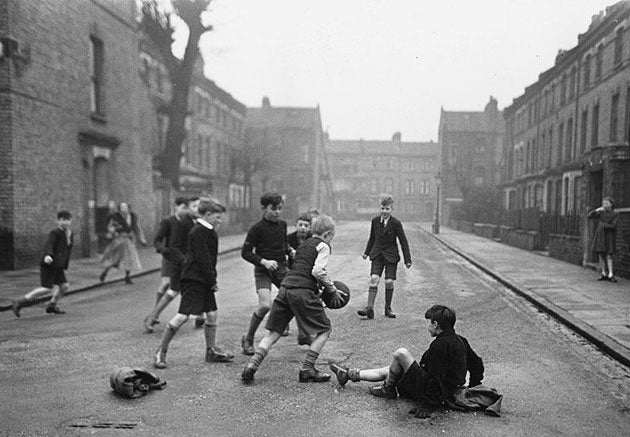
Play time is over for children, with up to half of youngsters banned from climbing trees, playing conkers or riding their bikes by over-protective parents who are terrified that they might get hurt.
ICM research for Play England shows that half of seven to 12-year-olds are banned from climbing trees. Four in 10 were banned from playing in their local park or recreational area without an adult present and one in three cannot ride a bike without parental supervision.
One in five had been banned from playing conkers and one in six were not allowed to play chase because over-protective parents had ruled that it was too dangerous.
Yet parents were much less vigilant when it came to internet safety, the study found. Three-quarters of children aged seven to 12 were allowed to surf the internet without adult guidance.
Professionals in child welfare warned that children's development was being damaged by parents' obsession with safety, which was depriving youngsters of adventurous play.
Adrian Voce, director of Play England, said playing was "an essential part of growing up ... Adventurous play both challenges and excites children and helps instil critical life skills. Constantly wrapping children in cotton wool can leave them ill-equipped to deal with stressful or challenging situations they might encounter later in life. Children both need and want to push their boundaries in order to explore their limits and develop their abilities."
The research also found that children were less likely to play outdoors than their parents had been when they were growing up. Of the adults surveyed, 70 per cent said they had experienced most of their play outdoors. In comparison, just 29 per cent of children broke beyond the four walls of home, or a designated playground, to experience creative "adventure" play. Only one in four children experienced most of their adventurous play in natural wild spaces or their local streets.
More than three-quarters of children said that they wanted more chances to experience adventurous play arguing that it made them feel "happy", "free" and "confident". And 80 per cent of adults agreed that children should be free to experience adventurous play even if it puts them at risk of minor injury.
Bike-riding and skateboarding ranked as the top adventurous activity for both boys and girls, the poll found. However, boys cited playing computer games as their second favourite "adventurous" activity, followed by exploring new and unfamiliar places.
Girls were more likely to have their adventures outdoors, citing exploring new places as their second-favourite activity, followed jointly by playing with nature and playing in a playground or park.
In his book Paranoid Parenting, the sociologist Professor Frank Furedi describes the culture of fear that has led parents to restrict their children's movements outdoors. Professor Furedi complained that in 1971, eight in every 10 eight-year-olds were allowed to walk to school alone. Today it is thought to be fewer than one in 10.
There has been growing concern that health and safety fears have stifled schools, encouraging them to ban traditional playground games such as conkers, snowball fights and cartwheeling, or prohibited pupils from doing the backstroke in swimming lessons. Last month, John F Kennedy Primary in Washington, Tyne and Wear, banned the sack race and the three-legged run from sports days – in case the pupils were hurt.
In 2005, the headmaster of Cummersdale Primary School, in Carlisle, bought six pairs of industrial safety-goggles for pupils to wear when they played conkers in the playground. However, the survey's findings showed that a large proportion of children were being banned from taking risks by their parents.
Josie Gleave, of Play England, argued that the low probability of accidents made playgrounds one of the safest places for children to be. The risk of a fatal playground injury is approximately one in 30 million and three-quarters of injuries sustained on the playground consist of minor cuts or bruises.
"The research shows that children need to experience challenging play in order to develop important life skills and to better manage risk and challenge in their daily lives," she said.
"However, opportunities for children to take such risks are limited. This is due to our risk-averse culture and an increase in health and safety constraints. It is clear that we need to address the current 'cotton-wool culture' and to provide children with more opportunities for adventurous play."
The researchers interviewed 1,030 children and young people, aged from seven to 16, and 1,030 adults.
Join our commenting forum
Join thought-provoking conversations, follow other Independent readers and see their replies
Comments
Bookmark popover
Removed from bookmarks