Charles Taylor convicted of 'aiding and abetting war crimes' in historic ruling at ICC
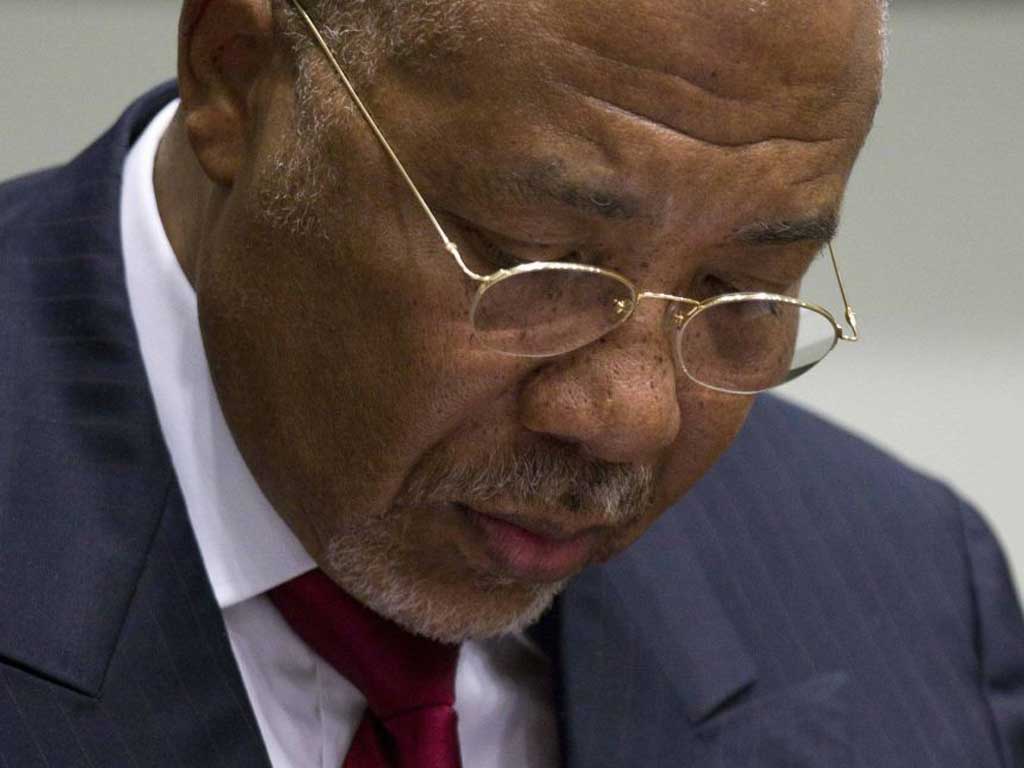
In a historic ruling, an international court today convicted former Liberian President Charles Taylor of aiding and abetting war crimes and crimes against humanity for supporting brutal rebels in neighbouring Sierra Leone in return for “blood diamonds”.
Taylor is the first head of state convicted by an international court since the post-Second World War Nuremberg military tribunal.
"Today is for the people of Sierra Leone who suffered horribly at the hands of Charles Taylor and his proxy forces," said prosecutor Brenda Hollis. "This judgment brings some measure of justice to the many thousands of victims who paid a terrible price for Mr Taylor's crimes."
Prosecutors and defence lawyers both said they would study the lengthy judgment to see if there were grounds for appeal.
Taylor's lawyer, Courtenay Griffiths, slammed the conviction as based on "tainted and corrupt evidence." He claimed prosecutors paid for some of the evidence.
Griffiths said Taylor took the verdicts in his stride. "Mr Taylor has always been a stoic individual and he continued to display that stoicism," Griffiths told reporters.
Presiding Judge Richard Lussick said the 64-year-old warlord-turned-president provided arms, ammunition, communications equipment and planning to rebels responsible for countless atrocities in the 1991-2002 Sierra Leone civil war and was repaid by the guerrillas in so-called "blood diamonds" mined by slave labourers.
Lussick called the support "sustained and significant."
"Mr Taylor, the trial chamber unanimously finds you guilty" of 11 charges, including terror, murder, rape and conscripting child soldiers, he told Taylor.
Taylor stood and showed no emotion as Lussick delivered the guilty verdicts at the Special Court for Sierra Leone. Lussick scheduled a sentencing hearing for May 16, and said sentence would be announced two weeks later. Taylor will serve his sentence in Britain.
The court does not have maximum sentences or the death penalty. In the past, convicted Sierra Leone rebel leaders have received sentences of up to 52 years.
Human rights activists hailed the convictions as a watershed moment in the fight against impunity for national leaders responsible for atrocities.
"Taylor's conviction sends a powerful message that even those in the highest level positions can be held to account for grave crimes," said Elise Keppler of Human Rights Watch.
"Not since Nuremberg has an international or hybrid war crimes court issued a judgment against a current or former head of state. This is a victory for Sierra Leonean victims, and all those seeking justice when the worst abuses are committed."
Thousands of survivors of Sierra Leone's brutal civil war celebrated after learning of the conviction.
Jusu Jarka, who lost both of his arms during the fighting in 1999, was among those closely watching the verdict. "I am happy that the truth has come out ... that Charles Taylor is fully and solely responsible for the crimes committed against the people of Sierra Leone," he said.
Crowds who had gathered in Freetown, Sierra Leone's capital, sighed with relief when the conviction was announced. While the reaction was subdued, anger was on display on a series of posters. One read: "Shame on you Charles Taylor. Give us your diamonds before going to prison."
Taylor had pleaded not guilty to all counts, claiming in seven months of testimony in his own defence that he was a statesman and peacemaker in West Africa.
While judges convicted him of aiding and abetting atrocities by rebels, they cleared him of direct command responsibility, saying he had no direct control over the rebels he supported.
His lawyer pounced on that finding, saying the judges "rejected large areas of the prosecution theory."
He portrayed Taylor as the leader of a small and impoverished African nation struggling to protect its borders and compared his intervention in Sierra Leone to US support for rebels in El Salvador, Nicaragua and Afghanistan.
US State Department spokeswoman Victoria Nuland welcomed the verdict without commenting on Griffiths' claims.
Nuland called the judgment, "an important step toward delivering justice and accountability for victims, restoring peace and stability in the country and the region."
Griffiths also dismissed evidence given by the most famous prosecution witness - supermodel Naomi Campbell, who told judges she had received diamonds at a function in South Africa, but did not link them to Taylor. Her testimony was "a large, fat, zero," the lawyer said.
The only other head of state convicted by an international court was a Nazi naval commander, Karl Doenitz, who briefly led Germany after Adolf Hitler's suicide and was convicted by a military tribunal at Nuremberg.
Others have been indicted but not convicted - yet.
Former Ivory Coast President Laurent Gbagbo is jailed in The Hague awaiting trial at the International Criminal Court on charges of war crimes and crimes against humanity allegedly committed as he attempted to cling to power last year after losing a presidential election.
The ICC last year indicted Libyan dictator Mummar Gaddafi with crimes against humanity as he resorted to murdering and persecuting civilians to put down protests against his regime, but he was captured and killed by rebel fighters before he could face a court of law.
The same court also has indicted Sudan's President Omar al-Bashir on charges including genocide for his regime's brutal crackdown on rebels in Darfur. Al-Bashir remains at large in his country, which does not recognise the International Criminal Court.
Former Serbian President Slobodan Milosevic died of a heart attack in his cell in 2006 before his four-year genocide trial at the UN Yugoslav tribunal could reach a verdict.
But survivors of rebel atrocities in Sierra Leone were only concerned that the leader who fuelled a war that tore apart their country had been judged.
"The whole world will know today what Charles Taylor did, and we are happy," said Samuel Komba, who survived an attack by rebels who attempted to burn him alive and cut off his hand.
AP
Join our commenting forum
Join thought-provoking conversations, follow other Independent readers and see their replies
Comments