Herge's 'racist' adventures of Tintin? Not so, court decides
Congolese campaigner battling to ban book since 2007 plans to appeal against decision
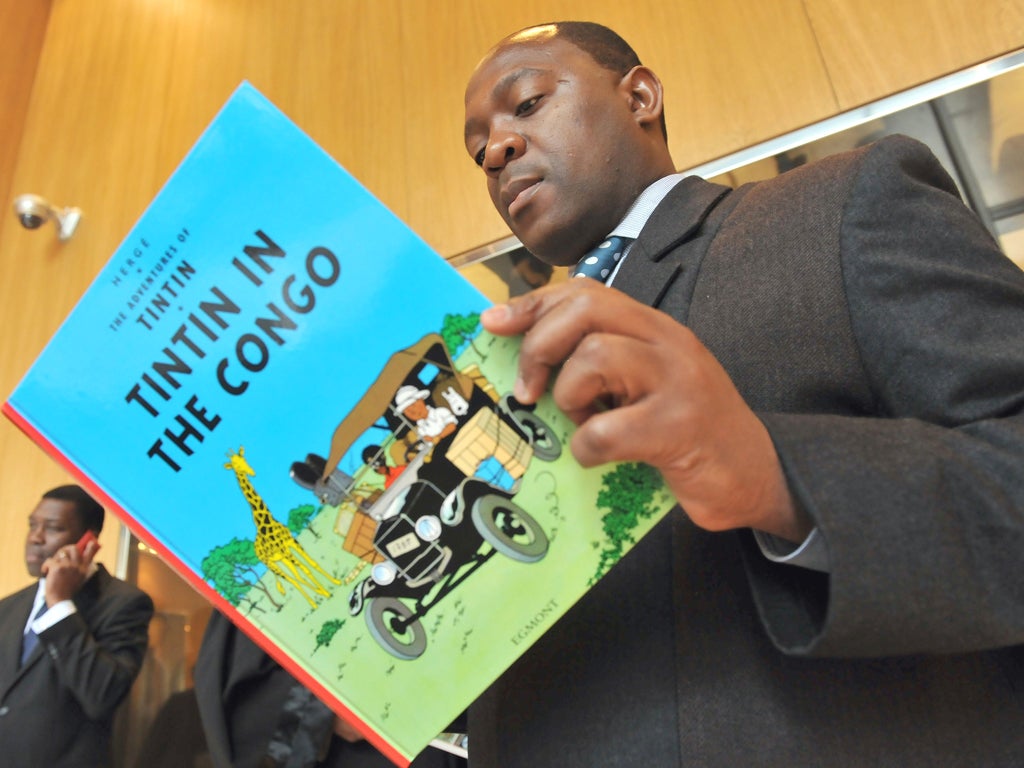
Armed with little more than the faithful support of his dog Snowy, Tintin's journalistic exploits have seen him tackle ruthless drug smugglers, wild animals and even take a rocket to the moon.
Yet the reputation of the intrepid boy reporter and that of his creator Hergé have long been besmirched by allegations of racism over the story of his exploits in colonial Africa.
Yesterday, however, both moved a step towards rehabilitation when a Belgian court ruled that a 1946 edition of Tintin in the Congo did not break the country's anti-hate laws. It found the second of his adventures was a product of the attitudes of the day and not a deliberate attempt to incite racism.
"It is clear that neither the story, nor the fact that it has been put on sale, has a goal to... create an intimidating, hostile, degrading or humiliating environment," the court said in its judgement.
The decision was a setback for Congolese campaigner Bienvenu Mbutu Mondondo, who since 2007 has been seeking a ban on the book claiming the portrayal of Africans was "a justification of white supremacy". His lawyer said he plans to appeal against the decision.
During earlier hearings, the French publisher Casterman and Belgian rights holders to the 24 books in the Tintin series denied it was racist but merely an example of "kind paternalism". Lawyers likened the proposed ban to "taking a knife" to "Dickens on the Jews, Jules Verne on the black population or the Bible's attitude towards women".
The row over the book, first serialised between in 1930 when Hergé – real name Georges Remi – was 23 and had never left his native land, has simmered relentlessly in the intervening decades.
The artist himself was said to be unhappy with some of the depictions, which include Africans bowing to the young boy and removed some of the references in a later working. It was only published in English in 1991 but the racism row was rekindled last year following the release of Steven Spielberg's film The Adventures of Tintin, when it emerged that the book was being sold in a sealed wrapper.
Publishers Egmont UK included the warning: "In his portrayal of the Belgian Congo, the young Hergé reflects the colonial attitudes of the time... he depicted the African people according to the bourgeois, paternalistic stereotypes of the period – an interpretation that some of today's readers may find offensive."
Tintin has long been emblematic of the era of exploitation in Africa. The Democratic Republic of Congo (DRC) was a Belgian colony between 1908 and 1960. In 2004 a DRC spokesman hit back at Belgian ministerial criticism describing it as: "Tintin in the Congo all over again."
Tintin on trial: Offending article
In 2007 the UK equality watchdog, the Commission for Racial Equality described the book as containing "imagery and words of hideous racial prejudice, where the 'savage natives' look like monkeys and talk like imbeciles." The key image which has upset campaigners is one in which a black woman bows to Tintin saying: "White man very great... White mister is big juju man!"
Join our commenting forum
Join thought-provoking conversations, follow other Independent readers and see their replies
Comments