How football put Angola's war back in the spotlight
Separatists used African Cup of Nations to remind world of their cause
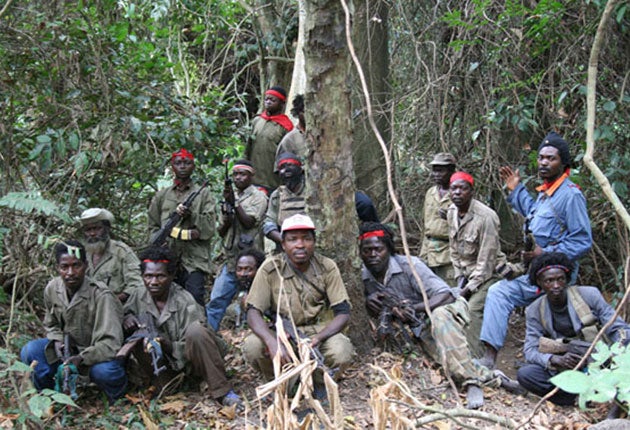
The Angolan separatist group that carried out the deadly ambush on the Togolese national football team at the African Nations Cup has vowed to strike again. The year in which sporting events will decide Africa's standing in the world has barely begun, and one of the continent's almost-forgotten and least understood conflicts is threatening to dash optimists' hopes.
The strike in the troubled Angolan enclave of Cabinda underlines how a simple surprise attack can embarrass an overconfident or underprepared government, drawing international attention to an obscure struggle.
Before Friday's ambush, which killed two members of Togo's national soccer delegation and the driver of their team bus, the Front for the Liberation of the Enclave of Cabinda (Flec) had been assumed to be in gradual decline, riven by divisions and reduced to as few as 200 fighters.
Its long war with the central government was supposed to have ended in 2006. An Angolan government minister, who previously fought with Flec, insisted it no longer existed as a fighting force. Instead, what remains of the group – which is fighting for greater control over the huge oil revenues generated from the enclave – was able to send a spectacular and lethal reminder of its existence.
Mark Schroeder, an Africa analyst with global intelligence firm Stratfor, said the killings had been an opportunistic attack by Flec "to say 'Hey, we are still here'." The government had been "overly confident in its attempts to pacify the province" in recent years, something that had now blown up in its face.
The African Nations Cup tournament was meant to be a showcase for the progress made by Angola, which is now Africa's largest oil producer, after decades of brutal civil war. But Cabinda with its continuing human rights abuses and unrest makes a mockery of the modern democracy the government had wanted to portray.
As with so many of Africa's most intractable conflicts, oil is at the heart of the unrest in Cabinda. The province, which was ruled until 1975 by Portugal, accounts for more than half of the two million barrels of oil that Angola produces daily – a contribution that has earnt it the nickname of the "Kuwait of Africa".
However, the treaty that was signed by Angola's other main independence groups was never agreed with the Flec, which continued its own low-level war for secession from the central government in Luanda.
On paper the enclave – cut off from the rump of Angola and sandwiched between the twin expanses of Congo-Brazzaville and the Democratic Republic of Congo – should receive 10 per cent of oil revenues, a cash flow which should make life comfortable for its inhabitants.
The day-to-day reality in the impoverished and predominantly French-speaking province is very different, as Human Rights Watch revealed last year. They reported widespread security force abuses from arbitrary arrest and detention to torture and extra judicial killings.
Detainees interviewed in a prison in Cabinda gave consistent accounts of being mistreated in military custody: "They took me – tied up – to the military garrison in Caio and put me in a hole full of water. I stayed there for 19 days." Another detainee said: "The military beat me, squeezed my testicles and my tongue with a pincer, telling me to 'say the truth'."
Since a ceasefire was agreed with one Flec faction in 2006, the remainder of the group has splintered making it harder to monitor.
The main beneficiary in the deal was former Flec fighter, Antonio Bento Bembe, who is now a minister responsible for Cabinda affairs. It was his insistence that Flec was now just "a few disaffected individuals" that may have prompted overconfidence in security arrangements.
Despite the very specific nature of the instability in Cabinda and Angola's history of civil war, the ambush has quickly turned the spotlight on security preparations for the World Cup later this year in South Africa.
Chief World Cup organiser Danny Jordaan insisted that the attack would have no impact on June's event, however, reports in South Africa last night suggested that some advance bookings were being cancelled.
Join our commenting forum
Join thought-provoking conversations, follow other Independent readers and see their replies
Comments