Masai return to their hunting grounds as tourism collapses
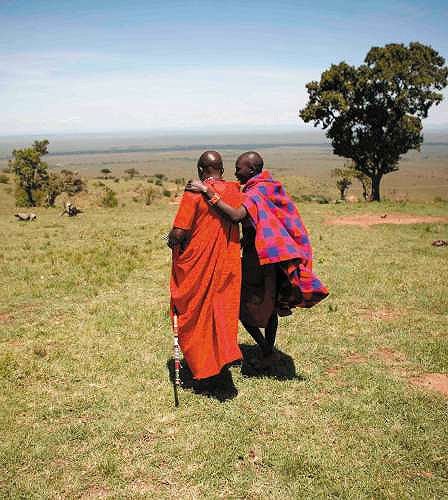
A leopard has been stalking Enkereri. Every night for the past week the hungry leopard has cleared a 10ft fence in the Masai Mara village with a single bound and made off with a goat.
For the herders who are losing animals to the marauding beast, the temptation to shoot the predator and protect their livestock is almost too much to resist. The only thing that has been stopping them is a compensation scheme set up by the Mara Conservancy which ensures they are reimbursed at the market rate for every animal killed by a predator. But this innovative project is now under threat – an unexpected casualty of the political turmoil that has rocked Kenya to its core.
This vast expanse of savannah, which offers some of Africa's best game viewing, used to attract about 300,000 tourists a year. But the images of machete-wielding mobs rampaging across the east African nation following disputed presidential elections saw many Western safari enthusiasts cancel their holiday plans. Even now, when the political stand-off has been solved and a new power-sharing cabinet sworn in, visitor numbers are still no more than a trickle, with gate receipts down 80 per cent.
That means the tourism revenues that used to keep the compensation fund afloat have dried up, the Mara Conservancy is on the brink of collapse and there is a very real threat to the delicate balance that exists in this game-rich corner of Kenya between man and nature.
High on the escarpment overlooking the Mara is the village of Enkereri (which means "viewpoint" in Masai). During the rainy season, zebras and gazelles come to graze on the slopes, mingling with cattle, goats and sheep. At night, big cats follow their trails and kill both wild and domestic prey.
Since the non-profit Mara Conservancy was founded in 2001, and the compensation scheme established, the number of lions in the reserve has doubled to 40. But now that the fund has been suspended, many Masai are threatening to resume hunting the lions and leopards which eat their cows, goats and sheep.
"We know we shouldn't kill it, but we might have to," said Konchellah Ololmaneie, who has lost six of his 80 goats to the leopard.
So far rangers in the Mara have managed to dissuade him from hunting down the leopard. But without the £10 per goat compensation he has been accustomed to, Mr Ololmaneie has nonetheless had to resort to desperate measures. He has decided to sell a cow before the leopard can get to it – a decision not taken lightly.
"If you don't have a cow, you are counting down the days until you die," he says. "Your cow is your bank."
But other herders have not been as understanding, and conservationists have reported a spate of lion and leopard killings across the Mara as Masai have sought to prevent their livestock herds being decimated. And patrols to deter any would-be game hunters are reducing in number because resources are so tight.
Since 2001, rangers have caught just over 1,000 poachers on their patrols, but for the last three months the Mara Conservancy has had to scrape by on donations.
Night patrols have already been scrapped and now the day patrols risk being scaled back. That might happen as early as next week. The group has managed to raise barely one third of the money it needs just to pay the wages of the rangers this month.
"These are the last days of protection for the Mara Triangle – unless someone comes in to support us," said Will Deed, a Mara Conservancy worker .
Simon Tankile, one of the organisation's senior rangers, who has been patrolling the grasslands for almost two decades, is continuing with the job on trust. Leading a team of nine through the undergrowth, he pads silently through waist-high golden grass, across thickets and over streams, occasionally stopping to gesture towards a footprint or a rustling in the distance. His job is not just a matter of a steady income, it is a source of pride. "Protecting these animals is vital for our country," he says.
Tourism chiefs talk about launching a campaign to persuade the world that Kenya's national parks and the games reserves areperfectly safe, and encouraging wildlife lovers to return. But if the Mara compensation fund remains frozen and herders start taking matters into their own hands by killing big cats, then there might not be many lions and leopards on which the returning tourists can train their binoculars.
Join our commenting forum
Join thought-provoking conversations, follow other Independent readers and see their replies
Comments