Mugabe offered amnesty and job for life in draft agreement
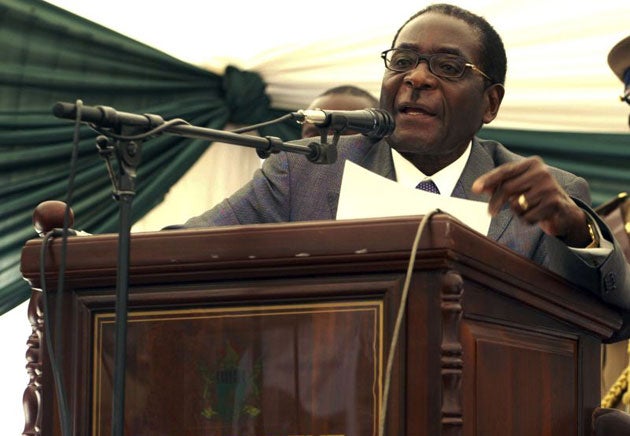
Robert Mugabe is set to receive a blanket amnesty and a post as ceremonial head of state followed by a life term as "founding president" on his retirement, under the terms of a draft deal to set up a transitional government in Zimbabwe.
According to the proposed settlement, obtained by The Independent, Morgan Tsvangirai will take over the running of the country as the new executive Prime Minister in an interim administration that will pave the way for fresh elections at a date to be determined in the future.
The detailed draft of more than 50 pages has already been circulated between the two rivals when they bypassed talks in South Africa two weeks ago, preferring to liaise indirectly with one another in Harare via intermediaries.
The draft agreement, as yet unnamed, will also provide the basis of the face-to-face meeting between the two men in the Zimbabwean capital tomorrow, an encounter that will be facilitated by the South African President, Thabo Mbeki.
Although there is still no final deal on the table, sources close to both sides of the talks say their respective parties are receptive to the draft. According to the document, the leader of the Movement for Democratic Change, will head the country through a period of transition, the duration of which is still to be negotiated. While the MDC is pushing for a term of 24 or 30 months, Zanu-PF is negotiating for five years. A compromise has still to be reached.
The outcome of negotiations remains uncertain and the draft could still be rejected.
Should the document become the basis for an agreement, Mr Tsvangirai would appoint two deputy prime ministers to his office, one from the ranks of Zanu-PF and one from his own party. Both deputies will also preside over the strategic ministries of defence and home affairs. It is widely anticipated that Mr Mugabe's Zanu-PF party will continue to control the Ministry of Defence, while the MDC will assume the control of home affairs, with responsibility or administering the police force and the prison services.
It also foresees the immediate dissolution of the notorious Joint Operations Command – the military chiefs and Mugabe loyalists who have overseen the campaign of violence unleashed since the first round of voting in March. In its place would be a National Security Council, overseen by the prime minister, his two deputies and a cabinet minister.
Some of the country's most politically tarnished authorities including the Central Intelligence Organisation, the head of the defence forces and the commissioner general of the police would all report to the NSC.
The security council would be designed to ensure that neither of the two parties could monopolise the future general election which would be called at the end of the transitional government and immediately after the existing constitution has been reformed or overhauled.
With Zanu-PF stripped of its control of the police, Zimbabweans could anticipate a smooth election free from the intimidation, fear and rigging that marred the recent polls.
The remaining ministries would be divided equally between the two parties, with one allocated to Arthur Mutambara's splinter MDC faction.
In a move to appease the potential donors who needed to finance a massive rescue package for the economically crippled country a number of key ministries would be handed over to "independents" – skilled individuals outside of party structures but approved by the cabinet.
It is anticipated that the Ministry of Finance and Investment would be one such portfolio that would reside independently of either party chief so as not to deter the expected and needed flow of money into the country during the transition, which will last for something in the region of two years. The ministries of Justice, Land Resettlement Implementation, Agriculture and State Enterprises are also tipped to fall under independent jurisdiction during the transition period.
As the incumbent head of Zanu-PF, "Comrade Robert Gabriel Mugabe should inaugurate the coalition government" by "formally summoning parliament," by "formally removing from office all those persons who immediately before the agreement date were vice-presidents, ministers and deputy ministers" and appoint "Mr Morgan Tsvangirai to be a senator", the document says.
Under the draft agreement, the "functions and powers" of 84-year-old incumbent "will be regulated and limited by transitional constitution". Upon his retirement he will be recognised as the founding president, but will undertake not to "seek to influence day-to-day governmental decisions, nor will he publicly criticise, expressly or by implication, decisions made by the government".
The most controversial aspect of the draft agreement is likely to be a blanket amnesty for each and every Zimbabwean "who in the course of upholding or opposing the aims and policies of the government of Zimbabwe, Zanu-PF or either formation of the MDC, may have committed crimes within Zimbabwe".
This would rescue Mr Mugabe and many of his senior aides from prosecution for gross human rights abuses and possible war crimes including the Matabeleland massacres of the 1980s and the recent political terror campaign which has killed some 120 opposition supporters.
The amnesty is expected to be a tough sell for Mr Tsvangirai who would face accusations from his supporters and human rights groups within the country that he has sold out to his political rival.
Join our commenting forum
Join thought-provoking conversations, follow other Independent readers and see their replies
Comments