Our man in Cairo rashly enters Egypt's veil debate
Muslims upset over comments about ban on women wearing the niqab
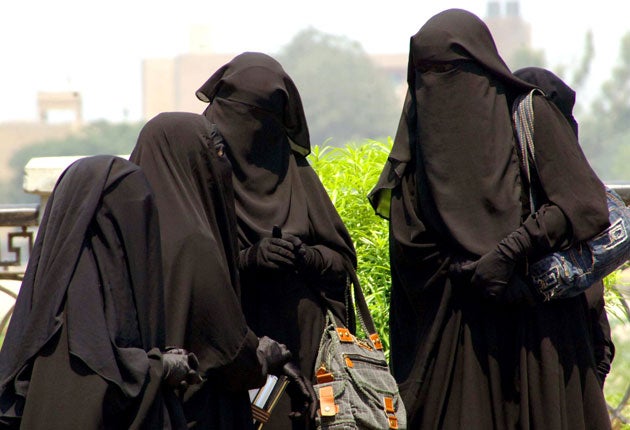
As the great-grandson of the Liberal Prime Minister Herbert Asquith, and as a rising star in the Foreign Office, Britain's ambassador to Cairo should be fluent in the carefully crafted language of negotiation and diplomacy.
But Dominic Asquith has caused upset among Muslims after comments he wrote in a blog in which he entered the hotly contested and sensitive debate over whether women should be allowed to wear the niqab in Egypt. Mr Asquith, 52, described the niqab – the full-face veil – as a "symbol" of Islam rather than central to the religion and insisted that not wearing it did not make women any less Islamic.
He also compared the wearing of the niqab to women beginning to attend Catholic churches without the head veil in the 1960s, adding that "change is always difficult".
Muslims commenting on his blog accused him of representing a country with a "bloody history" and claiming that the "Catholic church is the last place to learn lessons from".
But in a second blog defending his position, Mr Asquith risked further criticism by saying: "We cannot presume to know the mind of God and whether God attaches importance to the symbols we have adopted... It goes to the heart of what is ritual in religion and what is dogma."
Mr Asquith's original blog post was written earlier this month following an incident at an Egyptian university where a leading Islamic cleric asked a student to remove her niqab. Sheikh Mohammed Sayyed Tantawi, the head of the Al-Azhar University, has banned female students and teachers from wearing the full-face veil in class. The Egyptian government is concerned about the rise in women wearing the veil in the country. But Muslim opposition groups in Egypt have said the ban amounts to an attack on personal freedom.
Mr Asquith wrote that the row reminded him of the 1960s, when Catholic women, including his own mother and aunt, no longer covered their heads when they entered church. He wrote: "I remember how difficult it was for some Catholics 50 years ago to accept the changes – to the symbols and the traditions. It is not impious to suggest a reasoned debate about religious matters, which focuses on the essence of our religion, not its symbols."
However polished Mr Asquith believed his language to be, it provoked an angry response.
While one respondent, "Shohrat", said he respected the ambassador's view, "Hisham" accused Mr Asquith of "sticking your nose in something that has nothing to do with you, your country, your religion, or your Catholic sect". Another, Mansour Jamil, wrote that the "Catholic church is the last place to learn lessons from".
In response last week, Mr Asquith wrote, rather diplomatically, that he found the comments "very rewarding – including from those who thought that, as a Catholic and a British ambassador (it was not quite clear to me which was worse in their eyes!), I was unqualified to voice an opinion".
The ambassador, in a reference to the niqab, said believers who did not adopt "symbols traditionally associated with their religion" were not un-Islamic. "If they choose not to do so, I can't believe that makes them less devout or less religious persons."
Mr Asquith is a fluent Arabic speaker and classicist educated at Ampleforth and Oxford. Before taking up the Cairo posting in 2007, he was ambassador to Baghdad during a difficult two-year period for Britain in the Iraq conflict, including the hostage-taking of five Britons.
Foreign Office ministers and diplomats have been blogging on the Foreign Office website since 2006, but when David Miliband, a keen blogger, became Foreign Secretary in 2007, the activity was stepped up.
Mr Asquith, who was born in Zanzibar and is a cousin of the actress Helena Bonham Carter, has written a blog since May this year.
Join our commenting forum
Join thought-provoking conversations, follow other Independent readers and see their replies
Comments