Record heat recorded for Africa's greatest lake
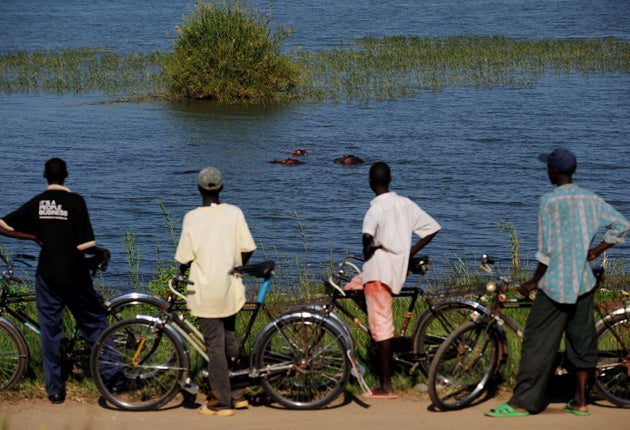
Africa's deepest lake is warming at an "unprecedented" rate thanks to man-made climate change, scientists have warned. Lake Tanganyika, which stretches from Burundi and DR Congo on its northern shores to southern Tanzania and Zambia, is the second largest lake in the world by volume.
The 420-mile-long finger of water in south-central Africa is now warmer than at any point in the last 1,500 years, according to research published in the journal Nature Geoscience, and the consequences could be dire for the 10 million people who live around it and depend on its fisheries.
"Our records indicate that changes in the temperature of Lake Tanganyika in the past few decades exceed previous natural variability," the paper found. "We conclude that these unprecedented temperatures and a corresponding decrease in productivity can be attributed to anthropogenic global warming."
Geologists from Rhode Island's Brown University and the University of Arizona took samples from the lake floor. By carbon dating these "lake cores", taken from depths of up 4,700 feet, and testing fossilised micro-organisms, they were able to create an accurate picture of temperature changes since AD500.
What they found was a gradual warming that accelerated alarmingly in recent decades as heat-trapping gases in the atmosphere have driven global climate change. The scientists were also able for the first time to link the warming to lower productivity in the lake, concluding that higher temperatures were killing life. The study found that the warmer the surface of the lake has become, the harder it is for cold currents to rise from the bottom and penetrate and recharge warmer layers.
A less productive lake means fewer fish and therefore less food and income in one of the poorest regions on earth. "The people throughout south-central Africa depend on the fish from Lake Tanganyika as a crucial source of protein," said Andrew Cohen, professor of geological sciences at the University of Arizona. "This resource is likely threatened by the lake's unprecedented warming since the late 19th century and the associated loss of lake productivity."
The surface temperature of the lake has risen by two degrees in the last 90 years to 26C, while the levels of algae that indicate the productivity of the lake have dropped.
The vast body of water, which at some points is more than 45 miles across, produces some 200,000 tonnes of fish annually, mainly sardines. It is also the region's main source of freshwater.
While scientists have previously focused on the Earth's atmosphere to understand the extent and consequences of climate change, they are increasingly looking to its lakes and seas, which absorb tremendous amounts of heat.
Jessica Tierney, from Brown University and the lead scientist on the paper, said: "We're showing that the trend of warming that we've seen is also affecting these remote places in the tropics in a very severe way."
The Great Lakes region of Africa – Lake Malawi, Lake Victoria and Lake Tanganyika – were formed after Eurasia and Africa collided some 25 million years ago, creating the Great Rift Valley stretching from Syria to Mozambique.
Officials from the UN Environment Programme (Unep) in Nairobi, Kenya, have warned that Tanganyika is not alone among Africa's Great Lakes in being threatened by climate change. Lake Victoria, the continent's largest by surface area but shallow in comparison with Tanganyika, has registered record temperature rises since the 1960s, which have added further stress to an ecosystem already under attack from human waste, agricultural run-off and invasive species.
With the fastest-growing population of any lake basin in the world, Victoria is offering what some scientists are calling "an accelerated preview of the great environmental challenges" of the coming century. More than 30 million people already live around "Victoria Nyanza", as it is known in Kenya, and that figure is projected to double by 2025, according to Unep.
Join our commenting forum
Join thought-provoking conversations, follow other Independent readers and see their replies
Comments