Assange leaks 251,287 raw US cables, sparking global outcry
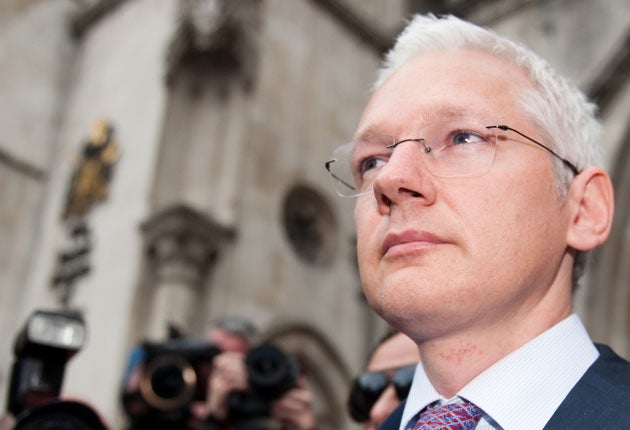
The first time information from the 251,287 US diplomatic cables obtained by WikiLeaks was made public, the howls of rage came from Washington.
WikiLeaks' founder, Julian Assange, was reviled by the American right as a friend of terrorists, but was lauded by others around the world for what he had done to expose some of the murky secrets of international diplomacy.
Yesterday, the loudest voices decrying his action in publishing raw data, with no attempt to protect the innocent, were the newspapers who once collaborated with him. His decision was condemned in a joint statement by five newspapers – The Guardian, New York Times, El Pais, Der Spiegel and Le Monde – who protested: "Our previous dealings with WikiLeaks were on the clear basis we would only publish cables which had been subjected to a thorough joint editing and clearance process.
"We will continue to defend our previous collaborative publishing endeavour. We cannot defend the needless publication of the complete data – indeed, we are united in condemning it. The decision to publish by Julian Assange was his, and his alone."
But the WikiLeaks Twitter feed, which is believed to be controlled by Mr Assange, retorted: "The Guardian continues to issue false statements. Nepotism in The Guardian has clearly compromised its accountability."
Others deplored the way the argument about who was to blame detracted from the revelations to be found in those leaked cables. They include one from a UN Rapporteur describing the cold-blooded execution in 2006 of 10 Iraqi civilians, including five children, reported in yesterday's Independent.
The sequence of events leading up to yesterday's decision to publish began when Julian Assange gave The Guardian's investigations editor, David Leigh, the password to a cache of documents held in a hidden folder.
Mr Leigh was amused by it, and used it in his book about Julian Assange, published seven months ago, unaware that the files it opened were still online. The Guardian denied that Mr Leigh was responsible for the failure to protect the unredacted data, saying that the password was a temporary code, which should have expired within hours.
This was disputed by WikiLeaks' anonymous tweeter, who alleged yesterday: "It is strictly false that The Guardian was told the password or file were temporary, hence the elaborate password handover method."
The cables were placed on a file- sharing network by a WikiLeaks activist, where they could be opened by those who knew where to find them and where to find the password. After a German magazine reported the security breach, without giving any clues about where the files could be found, WikiLeaks defended itself in a series of tweets. Enough information was given to enable a little group of internet users to find the unredacted files. One of the cables in the folder, and now out on the net, dated December 2004, gives the telephone numbers of senior figures at the Vatican, including the then Pope, John Paul II.
By yesterday, Mr Assange feared that most of the security services in the countries covered by the files would have worked out how to access them and he decided to make them universally available. WikiLeaks had earlier run a poll asking whether it should go ahead, saying on Thursday the vote was "over 100 to 1 in favour".
The fiasco has left WikiLeaks' Australian-born founder looking increasingly vulnerable, as he awaits the verdict of the British High Court on whether to extradite him to Sweden, where he is accused of sexual assault.
Australia's attorney general Robert McClelland said the cables revealed the name of at least one member of the intelligence service, which is a criminal offence in Mr Assange's homeland. Jimmy Wales, founder of Wikipedia, tweeted: "I think Assange screwed this up big time. The security failure is astonishing. Amateurish."
Q & A
What exactly has been published?
The full archive of 251,000 US diplomatic cables. Previously, the same set of documents had been used by journalists working in partnership with WikiLeaks, and selectively published alongside news stories. But now the source material itself has been released into the public domain. At least 150 of the documents refer to whistleblowers, and thousands include the names of sources that the US believed could be put in danger by the publication of their identities.
Can anyone see the cables?
Yes. Although they were already online in another format, it is the first time they have been easily searchable by non-specialists, who can look for terms of interest on a number of websites devoted to organising the information.
Can the documents be removed from the public domain?
Not easily. While the US and other governments have used their legal powers to exert pressure on web hosting services used by the organisation, the full cache of documents has been put up by a series of mirror websites already. The more of these websites that put the data up, the harder the information will be to control.
Will people really be put in danger?
While no one is yet known to have been hurt as a result of information published through WikiLeaks, many fear that the new release creates a genuine security problem for the subjects of the cables. The newly released cables include the names of informants working for the United States in such countries as Israel, Jordan, Iran and Afghanistan.
So why did Assange release them?
The WikiLeaks chief's decision came after he hit out at The Guardian newspaper for publishing a password that he said would give anyone access to the full set of information. "Given that the full database file is downloadable from hundreds of sites there is only one internally rational action," one message on the WikiLeaks Twitter feed read. But that password was not widely known, and considerable technical expertise would have been needed to access the documents. This release is far more comprehensive and publicly visible.
Join our commenting forum
Join thought-provoking conversations, follow other Independent readers and see their replies
Comments