Cajun country to be Mississippi flood scarifice
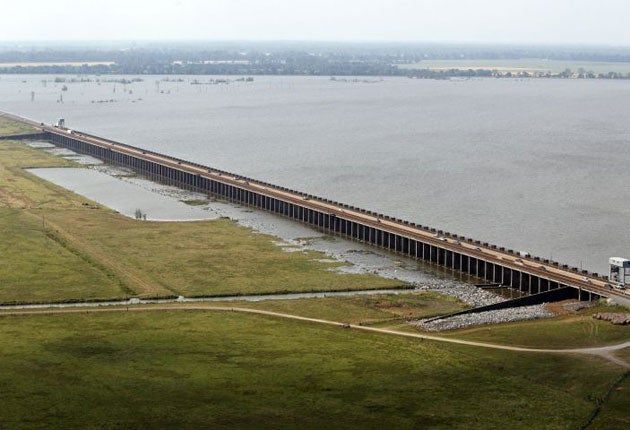
Army engineers will open a key spillway along the bulging Mississippi River as early as today, deluging thousands of homes and farms in Louisiana's Cajun country in order to avert a potentially bigger disaster in Baton Rouge and New Orleans.
About 25,000 people and 11,000 structures could be in harm's way when the gates on the Morganza spillway are unlocked for the first time in 38 years.
"Protecting lives is the number one priority," Major General Michael Walsh of the US Army Corps of Engineers said during a flyover of Mississippi flooding, before the decision was made to open the spillway.
Opening the spillway will release a torrent that could put about 3,000 square miles under as much as 25 feet of water, but take the pressure off the downstream levees protecting New Orleans, Baton Rouge and the numerous oil refineries and chemical plants along the lower reaches of the Mississippi.
Engineers feared that weeks of pressure on the levees could cause them to fail, swamping New Orleans under as much as 20 feet of water in a disaster that would have been much worse than Hurricane Katrina in 2005.
Instead, the water will flow 20 miles south into the Atchafalaya River. From there it will roll on to the Gulf of Mexico, flooding swamps and croplands. Morgan City, an oil-and-seafood hub and a community of 12,000, shored up levees as a precaution.
The corps said it would open the gates when the river's flow rate reached a certain point, expected today. But some people living in the threatened stretch of countryside - an area known for small farms, fish camps and a drawling French dialect - have already started fleeing to higher ground.
Sheriffs and National Guardsmen will warn people in a door-to-door sweep through the area, governor Bobby Jindal said, with shelters ready to accept up to 4,800 evacuees.
"Now's the time to evacuate," Mr Jindal said. "Now's the time for our people to execute their plans. That water's coming."
The Army Corps of Engineers employed a similar cities-first strategy earlier this month when it blew up a levee in Missouri - inundating an estimated 200 square miles of farmland and damaging or destroying about 100 homes - to take the pressure off the levees protecting the town of Cairo, Illinois.
This intentional flood is more controlled, however, and residents are warned by the corps each year by letter, reminding them of the possibility of opening the spillway.
Meanwhile, with crop prices soaring, farmers along the lower Mississippi had been expecting a big year. But now many are facing ruin, with floodwaters swallowing up corn, cotton, rice and soya bean fields.
Cotton prices are up 86 per cent from a year ago, and corn - which is feed for livestock, a major ingredient in cereals and soft drinks, and the raw material used to produce ethanol - is up 80 per cent. Soya beans have risen 39 per cent.
The increase is attributed, in part, to worldwide demand, crop-damaging weather elsewhere and rising production of ethanol.
While the Mississippi River flooding has not had any immediate impact on supermarket prices, the long-term effects are still unknown. A full damage assessment cannot be made until the water has receded in many places.
Some of the estimates have been dire, though.
More than 1,500 square miles of farmland in Arkansas, which produces about half of America's rice, have been swamped over the past few weeks.
When the water level goes down - and that could take many weeks in some places - farmers can expect to find the soil washed away or their fields covered with sand. Some will probably replant on the soggy soil, but they will be behind their normal growing schedule, which could hurt yields.
Many farmers have crop insurance, but it will not be enough to cover their losses and will not even come close to what they could have expected with a bumper crop.
The river's rise may also force the closing of the river to shipping, from Baton Rouge to the mouth of the Mississippi, as early as next week. That would cause grain barges from the heartland to stack up along with other commodities.
Join our commenting forum
Join thought-provoking conversations, follow other Independent readers and see their replies
Comments