Coup leader willing to hold early election
Honduras tries to fend off sanctions but rejects calls to re-instate ousted President
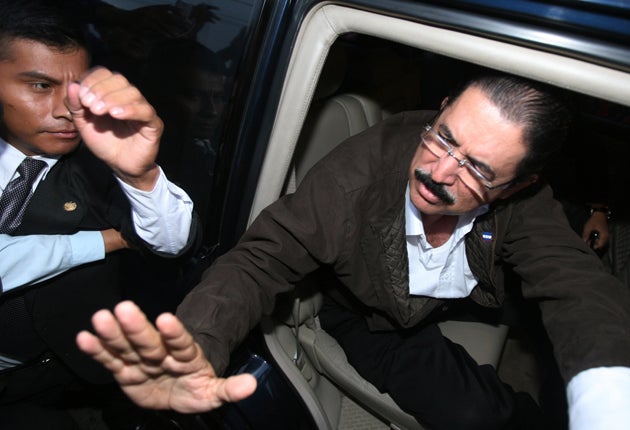
The self-declared leaders of Honduras showed signs of softening yesterday, indicating a willingness to bring presidential elections forward or even hold a plebiscite on re-instating the man they ousted last weekend.
First murmurs of possible compromise emerged from Tegucigalpa just hours before the scheduled arrival of the head of the Organisation of American States, Jose Miguel Insulza, who had given the coup leaders until today to reverse course or face sanctions.
Before the visit, Mr Insulza said he was not prepared to negotiate or meet with the interim government headed by Robert Micheletti, who has been declared president. "I cannot say I am confident," he said. "I will do everything I can but I think it is very hard."
There had been plans for President Manuel Zelaya to return to the capital this weekend, but Mr Micheletti flatly stated that he would be arrested should he set foot in Honduras.
Mr Zelaya came to power in 2006 as the leader of the centrist Liberals but he subsequently allied himself with President Hugo Chavez of Venezuela and tacked leftwards. Already at odds with the country's business elite, he then began moves to change the constitution to allow him to run for a second term. Congress and the courts supported his removal from the presidential palace at gunpoint on Sunday.
But the overthrow of Mr Zelaya has triggered unusual unity in the hemisphere. Even the US and Venezuela have united to demand his re-instatement. Honduras has seen ambassadors withdrawn and trade barriers thrown up against it. The streets of the capital have been the scene of clashes between supporters of the coup and Zelaya loyalists and there were fears last night of fresh violence.
Mr Insulza said: "We hope the coup leaders recognise the damage they are doing to the country and the world and allow the return of President Zelaya."
Asked about bringing forward elections planned for November, Mr Micheletti said he would have "no objection if it would be a way of resolving these problems".
He did not rule out a referendum on restoring Mr Zelaya to power either but said it would be hard to organise. There was little change in tone, however, when it came to Mr Zelaya personally. "For the peace and calm of the country I would prefer he does not come in," Mr Micheletti told Honduran radio. "I do not want even one drop of blood spilled in this country."
The country itself seems split on the issue. Before his rude awakening and involuntary dispatch to Costa Rica on Sunday, Mr Zelaya had not only earned the wrath of the other main institutions of government but had also seen his approval rating among voters slump to 30 per cent or less. Mr Chavez moved to lower the temperature of the crisis after indicating earlier this week that he was prepared to invade Honduras after his ambassador was briefly detained.
He indicated instead that he was talking about ending the standoff with contacts in Honduras and outside it. "We are in contact with people inside and in various parts of the world," Mr Chavez said. "Of course, one wants to do more but that country has its sovereignty and we have to respect it."
Join our commenting forum
Join thought-provoking conversations, follow other Independent readers and see their replies
Comments