State Department: Officials turned down security requests in Libya
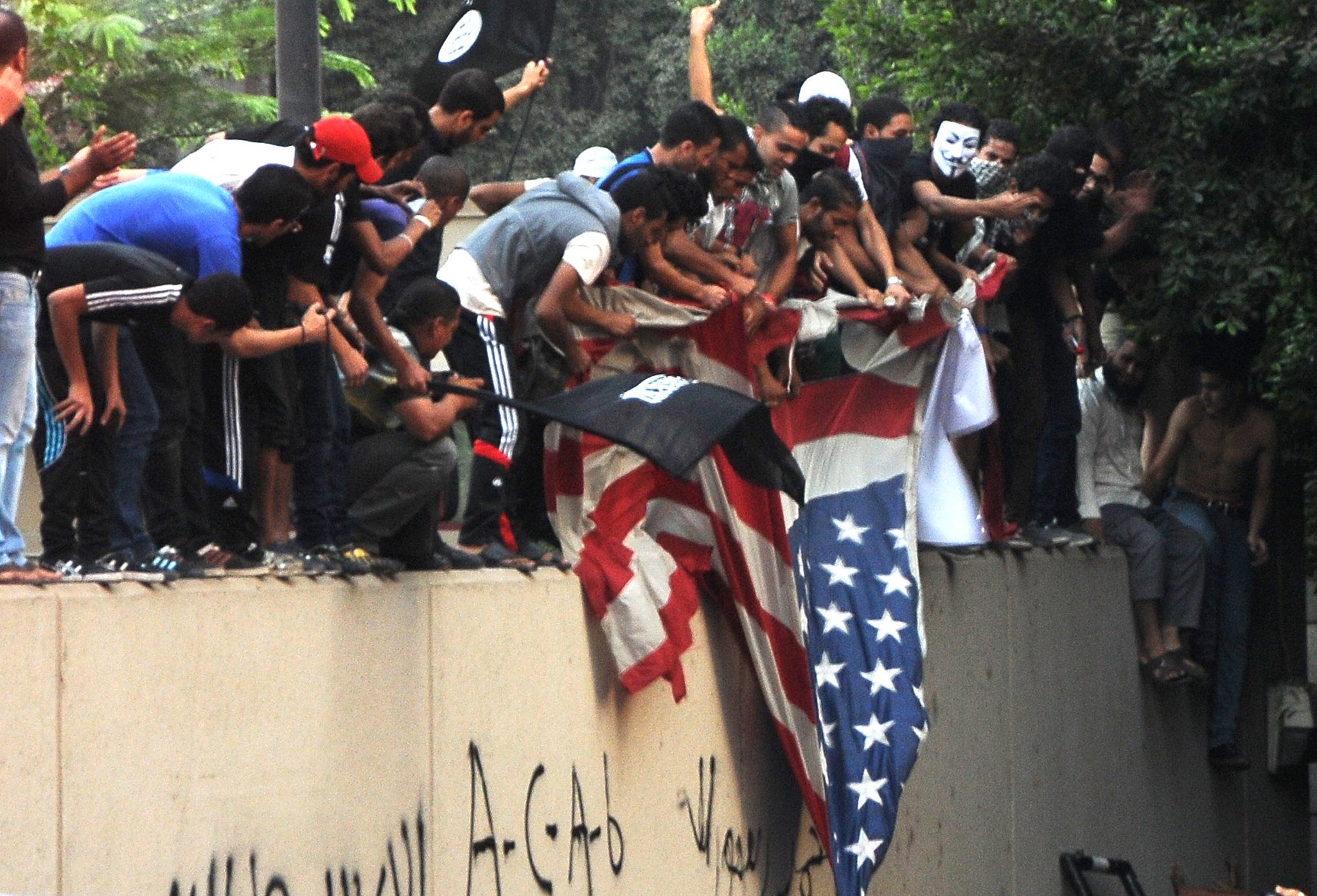
The State Department has acknowledged that it rejected appeals for more security at its diplomatic posts in Libya in the months before a fatal terrorist attack in Benghazi as Republicans suggested that lapses contributed to the deaths of the US ambassador and three other Americans.
Republicans also tried to use a congressional hearing to blow holes in the Obama administration's public explanations for what happened in Benghazi on Sept. 11, accusing the White House of playing down the possibility that the attack was a successful al-Qaida assault.
The highly charged congressional oversight session, titled "Security Failures of Benghazi," included sharp accusations from Republicans that the State Department was more interested in presenting a picture of an improving situation in Libya than in ensuring the safety of its staff there.
The session had the feel of a courtroom prosecution as Republicans bored in on inconsistencies and suggested a coverup. The hearing produced few new revelations about the attack, but it underscored the administration's political vulnerability over the Benghazi episode four weeks before the presidential election.
"They repeatedly warned Washington officials of the dangerous situation" in Libya, Rep. Darrell Issa, R-Calif., chairman of the House Oversight and Government Reform Committee, said in his opening statement. "Washington officials seemed preoccupied with the concept of normalization."
Democrats on the committee defended the administration, saying Republicans had voted to cut some of the very funding for security that they suggest was lacking in Libya. The Democrats also accused the Republicans of running a secretive and overly partisan investigation leading up to the hearing.
Rep. Elijah E. Cummings of Maryland, the top Democrat on the committee, called on House GOP leaders to support a supplemental funding bill to restore diplomatic security resources.
Ambassador J. Christopher Stevens and three other government employees were killed when militants attacked two U.S. compounds in the eastern Libyan city. In the days after the attack, administration officials said the assault appeared to grow out of a protest outside the main compound over an anti-Islamic video. More recently, the administration has termed the attack as a premeditated terrorist assault and acknowledged that earlier incidents and warnings about threats had not led to beefed-up security in Benghazi.
President Barack Obama sought to explain the evolving explanations in an interview Wednesday on ABC News. "This has all been well-documented and recorded: As information came in, information was put out," he said of the shifting narrative. "The information may not have always been right the first time. And as soon as it turns out that we have a fuller picture of what happened, then that was disclosed. But the bottom line is that my job is to let everybody know I want to know what happened, I want us to get the folks who did it, and I want us to figure out what are the lessons learned and ask the tough questions to make sure it doesn't happen again."
Committee Democrats provided the lead witness at the hearing, Undersecretary of State for Management Patrick F. Kennedy, an opportunity to explain the evolving explanations of the attack. Kennedy provided little clarity, saying that although he had called the attack an act of terrorism the week it happened, multiple and perhaps conflicting "threads" of intelligence complicated efforts to learn what happened.
In a briefing for reporters Tuesday, the State Department said for the first time that it had never concluded that the attack was the result of a protest over the video. But none of the witnesses Wednesday was so definitive.
Kennedy took pains to defend Susan E. Rice, the U.S. ambassador to the United Nations, from intense Republican criticism of her initial account of the attack as the outgrowth of a protest in television appearances on Sept. 16.
"The information she had at that point from the intelligence community is the same that I had at that point," Kennedy said. "As time went on, additional information became available."
In a heated exchange with Kennedy, Rep. Trey Gowdy, R-S.C., declared: "This was never about a video. It was never spontaneous. It was terror."
Although Issa praised Secretary of State Hillary Rodham Clinton for the department's cooperation in the ongoing inquiry, the deaths in Benghazi represent a blemish on her tenure. Clinton did not appear at Wednesday's hearing, but she is expected to address the issue in a talk Friday at a Washington think tank.
The committee released a copy of a diplomatic cable written by Stevens on the day he died in which he catalogued concerns about rising violence and Islamist influence in eastern Libya but did not specifically ask for more protection.
The committee also released earlier messages from other diplomatic staff members in Libya that were clear in their requests for more help.
Deputy Assistant Secretary of State Charlene Lamb, who helps oversee diplomatic security, fumbled to explain how the requests were evaluated. But she said there was the right level of protection in Benghazi the night of Sept. 11.
Republicans pounced, saying the deaths of four Americans proved that there was not enough security on hand.
White House spokesman Jay Carney seemed to agree, telling reporters later Wednesday that in hindsight "there is no question that the security was not enough to prevent that tragedy from happening."
The hearing took an unusual detour over images on large easels set up behind Lamb. As she delivered her prepared remarks, Rep. Jason Chaffetz, R-Utah, objected to the display, which he said contained classified information. Issa at first agreed with State Department officials that the material was unclassified, then directed that it be taken down.
Lamb said she opposed a request to extend the term of a special supplemental security team comprising mostly military personnel that had assisted Stevens and other diplomats from February until August. The team was based in Tripoli and "would not have made any difference in Benghazi," Lamb said.
Under tense questioning, she acknowledged that she had told the top security officer at the U.S. Embassy in Tripoli, the Libyan capital, not to bother asking for additional help when the military team was sent home.
That officer, Eric A. Nordstrom, was sitting uncomfortably beside her. Nordstrom said he interpreted Lamb's refusal as "there was going to be too much political cost." But in his written statement, he acknowledged that the "ferocity and intensity of the attack was nothing that we had seen in Libya, or that I had seen in my time in the Diplomatic Security Service. Having an extra foot of wall, or an extra-half dozen guards or agents would not have enabled us to respond to that kind of assault."
Nordstrom sounded a forlorn note when he said, "The takeaway from that, for me and my staff, it was abundantly clear, we were not going to get resources until the aftermath of an incident. And the question that we would ask is, again, 'How thin does the ice have to get before someone falls through?' "
In a sharply worded opening statement, Chaffetz said the attack on the Benghazi post could have been averted with a small amount of additional resources. He said an earlier bombing at the Benghazi post was a test by terrorists that went unaddressed by authorities.
"I believe we could have and should have saved the life of Ambassador Stevens and the other people who were there," Chaffetz said.
The investigation of the deaths has moved slowly in Libya. The White House said John O. Brennan, Obama's top counterterrorism adviser, discussed the progress Wednesday with Libya's president and other officials in Tripoli. Brennan "urged Libya to take full and timely advantage of specific offers of assistance from the United States and other international partners," National Security Council spokesman Tommy Vietor said.
* Julie Tate in Washington contributed to this report.
Join our commenting forum
Join thought-provoking conversations, follow other Independent readers and see their replies
Comments