The man who bet on the credit crisis – and took home $3.7bn last year
It is a jarring comparison for the millions of American homeowners struggling with their soaring mortgage payments, but there is one man who has profited so much from the credit crisis that he is jumping a few rungs on the property ladder this year.
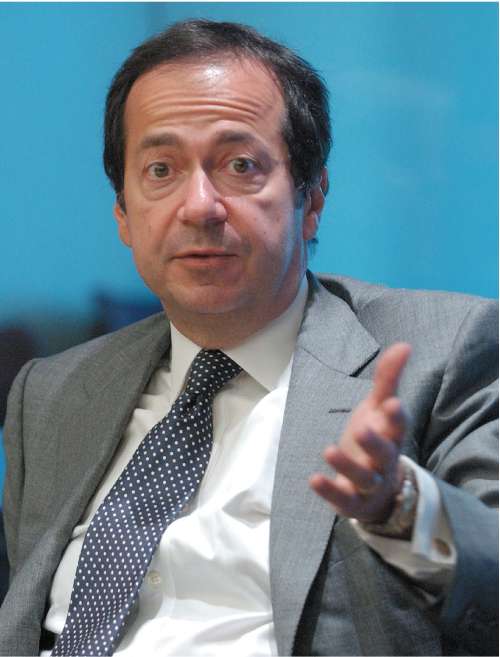
He is John Paulson, a previously obscure hedge fund manager from New York, who took home $3.7bn (£1.9bn) last year, after betting on a calamity in the mortgage market.
It is certainly the biggest single pay-day in the history of Wall Street, more than twice anything previously achieved even in the bloated hedge fund industry. It is worth spelling the total out with all the zeros: $3,700,000,000, the equivalent of a lottery jackpot every day for a year.
No wonder Mr Paulson is trading up in the Hamptons, the upstate playground for New York's rich and famous, where he has just bought a 10.4-acre lakefront compound – complete with staff quarters, two outhouses and ocean views – for $41m. His more modest seven-bedroom, three-acre "cottage" a mile down the road, is up for sale with a price tag of $19.5m. (In another example of his trading acumen, that is a profit of almost $7m during the two years he has owned it.)
Alpha Magazine, the industry journal that did the sums, calls his performance last year "the greatest hedge fund trade of all time".
It has turned Mr Paulson into an industry legend overnight, courted by powerful bankers and politicians, anxious for insight on how bad the housing crisis in the US and the global credit crunch might still get.
With his new-found influence, his Manhattan-based hedge fund, Paulson & Co, has been able to sign up Alan Greenspan, a former head of the Federal Reserve, as an adviser. The appointment raised a chuckle in dealing rooms across the city, since Mr Greenspan is being damned as the architect of the housing market's disastrous bubble.
Mr Paulson's story is rich with other ironies. Now 52, he learnt his trade in part during four years at Bear Stearns, the investment bank which lost billions in 2007 making optimistic bets on mortgages that were the mirror image of Mr Paulson's. Its collapse last month is the defining catastrophe of the credit crisis. He also shares a name with – but is no relation of – Hank Paulson, the US Treasury Secretary, whose tenure has been spent trying to shore up the housing market.
John Paulson set up his hedge fund in 1994 and spent more than a decade as a middle-ranking fish in an increasingly crowded pond, until realising 18 months ago that the mortgage market was headed for disaster as millions of US homebuyers were signing up to loans they would not be able to afford. There would soon be a day of reckoning for borrowers and their profligate lenders, he calculated, and the multi-billion dollar market for mortgage derivatives was bound to collapse.
Putting his own money, his clients' money and billions of dollars of borrowed funds into the bet, he won big. Paulson & Co, his fund, had $6bn under management at the start of 2007 and $28bn at the end. The gains on his own capital and his cut of the fund's fees netted him $3.7bn over the period.
That puts him atop Alpha's list of top earners ahead of George Soros, the veteran trader who has also been betting on economic calamity in the US and who took home $2.9bn. A hedge fund manager had to earn $210m to make the top 50.
Join our commenting forum
Join thought-provoking conversations, follow other Independent readers and see their replies
Comments