
It is the Western hemisphere's poorest nation, hobbled by generations of corruption and social turmoil which have resulted in two-thirds unemployment and an economy entirely reliant on overseas aid. That was Haiti, even before the disaster that struck at around 5pm on Tuesday, 12 January.
The earthquake which rattled through the capital, Port-au-Prince, for around 90 seconds measured 7.0 on the Richter scale. That hardly makes it a blockbuster. Bigger quakes happen somewhere in the world every few months. But they rarely strike so fragile a target.
In a nation where 80 per cent of the population live below the poverty line, and 54 per cent exist in conditions the UN officially classifies as "abject", the daily struggle to make ends meet had created an environment ripe for disaster.
The population of Port-au-Prince had roughly quadrupled in the previous decade, thanks in part to the US dumping cheap rice on the Haitian market, bankrupting its farmers. By this year, the city had become a chaotic metropolis, in which 3 million people were sandwiched into a small plot of land just five miles across.
We now know that their breeze-block dwellings were no match for the quake, which had its epicentre 16 miles away. We also know that, thanks to non-existent building codes, many of the city's larger structures would tumble like a house of cards. It took days for the dust to even settle.
When it did, Haiti's deadly shortcomings were apparent. Roads were gridlocked and impassable in all but 4x4s. The port had collapsed into the sea. All aid was being funnelled in by plane, through one tiny airport which had no control tower and was hopelessly over-stretched. Phone, electricity, internet and water systems had been demolished.
To drive into the city on the Friday of that week was to experience scenes from a disaster movie which had yet to be edited to avoid offending the squeamish. Corpses littered almost every street. The survivors stepping over them were thirsty, penniless, and on the verge of panic. From everyone you spoke with, you'd hear tales of unimaginable tragedy: children who'd lost entire families, mothers whose children had vanished.
The smell – sewage and rotting flesh – took weeks to forget. The psychological trauma lingered even longer. Its enduring effects on the national psyche can scarcely be imagined. A total of around 300,000 perished; many bodies were never identified and are now in mass graves in the hills around town.
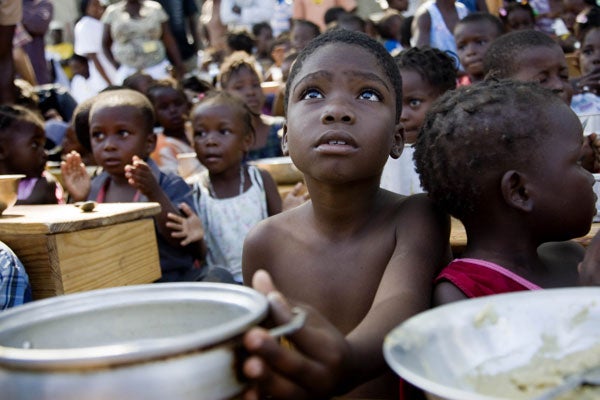
For many, almost a year later, the pain endures. By most estimates, around 1.5 million people, which equates to roughly a quarter of the population, were made homeless by the quake. Most are still living in makeshift shelters. Only the lucky few have jobs, the remainder are still relying on handouts.
Today, roughly 4,000 are at work in the country, employing a small-army of well-meaning staff. They do a decent job: until the recent cholera outbreak, which has been reasonably contained, there had been no widespread problems with disease. Charities have provided basic sanitation, and reasonable medical care.
But aid can only achieve so much. To return to anything like normal, Haiti needs a basic economy and the apparatus of normal government (a prospect which seems as far away following last month's botched election). The cycle of dependency must be broken.
An earthquake might have caused the natural disaster. But in Haiti this year, poverty has been the real killer.
Join our commenting forum
Join thought-provoking conversations, follow other Independent readers and see their replies
Comments