A general tightens his grip on power in Pakistan
World Focus: General Ashfaq Pervez Kayani
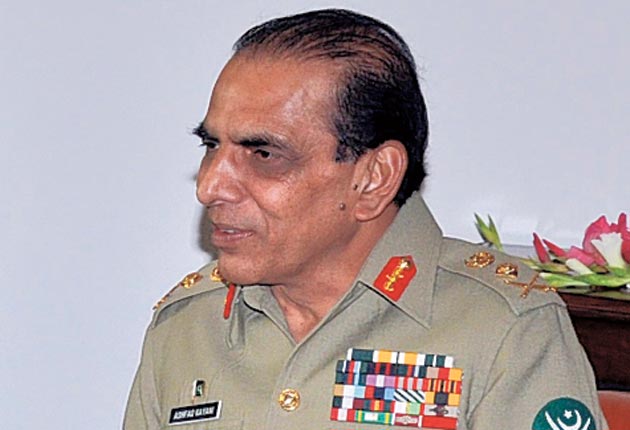
As was once said of Prussia, Pakistan is not so much a country with an army but an army with a country. That fact was made clear when Pakistani Prime Minister Yousuf Raza Gilani announced that the army chief, General Ashfaq Kayani, has been given an extension for another three years.
The move was not a great surprise. A weak and unpopular civilian government is in no position to resist a powerful army chief's sense of his own indispensability. But what made many gasp was the length of the extension: General Kayani, who was due to retire in November, will remain in his post until 2013, establishing him as the most powerful man in the country.
The extension was necessary, Mr Gilani said on Thursday, in light of the critical fight against Islamist militancy. General Kayani's leadership has been instrumental in securing impressive successes against the Pakistani Taliban in Swat, South Waziristan and elsewhere in the north-west.
Washington and other Western allies will probably champion the move. Given the delicate state of Afghanistan, where US and Nato forces are struggling, General Kayani's cooperation will be key.
In recent weeks, he has opened up a direct line of communication with the Afghan President Hamid Karzai and has offered to lure elements of the Afghan Taliban to the negotiating table.
But many here also question the move. "It augurs badly for democracy in this country," said Kamran Shafi, a respected commentator and former soldier. "The last time a civilian government gave a military chief an extension, it was General Ayub Khan. Later, he took over and ruled the country as a dictator for a decade, in the first of four military dictatorships. It's been downhill ever since."
There is also speculation about the impact of the move on Pakistan's army. By favouring an individual over an institution – and blocking promotion opportunities for senior generals – there is likely to be quiet discontent.
The extension also underscores the army's enduring clout. Since assuming power in March 2008, the civilian government has been steadily ceding prerogatives that are taken for granted in established democracies.
Early attempts to forge an independent foreign policy by improving relations with Delhi, Kabul and Tehran foundered. Now, as analyst Najam Sethi says, "When it comes to policy in regards to the US, Afghanistan and India, it is General Kayani who is calling the shots."
Last week's failed peace talks between India and Pakistan is being seen as a stubborn refusal by hawkish elements within both countries' establishments to dim their hostility.
Join our commenting forum
Join thought-provoking conversations, follow other Independent readers and see their replies
Comments