A mother's story of the teenager India wants to hang after gang-rape that shocked a nation
To India he’s a monster, the juvenile who committed a horrific crime. But to his mother he’s still Bhura, the boy she was forced to abandon at 11 years old
His mother lies shrunken and despairing, shrouded in blankets on a straw mattress. For her, the young man who went by the nick-name “Bhura”, or “brown”, was her first-born joy, a flash of happiness in a hard-edged world until she was forced to send him away to work in Delhi at the age of 11. For several years afterwards she had no idea he was alive or dead.
But to the world, gripped by the recent rape and murder of a Delhi student, the 17-year-old bus attendant from Uttar Pradesh represents little less than the essence of evil. In briefings to the media, police have suggested this teenager was among the most savage of the six attackers, luring the student and her male companion aboard a bus with his “sing-song” call before twice raping her and internally assaulting her with an iron bar.
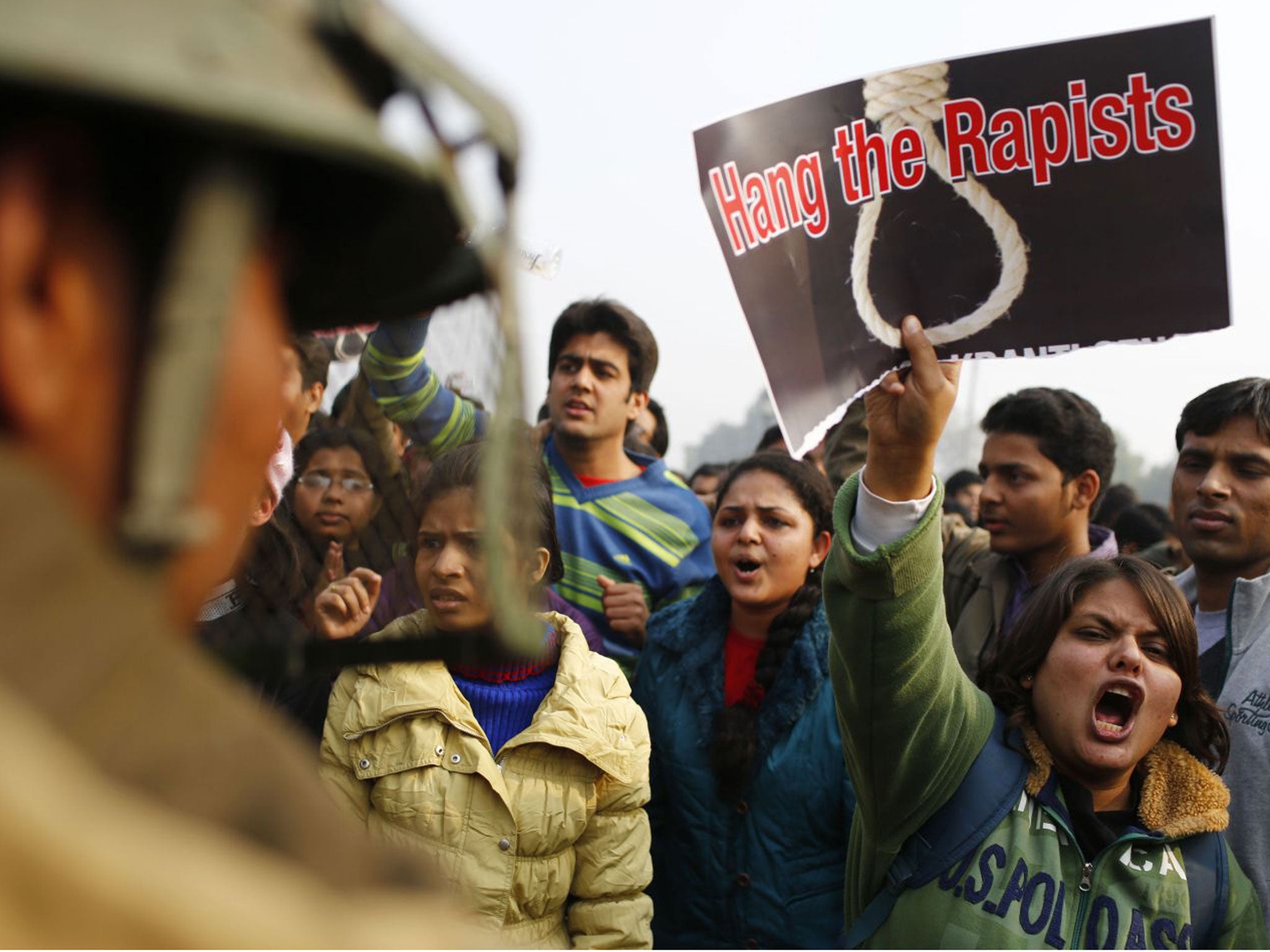
Indeed, his alleged viciousness was so bad that the family of the murdered student has said he ought not to be treated as a juvenile as demanded by law, but, if convicted, should instead face the death penalty. “He is well aware of what is right and wrong,” the student’s brother told reporters.
In the days since the attack on 16 December, much has been written about how the 23-year-old physiotherapy student embodied the “new India”. Her family’s decision to sell a plot of land in eastern Uttar Pradesh (UP) to allow them to move to Delhi, and for her to be educated, underscored the opportunities newly available in this rapidly developing nation.
If that is true, then Bhura’s story equally represents the story of old India, of lives enveloped by poverty and hardship and of chances limited by the centuries-old constraints of caste, religion and bad luck. He too migrated to Delhi for economic reasons but unlike the family of the student, he was unable to make the leap.
The teenager belongs to a Muslim caste that in India has traditionally been associated with the pressing of vegetable oils. The family home near the town of Islam Nagar in western UP is among the poorest in the village and consists of two rooms, covered in thatch and plastic sheeting.
When The Independent visited earlier this week, the teenager’s mother was lying on a bed under a lean-to, and said she had not had a meal since the previous day. She said the family did not always eat every day and at one point she fainted, apparently from hunger. Her husband was lying on a cot a few feet away. She said he had mental health problems. A tethered buffalo stood in the yard. The woman said she had a total of five children, two younger sons and two girls aged 11 and 13. With her husband unable to work and with Bhura no longer at home, her two daughters were the only source of income, each earning 50 rupees a day (55p) as labourers in the fields.
She said her first-born son had been a quiet, docile boy who never created problems. For a year-and-a-half he attended the village school but dropped out after he was beaten by a teacher. At the age of 11, a family member arranged a job for him, working in a rough-and-ready eatery in the east of Delhi.
“I felt good when he was born,” said his mother, her sunken eyes all but covered behind a green shawl. “At the age of 11, I had to put him in the eatery to work. I did not want to but I put him there to work.”
She said for the first few years he was in Delhi, Bhura sent home much-needed money. Then he stopped. They tried to contact him but were unable to. “For the last [few] years we thought he was dead. Then the Delhi police came here and started asking about him,” she said.
The eatery where Bhura was employed cleaning plates and serving food is located in the east of the city, an area dominated by roads and fly-overs. The skyline is dominated by a huge, mountainous rubbish dump where a thousand birds of prey hover in the breeze.
While its proper name is Bharkat’s, it is known locally as Mullah-ji’s and serves “Muslim” food, such as minced lamb and stewed brains.
“He was very loyal and hard-working. He worked here for two years. When he said he was leaving, I offered him more money but he decided he did not want to work in an eatery,” said the owner, Islam Uddin.
It appears that Bhura’s family may have been tipped-off about an opening for a young boy by another young man from the same village who left for Delhi several years earlier and who works in a recycling shop next door. Subash Gupta said that Bhura worked seven days a week, from 8am to 11pm with just two days holiday, when he was allowed to mark the Eid festival. He was paid R2,500 (£28) plus food, and was allowed to sleep in the restaurant.
“He was a very good worker. There are no jobs in the village so people come to the city to earn,” said Mr Gupta. “It’s a poor man’s village. If his family had money he would not have home here.”
Mr Gupta said he had not seen the slightly-built Bhura for 18 months after he left the eatery, yet he said he could not believe the teenager was involved in the rape. “He did what he was supposed to do. I do not think it is at all possible,” he said.
Reports in the Indian media suggest after leaving Mullah-ji’s, Bhura got a job washing buses, and later as a bus driver’s assistant, not far from the Anand Vihar inter-state bus terminal. Reports say it was while working there that he got to know Ram Singh, another of the accused, who worked driving a private bus. He had got to know him so well that at some point he had leant the older man R8,000 (£90). A few days before the attack on the student, Bhura had gone to Mr Singh’s shack in the poor Ravi Das colony area in south Delhi to collect it and had slept in his bus.
According to several reports, on 16 December, when Mr Singh, Bhura and four others set out for a drunken joy-ride, it was Bhura who called out to the medical student and her male companion as they made their way home from watching a film, encouraging them to board the bus.
Two days after the attack, the teenager was arrested at the Anand Vihar bus terminal, apparently trying to leave the city.
Reports containing gruesome details have portrayed Bhura as one of the most brutal of the assailants. Yet, according to someone who has seen the official charge-sheet relating to the five adults, the boy is not mentioned. It is likely police will file a separate charge-sheet at a juvenile court hearing that has been arranged for 15 January. A spokesman for the Delhi police, Rajan Bhagat, declined to comment.
Reports said the teenager has been attacked several times by other juvenile inmates while in custody, twice having to be moved. This week, he was taken to Delhi’s Lok Nayak Jaiprakash Hospital where he underwent emergency surgery for appendicitis. It is not clear whether his condition is linked to alleged abuse he suffered while awaiting his hearing. A hospital employee yesterday confirmed the operation had been completed.
The arrest of the juvenile has triggered fierce debate within India about what punishment might be appropriate if he is found guilty. Some have called for the authorities to lower the age at which a defendant is considered a juvenile to 16. The maximum punishment available for a juvenile is three years in custody.
Meanwhile, the authorities are still seeking confirmation of the teenager’s age. If he is found to be 18, he will be tried as an adult and could face the death penalty. As part of this, they have ordered tests of the teenager’s bones and have summoned the principal of the village school.
The teacher, Yatindra Mohan, said he already provided the school-log and would attend the hearing next Tuesday to provide further details. He said: “I have to appear again.”
Join our commenting forum
Join thought-provoking conversations, follow other Independent readers and see their replies
Comments