Australian climber hopes finally to solve mystery of who reached summit first
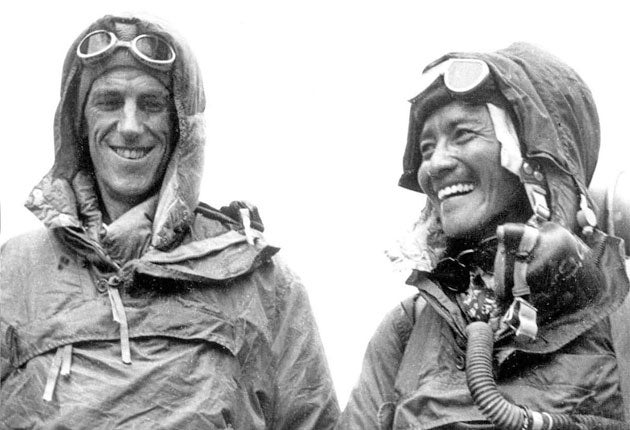
It is one of the enduring riddles of mountaineering: were Edmund Hillary and Tenzing Norgay the first men to conquer Mount Everest, as is officially recorded, or were they beaten to the summit nearly 30 years earlier by the British climbers George Mallory and Andrew Irvine?
The British pair, who died on the mountain during a 1924 expedition, were last seen not far from the 29,028-feet summit. Mallory's body was discovered on the frozen slopes by an American team in 1999, but – despite several subsequent searches – Irvine's body has never been found. Nor has photographic equipment, including a primitive Vestpocket Kodak camera that belonged to Mallory.
Now an Australian explorer is hoping to solve the mystery. Duncan Chessell, who has scaled Everest twice, is about to make a third attempt. He is optimistic about his chances of finding Irvine's body, saying that conditions on the mountain this year are the most favourable in decades.
"I was at North Col (23,000 feet up) last week and the wind was 150kph (93 mph) and it was stripping snow off the mountain which has been there for many years," Mr Chessell said yesterday in a message from Everest base camp. He added: "There is now bare rock exposed, which has been deeply covered for decades, in the most likely areas where Andrew Irvine's body may be. It is my intention to search those areas en route to the summit and take this rare opportunity to find him and, perhaps, the missing cameras."
The Kodak was not on Mallory's body, which prompted speculation that Irvine was carrying it on a cord around his neck. If located, it could contain evidence that the pair did reach the top and were on their descent when one of them fell.
Mallory's body – which was perfectly preserved after 75 years, down to the explorer's tweed jacket, hobnailed leather boots and name tag sewn into his clothes – had a rope around it, indicating that the two men were tied together. His snow goggles were folded in his pocket: an indication, some say, that he was returning from the summit.
Kodak experts have said that if the camera were retrieved, the film might be salvageable – preserved by the frozen, dry conditions. However, they have warned that cosmic rays might have degraded the images.
First, however, Irvine himself has to be found, and that is no easy task. There are an estimated 120 bodies on Everest, which has claimed the lives of more than 180 climbers over the years. Mr Chessell's companion on his first climb in 1999, Mark Auricht, died a few hundred feet from the summit, having turned back while his partner continued to the top.
Mr Chessell, from Adelaide, buried his friend's body in snow, and returned to base camp in 2003 to place a memorial stone. In 2005 he scaled the Himalayan peak for a second time.
In his message yesterday, he said he had closely studied the matter, and was very familiar with the mountain. "I believe we have a good chance of finding something," he said.
Mr Chessell, who will attempt to reach the summit from the north-east ridge, the same route taken by the British pair, was planning to begin his final assault on the mountain yesterday. He hopes to reach the summit next Sunday or Monday.
Despite the passage of time, Mallory and Irvine's story continues to enthral. Jeffrey Archer's latest novel, Paths of Glory, published last year, was based on Mallory's life, and a film is being made about the ill-fated Everest expedition, with Julia Roberts playing Mallory's wife, Ruth.
The American team that found Mallory's body returned to Everest in 2001, in the hope of locating his companion. They found the pair's last camp, but abandoned their quest after helping to rescue five climbers from two other expeditions. Two subsequent searches proved equally fruitless.
Mallory – when asked why he wanted to climb Everest, famously answered "because it's there" – was from the Cheshire village of Mobberley. Irvine was a 22-year-old engineer. Mallory's body was found on a terrace below the spot where an ice axe, believed to be Irvine's, was discovered in 1933. While the issue of whether the British pair conquered the peak has fascinated mountaineers for nearly 60 years, some question its relevance. Sir Edmund, who died in 2008, said that what mattered was not just reaching the top, but making it down alive to tell the tale.
Join our commenting forum
Join thought-provoking conversations, follow other Independent readers and see their replies
Comments