Blind masseurs protest at sighted competition
South Korea's 7,000-strong sightless army takes to street to protect their livelihoods
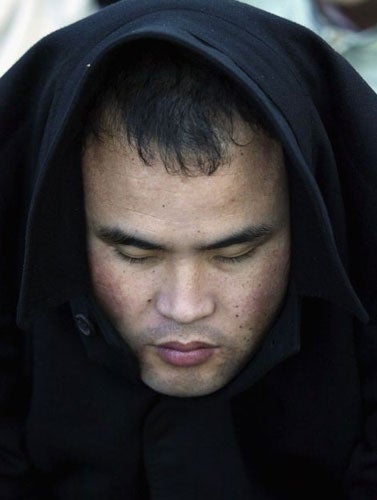
Unheralded and largely out of sight, a small army of blind masseurs has been kneading South Korea's tired muscles for nearly half a century. Now, demands that the masseurs share their profession with the non-blind have forced them out of the massage parlours and onto the streets into dramatic, sometimes suicidal, protests.
In an incident last month, a group of blind masseurs burned cars and threatened to jump into Seoul's Han river unless the government reversed a decision allowing the sighted to practice. The police arrested 26.
Blind demonstrators have leapt from bridges and buildings and two have died since a court declared two years ago that a directive allowing them to exclusively work as masseurs "excessively discriminated" against the sighted. The Korean constitutional court will rule on the dispute again this month, but whatever the verdict, not everyone will be happy.
It was the Japanese colonialists who introduced to Korea the idea of reserving the role of masseurs for the blind in 1913. The US military government later abolished the protection but it was reinstated in a government directive in 1963. But sighted masseurs say the 7,100-strong blind army can no longer keep pace with demand in South Korea, where at least 120,000 and possibly half a million masseurs operate illegally, and have mounted a legal challenge to make their pounding of the flesh legal.
Non-licensed therapists face fines of up to $4,500 (£2,560), although many have worked in official positions; South Korea's former president is believed to have employed one, and they were even used to minister to tired footballers during the 2002 World Cup.
Park Yoon Soo, the leader of the group spearheading the challenge told the New York Times: "It breaks my heart when I think that what I do every day, what I consider my calling is a crime. We are not trying to steal jobs from the blind, we just want to share the market. Blind people should be helped into other jobs, not given exclusive rights to just one."
In 2006, the Constitutional Court responded to a series of legal challenges by ruling that blind masseurs could not have a monopoly, sparking weeks of fierce demonstrations. The government caved in and wrote the protection for the blind back into law. That decision was the cue for more protests, this time by the sighted, one of whom died after plunging into the river Han.
The government recently offered an olive branch by allowing a limited number of sighted therapists to practice, setting off another series of protests by the blind, who demanded the new additions massage only the head and hands.
As the government gropes about for a solution, the angry demonstrations continue. Han Yong-seok said a ruling against them would steal their livelihood. "I simply couldn't get another job," he told the BBC this month. "I need to learn this trade so I can continue to bring up my family and be part of society."
Opponents of the blind masseur law say it has, in effect, criminalised up to half a million people to protect the rights of a few thousand. Privately, some in the government are said to agree with them. But although they would like to lure the blind out of what some call a vocational ghetto, the issue had become so emotionally charged, few are willing to predict a peaceful end. "It's a life-or-death situation," for us, a visually impaired protester told Korean television after last month's riots.
Join our commenting forum
Join thought-provoking conversations, follow other Independent readers and see their replies
Comments
Bookmark popover
Removed from bookmarks