Burmese dictator lives like a king, laments the nation's last royal
General inhabits palace while heir to throne grows old in bungalow
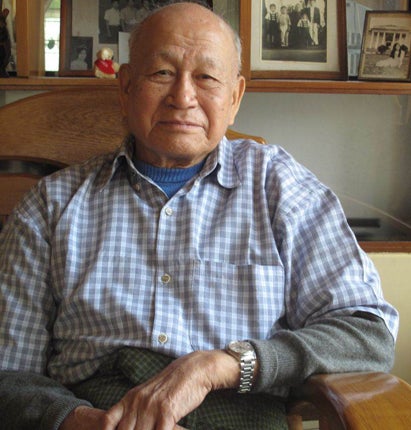
Sitting in the living room of his modest bungalow in the cool hills above Mandalay, the sole surviving grandson of Burma's last king laughs off the notion that he has political aspirations. Don't you know, he says mischievously, Burma has a new royal family now?
Eighty-five-year-old Taw Paya is heir to the Konbaung throne, and could be king, had British colonisers not exiled his grandparents, King Thibaw and Queen Supayalat, to India in 1885. Instead, Taw Paya lives a quiet life with his daughters and grandchildren in the former British hill station of Maymyo.
"I count my beads, I say my prayers, and I'm very fond of Reader's Digest," Taw Paya said. "My life is very simple."
The "new royals" to whom he refers are not a rival line of aristocrats, but Burma's ruling generals, who lead sumptuous, decadent lives in their newly built capital, whose name means, suitably, "Abode of Kings".
"Those chaps, really, they are the ones who think they are royalty," Taw Paya said, employing his quaint brand of English learned at mission schools in the 1930s.
The head of the Burmese junta, General Than Shwe, is well known for his royal pretensions. His palatial residence in the new capital, Naypyidaw, has pillars of jade and marble, and his family reputedly refer to each other using royal titles. Footage of his daughter's lavish 2006 wedding, leaked onto the internet, sparked outrage in Burma, where most live in poverty. "They love big shows of wealth and power," said Taw Paya. "But the people hate it."
Taw Paya's royal heritage and advanced years may afford him more room than most in Burma to criticise the behaviour of its military rulers. But still, he has to be careful. He refuses to discuss this year's election, the first national vote in 20 years, which some foreign observers have already dismissed as a sham that will merely cement the power of the military behind a civilian-fronted government. The date for the election has yet to be set, but the junta this week began to unveil the election laws, including one which bars imprisoned opposition leader Aung San Suu Kyi from holding office.
"I don't understand politics," Taw Paya said. "It's such a cheating game. I want to stay out of it."
Taw Paya's mother was allowed to return to Burma in 1919. The family lived under tight restrictions but on a comfortable pension paid by the colonial administration until independence in 1948.
Since then, the royal descendants have experienced mixed fortunes: Communist insurgents assassinated Taw Paya's eldest brother shortly after independence, while the military junta – in power now for half a century – imprisoned his second brother three times. One of his nieces has done well on the executive of the junta's political party, the Union Solidarity and Development Association, and a nephew held a senior position in the Ministry of Foreign Affairs. Taw Paya's own sons have chosen mundane careers – a security guard, a policeman and a truck-driving instructor. Another nephew, and great-grandson of King Thibaw, is a failed artist and down-and-out. "He lives in a mud hut," said Taw Paya.
The heir to the throne himself lives fairly anonymously in Maymyo, a pleasant, breezy town surrounded by strawberry fields. British officers and colonial administrators would escape here from the pounding heat of Burma's central plains, and its red brick houses and pretty cottages evoke the atmosphere of a Surrey village. Today, under its new name of Pyin U Lwin, the town is home to the Defence Services Academy and on a Saturday morning is bustling with young Burmese army cadets in starched, white jackets.
Last year, Taw Paya moved from his family's substantial villa near the centre of Maymyo to a newly built bungalow on a patch of residential sprawl to the north of the town. "We didn't need all that space. We're much more comfortable here," he says.
Last year, his life story was serialised in a popular Burmese women's magazine, bringing him a bit of attention and celebrity that he seems to enjoy. He pulls out copies of the articles complete with black and white photos of his parents and grandparents. He scans the Burmese text wistfully, translating parts for my benefit. Taw Paya's identity was defined by events that occurred before his birth, and having it all laid out in print seems to be a comfort.
"These articles were very popular actually," he says, shyly. "The sympathy for us is still quite strong."
Join our commenting forum
Join thought-provoking conversations, follow other Independent readers and see their replies
Comments