Case against me is all lies, says whaling activist on trial in Japan
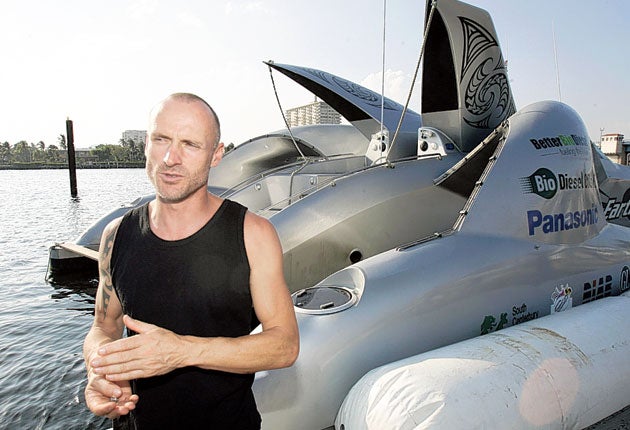
Arrested at sea, taken to Tokyo in handcuffs and now facing a possible 15-year jail sentence for trying to stop Japan's annual whale cull, Peter Bethune has become a controversial hero of the environmental movement. But in Japan, where he is on trial for boarding a whaling ship and assaulting a crew member, he is despised and harangued by nationalists, who call him an eco-terrorist.
Mr Bethune is accused of throwing an acid similar to rancid butter, and injuring a member of the crew of the Shonan Maru No 2 that collided with his powerboat a month earlier during clashes in the Antarctic Ocean. The New Zealander's trial is the first in Japan against a member of the Sea Shepherd Conservationist Society, a direct action group founded more than 30 years ago in the US, and has attracted huge media attention.
Japanese ultra-nationalists have picketed his daily court appearances and staged noisy protests outside the New Zealand and Australian embassies in Tokyo. Some called for Mr Bethune to be "hanged" and for Japan to go to war with Australia over its whaling stance. Australia announced this week that it is upping the ante in the anti-whaling battle by following through on a long-standing threat to take Japan to the International Court of Justice in The Hague.
Australia and New Zealand accuse Japan of commercial whaling in what both countries consider a whale sanctuary. Tokyo calls the annual cull "scientific whaling" and says neither country has any legal claim over the southern oceans. Against this backdrop, Mr Bethune, from New Zealand, told The Independent that much of the evidence against him is an "orchestrated litany of lies" and described his trial as "judicial rape".
"There has been this procession of rehearsed statements from their side," said Mr Bethune, flanked by a prison guard during an interview in the bunker-like Tokyo Detention centre. "You're not allowed call anyone a liar in the courtroom here but they're lying."
The militant activist has admitted charges including trespassing and disruption of commerce but denies assaulting a crew member of the Shonan Maru No 2 with a bottle of butyric acid.
Last week the whaler testified that he needed a week of medical treatment after the substance splashed him on the face. Bethune accepts he threw it, but said it could not have harmed the whalers. The prosecution showed a damaging video shot by the whalers that appeared to show him whooping with delight after throwing the acid, which is said to be a type of stink bomb.
"The whalers had visors covering their faces, so how could our acid thrown from 18m away have travelled up under the visors? They injured themselves with their own pepper spray," he said. "They're hunting whales in my backyard. They've got no right to be there and like a lot of people I find it deeply offensive."
Prosecutors accuse Mr Bethune of conspiring with other Sea Shepherd members, including leader Paul Watson, of Canada, to "sabotage Japanese whaling in the Antarctic".
Mr Watson, who is not before the court, said that Mr Bethune "is being used as a political football by right-wing nationalists in Japan".
Mr Bethune is expected to be found guilty of the assault charge despite weeping in court last week and saying he had no intention of hurting whalers. Japanese courts boast a conviction rate of more than 99 per cent and if found guilty he faces a maximum of 15 years in prison.
Most observers say a custodial sentence is likely, despite the publicity it would hand to Sea Shepherd. "I think I'll get a maximum of two to three years," predicts Bethune. I'll be disappointed but I'll accept it. I'm just standing up for what I believe in.
"For me, being charged with disruption of commerce is a badge of honour. We slowed them down and cost them a lot of money. But I totally deny the assault charge. I regret the acid and the fact that it got me into trouble."
Mr Bethune was captaining the powerboat Ady Gil in January when it was sliced in half by the Shonan Maru No 2 in what Sea Shepherd calls a deliberate attack. He climbed aboard the Japanese vessel the following month, intending, he says, to arrest its captain for attempted murder and bill him for the sinking of his ship, but was himself arrested and taken back to Tokyo for trial.
Government prosecutors say he was showboating for cameras that were making a documentary.
"My aim was to make life awkward for them," insists Mr Bethune. "We've succeeded. This has caused enormous damage and extreme embarrassment to Japan."
The anti-whaling struggle
Anti-whaling organisations have campaigned against the Japanese fleet for more than 20 years, leading to reduced catches and sparking an angry backlash by the Japanese authorities.
Although large-scale whaling came to an end with the 1986 ban on commercial whaling, Japan has remained one of the three countries that has carried on killing, along with Iceland and Norway.
By labelling its hunting "scientific research", Japan has often killed more than 1,000 whales a year. In 2008, Japan's fishing fleet came back with only just above half of its target number, in part because animal rights activists, including Sea Shepherd and Greenpeace, targeted the whaling voyage.
Japan and its pro-whaling allies are preparing what has been called a compromise deal for this month's annual International Whaling Conference in Morocco, which could finally allow a return of limited commercial whaling, in return for reduced catches and more monitoring, the first since the 1986 moratorium. Opponents say there is no guarantee that quotas would be respected.
Join our commenting forum
Join thought-provoking conversations, follow other Independent readers and see their replies
Comments