'I told the US to talk to the Taliban. They jailed me'
The West must start negotiating with Afghanistan's Islamists, the former foreign minister tells Kim Sengupta
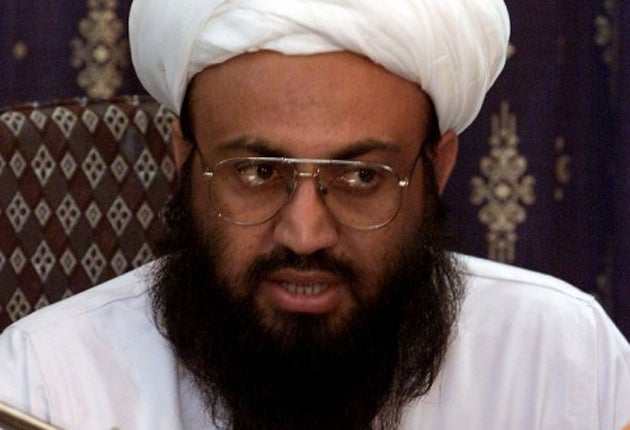
He was the man they called the mullah with a human face, the internet mullah, or the Rudolph Hess of the Taliban. Wakil Ahmed Muttawakil was the Taliban's foreign minister. It was he who in October 2001, a month after 9/11 and weeks before the US-led invasion of Afghanistan, broke ranks with the hardline clerical leadership and tried to broker a peace deal with Washington.
Eight years on, as the West struggles to form a coherent policy on Afghanistan amid mounting domestic opposition to the war, Mullah Muttawakil has claimed that the West has repeatedly squandered chances for peace.
"We have seen a lot of fighting since then, a lot of blood has been spilt, all for what?" he asked. "They are saying now that they will talk to some of the Taliban. That is what I said to them just after the war. I offered to put them in touch with the relevant people. Their answer was to put me in jail."
The policy of talking to the Taliban, now adopted by the US and Britain as part of their eventual exit strategy, ought to have been implemented eight years ago, when the Taliban were at their lowest ebb, he said. Now, he warns that they have tasted military success in the field against Western forces and will be harder to defeat. They also know that Western forces' involvement in Afghanistan is becoming unpopular in Europe and America.
"They ignored the Taliban who just got stronger in Pakistan. This was the result of not negotiating but depending on military means," he says.
Mr Muttawakil, who rose to prominence as a close adviser of Mullah Omar, fled to Pakistan along with the one-eyed leader after the US and opposition Northern Alliance seized control of Kabul. He returned after assurances by Hamid Karzai, he says, that he was not on any wanted list. But he was arrested by the Americans and spent the next 18 months in custody, first at Kandahar and then at the Bagram military base. The former foreign minister was eventually freed without charge, and then asked by Mr Karzai to open dialogue with factions of the Taliban. Ironically, when he ran in the election in 2005 (he lost), the former minister was viewed as a force for moderation in the Pashtun south.
Recently he was among a group who travelled to Mecca to hold Saudi-sponsored talks with representatives of the Taliban. "One of the main reasons I came back to Afghanistan was to say to the new government, 'Look, we are all Afghans, there are people in the Taliban who want to put the past behind them and join the political process.' I tried to say the same to the Americans, but they were not interested. All they wanted to know at the time was where Mullah Omar was, where Osama bin Laden was. I did not know. Would they tell me, someone returning to Afghanistan, where they were hiding? I still don't know where they are."
Mr Muttawakil says he was not physically mistreated, "but there was mental abuse. I was not allowed to sleep, I was not given enough water, I was threatened. But conditions improved and I was given books. After my release I was encouraged to talk to some of the Taliban leaders. You can bring a few in the Taliban over, but that is not going to stop the war. For that you need to talk to the leadership.
"But Mr Karzai and Nato want them to declare they will no longer fight, and the Taliban want all foreign troops to leave first. So there has to be compromise. If you do not speak to the Taliban there will be no solution."
As a high-ranking member of the Taliban regime, Mullah Muttawakil espoused the views of a medieval fundamentalist. "We want to live a life like the Prophet lived 1,400 years ago," he once told an interviewer. Now he blames international isolation for the lack of reform. "We really only had relations with Pakistan, Saudi Arabia and a few other countries. Things could have been different if the rest of the world was open to us."
Did isolation justify the brutal oppression of women, the general suppression of human rights, and the destruction of the treasured Buddha shrine at Bamiyan? The mullah looks uncomfortable."There were mistakes made, I think we have to accept that," he said. "We were trying to relax some laws, but there was opposition from some of our religious scholars on things like women's issues. I was against what was done to the Buddha statue, and so was the minister of cullture. We were for just scratching the face [of the statues] but that had already been done. The matter went to the supreme court and they decided that the faces can be destroyed. There was nothing I could about it."
There are new worries that reconciliation with Taliban figures will compromise human rights gains. Mr Muttawakil insists that everything can be negotiated. "It is up to the Afghan people to decide what they want. They should be able to do that without interference from outsiders. And that includes al-Qa'ida. We must make sure that al-Qa'ida does not become an obstacle to peace."
Taliban 2001: Where are they now?
Sayed Rahmatullah Hashemi, translator to Muttawakil in 2001, joined the Taliban at age 16 and after its defeat moved to Quetta, Pakistan to finish his high school education. Then in 2006, at the prompting of an American friend, he applied to study at Yale University in the US and was accepted, provoking the fury of some conservatives.
The career of Abdul Salaam Alizai exemplifies the way Afghan tribal leaders can change their allegiances. After fighting the Soviets, this Pashtun leader of the southern Alizai tribe, joined the Taliban and was said to be close to Mullah Omar. But in 2006, he switched sides, abandoning the Taliban, who last year killed several of his bodyguards in an attempt on his life.
After the 9/11 attacks, Abdul Salam Zaeef, the regime's ambassador to Pakistan, was the Taliban's public face, but in 2002 he was sent to Guantanamo Bay. In a book published in 2006 describing his ordeal he said the "confession" he signed on his release ran: "I am a Talib, I remain a Talib. I have no connections with al-Qa'ida."
Join our commenting forum
Join thought-provoking conversations, follow other Independent readers and see their replies
Comments