Police search for lost parents of China's stolen children
New website aims to return child victims of trafficking to their homes

For free real time breaking news alerts sent straight to your inbox sign up to our breaking news emails
Sign up to our free breaking news emails
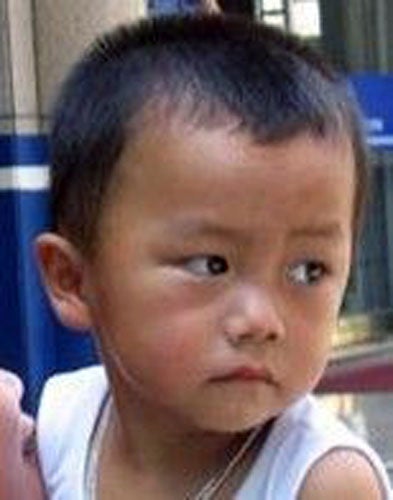
They gaze out at the camera with every variety of human expression – fear, hope, doubt, bafflement, dread. Some are asleep. One gapes with huge eyes. Some of the tiniest manage a sunny smile. But in truth, these children have little to smile about. What binds them together is that all of them were whisked away from their homes by criminal gangs and sold to families desperate enough to buy a child because they either want a son or are unable to have a child themselves.
A newly launched Chinese police website is aimed at reuniting scores of children found during a recent police crackdown on the trade.
"It's the first time the Ministry of Public Security has published data about children whose parents couldn't be found through the national DNA database," lawyer Zhang Zhiwei, who volunteers with a non-governmental organisation called Baby Come Home, told the China Daily newspaper.
The latest police campaign, prompted by widespread anger at poor enforcement of often lax trafficking laws, has rescued more than 2,000 missing children since 9 April.
The ministry hopes the website, called "Babies Looking for Home", will help them track down the relatives of some 60 rescued children they have yet to reunite with their families.
The main impetus behind the trade is China's traditional preference for male children. But girls and women are also seized, partly to feed the demand of unmarried sons for brides, but also to work as labourers. Some children are snatched to serve as props for beggars, while women are kidnapped and sold into prostitution. Some poor rural families sell their girls so they can try for a boy, getting around the one -child policy.
The ministry reports that between 30,000 and 60,000 children are reported missing in China every year, but it is impossible to know with any certainty how many of those are caught up in trafficking. The national database only has records of around 30,000 in total.
Babies are not the only victims: older children are also taken. Some boys are sold to work in illegal brick kilns in the Chinese heartland. Many of the hundreds rescued in the past two years were still wearing their school uniforms at the time.
The database has plenty of information about the children – DNA provided by the children's parents is shared among the 236 laboratories in China that are equipped to test it. Any children whom the authorities suspect of having been abducted, or children whose history is unclear, are also tested.
Last week, 42 suspected traffickers were picked up for allegedly selling 52 children in the north of China.
But despite the best efforts of police, reuniting the children can be difficult: often they do not know where theycome from, or the names of their parents, and in many cases the children have formed bonds with their new parents, further complicating the task of reuniting them with their families. But the website is a first step.
Tang Weihua, a mother who lost her five-year-old son in 1999, told local media, "Even if I can't find my boy's photo on the website today, it's a blessing for desperate parents like us who have nearly lost hope."
Subscribe to Independent Premium to bookmark this article
Want to bookmark your favourite articles and stories to read or reference later? Start your Independent Premium subscription today.
Join our commenting forum
Join thought-provoking conversations, follow other Independent readers and see their replies