Q&A: Why has there been such a rise in the number of UK soldiers killed?
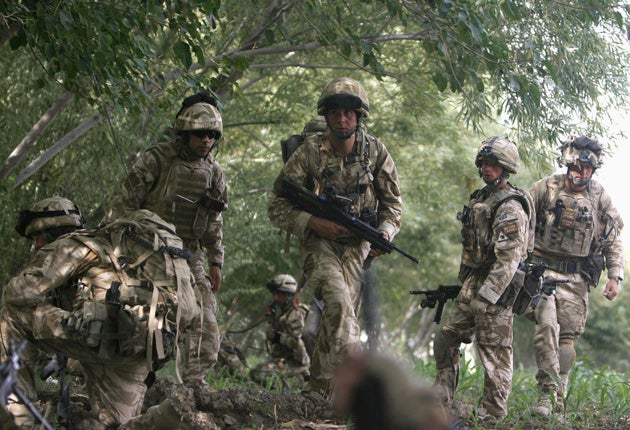
Q: What are the reasons behind this rise in the number of British service personnel being killed?
A: British and US forces are engaged in a large-scale operation to clear a section of the Helmand river valley of Taliban fighters before national elections in August. Increased combat brings the risk of increased casualties. But there was a rise in the number of deaths long before this operation began. IEDs (improvised explosive devices – mainly roadside bombs) used by the Taliban have taken a heavy toll. In the latest wave of killings – 15 in nine days – such blasts have killed 12. This was a key part of insurgents' tactics in Iraq and there is evidence of this technology being transferred to Afghanistan. For the insurgents this is a low-risk scenario, inflicting casualties without open combat with Nato forces.
Q: What is being done to counter the threat of IEDs and mines?
A: This has been the consuming question for the British military and for which there is still no clear answer. The "Snatch" Land-Rovers, below, with their relatively light protection, got hit repeatedly and their use is now restricted. The main problem in replacing them has been that the Army's long-term armoured vehicle programme is hopelessly out of date. A whole series of "off the shelf" vehicles have been bought from funding under Urgent Operational Requirements. The Government is right in claiming that a lot of money has been spent on these. The criticism is that these large sums have not been spent wisely and new vehicles, like the Vikings and Vectors, are also vulnerable. The truth is that no armoured vehicle can be 100 per cent safe, with the insurgents trying to counter upgraded armour and improve their own bomb-making tactics. Mainline battle tanks have been disabled by roadside bombs; American Abrams in Iraq and Leopards used by the Danes in Afghanistan being prime examples.
Q: So, are helicopters the answer?
A: It is certainly the case that using air rather than roads will give the Taliban less to aim at. The tide of Russia's war in Afghanistan was changed when the Americans started giving the mujahedin Stinger missiles, but Western aircraft are now far better protected. This is not, of course, the first time in recent British history that helicopters have been needed to counter threats from roadside bombs. Helicopters became the regular means of transport in South Armagh for that reason, with Bessbrook near Newry becoming the busiest heliport in Europe. The Americans, who are moving large numbers into Helmand and Kandahar, are bringing their own fleet, but for the British shortages will remain, despite the transfer of some Merlins after the drawdown from Iraq.
Q: What are the issues regarding troop reinforcement?
A: A chronic shortage of troops on the ground has been the fundamental problem for British land forces in the war. Strategic ground held by the Taliban would be taken after heavy fighting and then have to be abandoned because there were not enough numbers to keep it occupied. The enemy would simply slip back into those positions and re-start attacks. After the withdrawal from Iraq, the Army high command, backed by the then Defence Secretary, John Hutton, recommended that up to 2,500 extra troops should be sent as reinforcement to Helmand. An additional reason for the plea was the belief that with US forces arriving in Helmand in large numbers, the mission there was in danger of turning into an American show and it was important to raise the level of British commitment as well. Gordon Brown, under Treasury lobbying, turned down the request, agreeing instead to the temporary deployment of about 700 for the duration of the coming Afghan elections. After the present row, a review is due after the election period next month.
Q: What does the immediate future hold?
A: Operations by US and British forces are to be scaled back just before the elections and in the immediate aftermath of the polls so as not to provoke violence. But both sides see the coming months as a crucial time in the present conflict, and the Americans, in particular, want to see significant improvement in the security situation by the end of the year. The new US commander of Nato forces, General Stanley McChrystal, has made it clear that the policy is to drive out the Taliban, capture ground and then hold it. There will, thus, be many more missions and with them, more British, American and Afghan casualties.
Join our commenting forum
Join thought-provoking conversations, follow other Independent readers and see their replies
Comments
Bookmark popover
Removed from bookmarks