Workers discovered new pools of radioactive water leaking from Japan's crippled nuclear complex, officials said Monday, as emergency crews struggled to pump out hundreds of tons of contaminated water and bring the plant back under control.
Officials believe the contaminated water has sent radioactivity levels soaring at the coastal complex and caused more radiation to seep into soil and seawater. Crews also found traces of plutonium in the soil outside of the complex on Monday, but officials insisted there was no threat to public health.
Plutonium — a key ingredient in nuclear weapons — is present in the fuel at the complex, which has been leaking radiation for over two weeks, so experts had expected some to be found once crews began searching for evidence of it this week.
Tokyo Electric Power Co. official Jun Tsuruoka said only two of the plutonium samples taken Monday were from the leaking reactors. The other three were from earlier nuclear tests. Years of weapons testing in the atmosphere left trace amounts of plutonium in many places around the world.
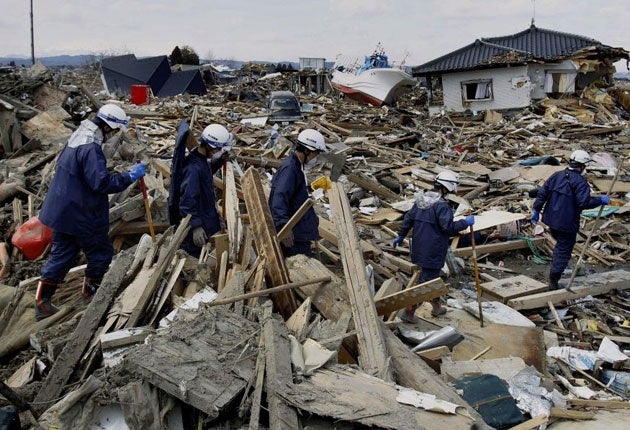
The Fukushima Dai-ichi power plant, 140 miles (220 kilometers) northeast of Tokyo, was crippled March 11 when a tsunami spawned by a powerful earthquake slammed into Japan's northeastern coast. The huge wave engulfed much of the complex, and destroyed the crucial power systems needed to cool the complex's nuclear fuel rods.
Since then, three of the complex's six units are believed to have partially melted down, and emergency crews have struggled with everything from malfunctioning pumps to dangerous spikes in radiation that have forced temporary evacuations.
Confusion at the plant has intensified fears that the nuclear crisis will last weeks, months or years amid alarms over radiation making its way into produce, raw milk and even tap water as far away as Tokyo.
The troubles at the Fukushima complex have eclipsed Pennsylvania's 1979 crisis at Three Mile Island, when a partial meltdown raised fears of widespread radiation release, but is still well short of the 1986 Chernobyl disaster, which killed at least 31 people with radiation sickness, raised long-term cancer rates, and spewed radiation across much of the northern hemisphere.
While parts of the Japanese plant has been reconnected to the power grid, the contaminated water — which has now been found in numerous places around the complex, including the basements of several buildings — must be pumped out before electricity can be restored to the cooling system.
That has left officials struggling with two sometimes-contradictory efforts: pumping in water to keep the fuel rods cool and pumping out — and then safely storing — contaminated water.
Hidehiko Nishiyama, a spokesman for Japan's Nuclear and Industrial Safety Agency, called that balance "very delicate work."
He also said workers were still looking for safe ways to store the radioactive water.
"We are exploring all means," he said.
The buildup of radioactive water first became a problem last week, when it splashed over the boots of two workers, burning them and prompting a temporary suspension of work.
Then on Monday, officials with Tokyo Electric Power Co., which owns and runs the complex, said that workers had found more radioactive water in deep trenches used for pipes and electrical wiring outside three units.
The contaminated water has been emitting radiation exposures more than four times the amount that the government considers safe for workers.
The five workers in the area at the time were not hurt, said TEPCO spokesman Takashi Kurita.
Exactly where the water is coming from remains unclear, though many suspect it is cooling water that has leaked from one of the disabled reactors.
It could take weeks to pump out the radioactive water, said Gary Was, a nuclear engineering professor at the University of Michigan.
"Battling the contamination so workers can work there is going to be an ongoing problem," he said.
Meanwhile, new readings showed ocean contamination had spread about a mile (1.6 kilometers) farther north of the nuclear site than before but is still within the 12-mile (20-kilometer) radius of the evacuation zone. Radioactive iodine-131 was discovered offshore at a level 1,150 times higher than normal, Nishiyama, a spokesman for the Nuclear and Industrial Safety Agency, told reporters.
Amid reports that people had been sneaking back into the mandatory evacuation zone around the nuclear complex, the chief government spokesman again urged residents to stay out. Yukio Edano said contaminants posed a "big" health risk in that area.
Gregory Jaczko, head of the U.S. Nuclear Regulatory Commission, arrived in Tokyo on Monday to meet with Japanese officials and discuss the situation, the U.S. Embassy said in a statement.
"The unprecedented challenge before us remains serious, and our best experts remain fully engaged to help Japan," Jaczko was quoted as saying.
Early Monday, a strong earthquake shook the northeastern coast and prompted a brief tsunami alert. The quake was measured at magnitude 6.5, the Japan Meteorological Agency said. No damage or injuries were reported.
Scores of earthquakes have rattled the country over the past two weeks, adding to the sense of unease across Japan, where the final death toll is expected to top 18,000 people, with hundreds of thousands still homeless.
TEPCO officials said Sunday that radiation in leaking water in Unit 2 was 10 million times above normal — a report that sent employees fleeing. But the day ended with officials saying that figure had been miscalculated and the level was actually 100,000 times above normal, still very high but far better than the earlier results.
"This sort of mistake is not something that can be forgiven," Edano said sternly Monday.
Join our commenting forum
Join thought-provoking conversations, follow other Independent readers and see their replies
Comments