Refugees head home after army scatters the Taliban
Schools and shaving show normal life is returning to Swat Valley after reign of terror
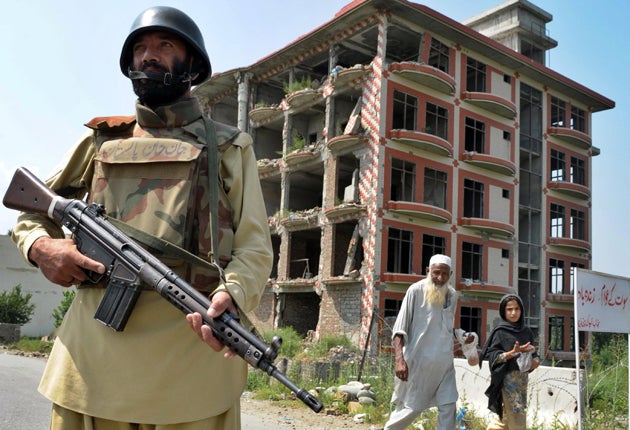
Two months after fleeing their picturesque corner of the Pakistani hills in terror, the residents of the Swat Valley are going home, and cautiously picking up their lives again.
Victims of a brutal campaign of beheadings, school burnings and extortion by the Taliban, two million of them fled as the Pakistan army launched a major offensive. But now they are going back and the relief is palpable.
"Before, the Taliban wouldn't let us live," says Azam Khan, 21, from the Charbagh area, standing amid a long convoy of vehicles waiting to enter the valley. "They were in control and would use their force in the streets." Now, after weeks of fierce fighting, he says things have changed. "The situation is better now. The army is here. Hopefully peace will also be here to stay." he says,
Mr Khan is in a seemingly endless queue of Swat residents streaming back home after the Pakistan army declared that they had beaten the Taliban. Ahead and behind, hundreds of small trucks creep along, heaving with furniture, livestock, and tight-packed passengers eager to resume their lives. Many of the vehicles are now flying the Pakistan flag, a rare sight in a valley that had slipped out of government's control over the past two years.
As the slug-paced convoy winds upwards and around the vast hills that encircle Swat, there are signs of life returning to normal. In the village of Barikot, some shops have reopened. Fruit vendors shamble around with freshly plucked goods. And where thick-bearded, Kalashnikov-toting Taliban fighters once manned checkpoints, Pakistani soldiers now maintain a highly visible presence. The main town of Mingora bears the scars of intense street battles. In the early stages of their advance, the Taliban had beseiged Mingora, mounting deadly bomb attacks on schools, the electricity grid and police stations. Now the town bears more scars of devastation from the savage street battles between troops and the militants.
The walls of a petrol station are honeycombed with bullet marks, and much of the roof has collapsed, with frayed wiring dangling. Small craters on the streets mark where the Taliban had detonated improvised explosive devices targeting troops on the move. An artillery shell had punched a large hole in the side of a new home. Numerous barriers give the once-bustling town the edgy feel of a war zone. Razor-wire, concrete blocks, barrels and large stones lie athwart positions where army soldiers were hunkered down during the fighting.
"It was a very tough fight," Major Nasir Ali Khan says. "The militants had captured many vantage points from where they were targeting us. They even captured the Continental Hotel and used it as a base. Our headquarters at Circuit House were under siege for a month. The Taliban were firing rockets at us."
But amid the wreckage, there are glimpses of a brighter life after the Taliban. In Fazl Khaliq's barber shop, three men sit in the red leather chairs, their faces caked with shaving foam. A flurry of swift strokes with cut-throat razors, and days of stubble are cleared.
Shaving was banned by the Taliban, and Mr Khaliq's 27-year-old business verged on ruin. "The Taliban came to this shop and said that we couldn't shave any customers. They had told everyone to grow a beard or else," he recalls. "Business isn't that great, but at least now I can shave customers." At the nearby Green Square, an armed policeman stands guard as supplies arrive for newly-reopened shops. Just months ago, this same spot was known as "Bloody Square" for the slaughters perpetrated there. Shopkeepers would arrive in the morning to find corpses hanging from the electricity pylons, with notes attached warning not to remove the bodies before an appointed time, so that they would serve as a warning to others.
The mere presence of the uniformed policemen marks a significant change. Before the military operation, police had disappeared from Swat's streets. The Taliban had killed many, and suicide bombers had leveled the main police station. As morale plummeted, policemen fearing for their lives took out ads in local newspapers announcing their retirement from the force, or moved around in plain clothes.
Children have also started returning to school, albeit in small numbers. Nearly 200, mainly girl's schools, were destroyed by the Taliban. Many were struck by suicide bombers, and others were torched. As the people of Swat wait for the much-promised reconstruction of their valley, the government has set up small tents for teaching. But even in some of the private schools that remained intact, attendance has been low. At one school in the Haji Baba neighbourhood, only 30 of the 700 children enrolled turned up.
In Cheena market, women now roam and shop freely. The Taliban's banners warning them not to shop have been taken down. Shoukat Ali, the owner of a women's clothing store, can barely suppress his joy. "Women now come here freely by themselves," he says, with a broad, teeth-baring grin. "No one stops them. It was difficult before. The only time I could serve women was by pulling down the shutters and showing them fabric quietly. Now, my only problem is the electricity cuts. The Pakistan army has done a great job. Long live the Pakistan army." Praise for the Pakistan army is also new to Swat. During previous military operations, the local population was angered by heavy civilian losses through inaccurate artillery fire and failure to make a dent in the Taliban's activities.
Many would even quietly allege that the military was secretly colluding with the insurgents. This time it is different: there have been smarter tactics, and a hardening of resolve. The army punished the militants deep in their territory for the first time, killed a slew of local commanders and destroyed key headquarters. The madrassa at Imam Dehri, a village across the river Swat, where local commander Maulana Fazlullah began issuing his sulphurous sermons, has been razed. "We also cut the cables of the chairlift that he used to operate before he became this big commander," says Major Khan with pride.
But the nagging fear among those who have braved the journey back to Swat is that the militants may also return. "The people, in their hearts, are afraid that the Taliban can still come back," says Azam Khan as he clambers back aboard his truck. "They say the Taliban haven't been killed, that they are just hiding, waiting for their moment."
Countdown: The road to recovery
*1995 Radical cleric leader Sufi Muhammad Khan demands Islamic law in Swat. Violence erupts after paramilitaries begin operations against him. Provincial government agrees to Islamic courts in Swat, but peace-deal disagreements lead to sporadic violence.
*25 October 2007 Government forces move in to fight Taliban. Between 400,000 and 600,000 people leave.
*21 May 2008 Taliban signs 16-point peace deal agreeing to disband militia and stop attacks. Violence continues, militants saying government not honouring peace deal.
*August-December 2008 Army moves into Swat with tanks amid fierce fighting. Hundreds are killed and thousands of homes destroyed. Militants control 75 per cent of the region. Girls are banned from going to school.
*August 2009 As Pakistan troops succeed in routing the Taliban – at least for now – some of the two million refugees begin trickling back.
Join our commenting forum
Join thought-provoking conversations, follow other Independent readers and see their replies
Comments