Taliban in policy shift on beards and burqas
Negotiations with Afghan President Hamid Karzai reveal new pragmatism ahead of US offensive
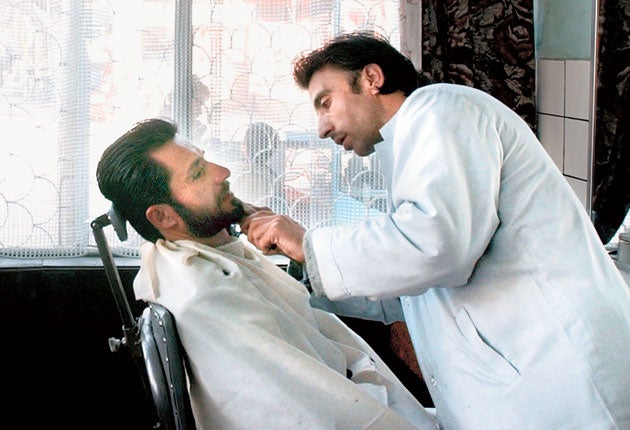
The Taliban, whose extreme interpretation of Sharia law and its harsh punishments made Afghanistan one of world's most repressive and reviled regimes, have agreed to soften their position on such things as beards and burqas as part of a trade-off in negotiations with the Afghan government.
Afghanistan is increasingly the focus of international diplomatic attention following a major international conference in The Hague this week. It will surface on the fringes of the G20 summit and dominate this week's Nato meeting in Strasbourg. Hillary Clinton, the US Secretary of State, floated the idea of talking to "moderate" Taliban at the Hague conference, saying that those who gave up "extremism" would be granted an "honourable form of reconciliation".
Publicly, a Taliban spokesman yesterday rejected the American offer, describing it as "a lunatic idea". But preliminary talks between President Hamid Karzai's government and Taliban insurgents are already under way, and appear to have yielded a significant shift away from the Taliban's past obsession with repressive rules and punishments governing personal behaviour. The Taliban are now prepared to commit themselves to refraining from banning girls' education, beating up taxi drivers for listening to Bollywood music, or measuring the length of mens' beards, according to representatives of the Islamist movement. Burqas worn by women in public would be "strongly recommended" but not compulsory. The undertakings have been confirmed by Mullah Abdul Salaam Zaeef, who was the Taliban's ambassador to Pakistan in the late 1990s, and who has been part of a Saudi-sponsored peace initiative.
The initiative also comes, according to former senior members of the movement, at a time when the Taliban are intensely apprehensive about the immediate future with an impending military and diplomatic offensive by the Obama administration.
According to Christoph Hörstel, a German analyst of Afghan affairs, Mullah Zaeef has confirmed that the Taliban are no longer insisting that their members should form the government. Instead, they would agree to rule by religious scholars and technocrats who meet with their approval following a national loya jirga, or community meeting, attended by public figures. The demand for a loya jirga could be met as early as next month if President Karzai convenes a meeting of elders to determine who should rule when his term officially ends on 21 May.
The Independent revealed earlier this year that the new head of Saudi intelligence, Prince Muqrin Abdulaziz al Saud has taken personal charge of organising a dialogue between the Karzai government and the Islamists. The Saudis are also said to have been reassured by the Obama administration that the US was not following a purely military solution but would welcome establishing contacts with some strands of the insurgency. Mrs Clinton reiterated this message this week.
Although the new stance shows a shift in the Taliban posture, some demands are certain to be rejected by both President Karzai's government and the Americans. They include the stipulation that all foreign forces should withdraw from Afghanistan within six months. According to a former Taliban minister, however, some of the more aggressive demands are for "internal consumption" within the radical Muslim groups involved in the insurgency in Afghanistan and Pakistan, and the Taliban negotiators would be content, for the time being, with gestures such as removing from a UN blacklist the names of some senior figures in the insurgency.
The Islamist group want a guarantee of safe conduct for Mullah Mutassim and others in Taliban delegations. "But there are others, people like me who are no longer part of the Taliban and people who have been helping with the peace process who are still on the blacklist. We believed our names would be lifted from the blacklist, but that has not happened."
Banned by the Taliban: Cassettes, kites and schools for girls
Televisions, pop music and kite flying were banned at the height of the Taliban's rule between 1996 and 2001. Women were only allowed outside with a male relative, men's beards had to be long enough to exceed a fist clasped at the chin, and anyone who broke the rules risked being beaten - or worse. Public executions – stonings, shootings and hangings – were held in football stadiums and on street corners. Gangs of "morality police" would patrol the streets in pick-up trucks looking for any signs of secularism. Television sets were rounded up and smashed. Cassette tapes were strung up on telegraph poles as a warning. Music with instruments was banned. Images of people and animals were officially outlawed. Girls' schools were closed and women were only allowed to work in their homes. Starving widows weren't even allowed out to beg. Today Taliban rule where it prevails, such as in Wardak, remains brutal but inconsistent. Some men are spared the need for fist-length beards, if they travel to Kabul.
Join our commenting forum
Join thought-provoking conversations, follow other Independent readers and see their replies
Comments
Bookmark popover
Removed from bookmarks