Tamils on the road as Sri Lanka opens refugee camps
Six months after bloody end of the civil war, civilians are finally allowed to leave – temporarily
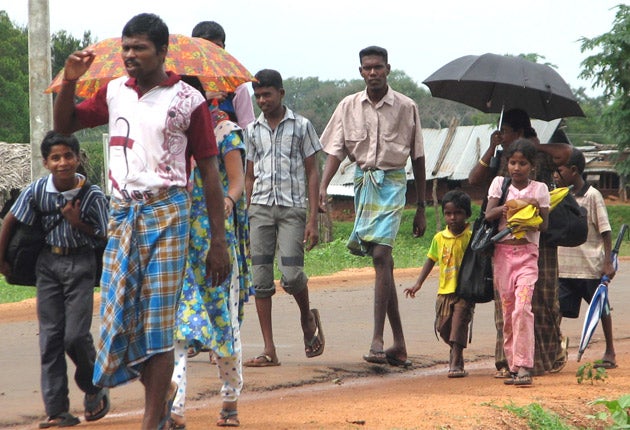
Thousands of Tamil civilians streamed out of the controversial refugee camps where they have been detained for months yesterday, after the Sri Lanka government told them they were free to leave temporarily. But the bar on international monitoring of the camps and the refugees' movements remained in force.
A full six months after the conclusion of the country's long-running civil war, officials said the civilians were able to leave the overcrowded camps for up to 10 days, although they would have to register with the authorities wherever they went. Major-General Kamal Gunaratne, the officer in charge of the biggest of the camps, Menik Farm, told the BBC that anyone who failed to return would be "tracked down".
Human rights groups said that while the move did not amount to complete freedom for the civilians, it was a positive step.
"It's good that they are out of the camps but there is another entire set of problems that will come up if these people are not properly monitored and protected," said Brad Adams, a senior spokesman for Human Rights Watch. "And then there are also the reports that up to 11,000 Tamils are still being held as security suspects. That could be higher than the number of [rebel fighters] who were fighting in the last stages of the war."
Up to 300,000 Tamil refugees were forced into camps in the aftermath of the fighting which saw the remnants of the once powerful Liberation Tigers of Tamil Eelam (LTTE) crushed and its leadership killed. Conditions inside the camps, which were surrounded by armed guards and barbed wire, were widely condemned by aid groups. The civilians complained of lack of water and insufficient access to information about their fate. Journalists were only permitted access on occasional, escorted trips.
Under international pressure, the government pledged that the majority of the civilians would be returned to their homes by the end of the year, once mine clearance operations had been completed and all those held in the camps had been thoroughly vetted by security. Currently, an estimated 127,000 civilians are still in the camps and officials now say all the facilities will be closed by the end of January. Six thousand were reported to have left by yesterday lunchtime.
Those taking the opportunity to leave the camps yesterday said they had received no help in getting where they wanted to go. "I want to go back to my village in Kilinochchi but I don't have any money for the journey," 38-year-old V Pushpavathi, who has been in the camp for seven months, told Agence France-Presse. "But I want to make use of this opportunity to go and visit some relatives who are living close by."
Another civilian waiting for a bus on which to leave, E Thavamani, added: "We have not received any assistance from the authorities to go and see our relatives, but this is better than being locked inside."
The authorities have been widely criticised for failing to allow aid agencies proper access to the camps. Concern has also been raised about providing the civilians with adequate help to allow them to resettle.
Senior UN relief official John Holmes, who recently visited Sri Lanka, said it would be years before normality returned to the north of Sri Lanka, an area that was held by the LTTE until the army launched the operation that drove them out.
"People face major problems in terms of shelter. Most of the houses... which people have left, they find in ruins when they return so there are big issues there," said Mr Holmes.
Britain's International Development minister, Mike Foster, welcomed the release of the displaced people. But he added: "Now it is imperative that humanitarian agencies be allowed full access to give them the help they need in all the places that they return to."
The move to release the civilians comes as Sri Lanka prepares for a presidential election scheduled for 26 January, which will pit the two most prominent figures in the war's last stages against each other. President Mahinda Rajapaksa has been challenged by the former army chief Sarath Fonseka, supported by a coalition of opposition parties, in a vote that could split the Sinhala Buddhist establishment. The two men were once close but fell out after the conclusion of the war when General Fonseka claimed he was sidelined.
Join our commenting forum
Join thought-provoking conversations, follow other Independent readers and see their replies
Comments