The Big Question: As Nepal becomes a republic, are there many absolute monarchs left?
Why are we asking this now?
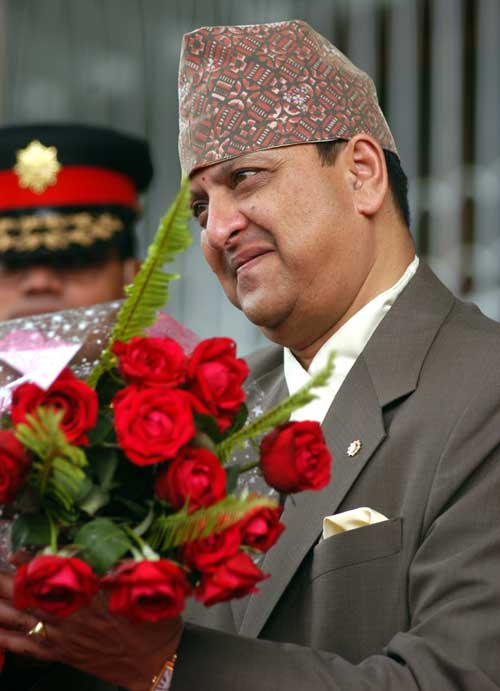
Because after 240 years of rule, Nepal has abolished its monarchy – the last Hindu monarchy in the world. King Gyanendra woke up yesterday as a divine ruler, but ended it as a common citizen. Not only has he lost his title and a generous royal salary, but has also had to hand over the keys to the royal family's seven palaces, which will now be turned into museums.
The king has been erased from the currency, and all references to the monarchy in the national anthem removed. But there was no great march on the palace or public guillotining. It has all come about because of Nepal's new constitutional set-up. The first task of its new assembly was to abolish the monarchy. Not bad for the first day at the office.
Why is Nepal ending its monarchy?
The monarchy's demise and the formation of a secular state was a key plank of a peace deal that saw Maoist rebels lay down their weapons after years of fighting, in which 13,000 people died. The royal household had already lost a lot of its influence after handing power to parliament in 1990. But even after that, the king retained some key powers, such as the right to dissolve parliament and to direct the armed forces.
In truth, King Gyanendra was the catalyst to the monarchy's demise. He only ascended to the throne after King Birendra, his brother, was shot dead along with eight other royals by the crown prince in 2001. Unlike his brother, Gyanendra was suspicious of parliament, ultimately dissolving it in 2002. He had hoped that the move would show the strong leadership he thought necessary to defeat the Maoists. The result was deep unpopularity and street protests. Throw in an unpopular playboy son, Paras, and the family had racked up dissenters on all sides.
So where do royals still have power?
Despite the reforms in Nepal, Asia is still where the most powerful monarchies are to be found. Probably the most powerful remains Hassanal Bolkiah, the fabulously wealthy Sultan of Brunei. He is not only the head of state, but also the head of the government. He has absolute power, but seeks advice from a series of councils and unelected ministers, much as the absolute rulers of Europe did in bygone centuries. The Brunei ruler has come from the same dynasty since the 15th century, but even a royal family with such longevity has had its share of unpopularity. There was a small revolt against them in the 1960s.
Other countries to retain absolute monarchies include states in which the monarchs are supported by oil and gas resources, such as Oman, Qatar and Saudi Arabia. Jordan's monarch still has considerable powers. He appoints the prime minister and all ministers, but the country also has a democratic element – a fully elected Chamber of Deputies.
And in countries outside Asia?
Swaziland is home to the last remaining absolute monarchy in Africa. The current leader is King Mswati III, whose father, King Sobhuza II, ditched the country's parliamentary constitution in 1973 in favour of reverting to a system based on the empowerment of tribal leaders. This also had the welcome effect of enriching the king and his inner circle. It turned Swaziland from a beacon of hope for African democracy to a feudal throwback almost over night. King Mswati III is currently on wife number 13.
So most just have symbolic power?
That's the case in Europe, with countries including Belgium, Sweden and the Netherlands retaining a constitutional monarchy. But even monarchs with symbolic power can retain an important role. Thailand has a constitutional monarchy, but its 80-year-old King Bhumibol Adulyadej – after 62 years the world's longest serving-monarch – is greatly revered and continues to have a significant role in holding together the country's fractious political make-up. And in Spain, King Juan Carlos I played a big part in the country's transition from fascist dictatorship to the current parliamentary system, after Franco appointed him as his successor.
Once they're gone, do they ever return?
It has been known. After all, England had a go at being a republic. But after an interregnum of 11 years, the British monarchy returned in 1660 – albeit without the absolute powers enjoyed by Charles I. And while the Afghani king was dethroned in 1973, he has since returned and is treasured as a figure of national importance. And lost regal powers can sometimes return, as they did in Liechtenstein. In 2003, Prince Hans-Adam II won the power to abolish the government at will, dismiss ministers and even veto parliamentary legislation. The only way he can lose the powers is via a referendum demanding an end to the monarchy.
But there remain some all-powerful regimes that continue to behave like absolute monarchies, even if they go by another name. The Assad family has ruled Syria since 1970, while North Korea's leader, Kim Jong-il, took over from his father, Kim Il-sung, who had led since the nation's birth in 1948.
What does a royal do when they're sacked?
Well, some have a go at just about everything. Just ask Prince Yi Seok, who has tried to bring back the South Korean monarchy. He says he is related to Sunjong, the country's last emperor, who ruled until 1910. He has been in the army, taught history, run an off-licence and has even been a Las Vegas-style singer – his rendition of Tony Bennett's "I Left My Heart in San Francisco" is said to be particularly stirring. He argues that the monarchy should return for the sake of tourism, but so far, his pleas have only earned him a lecturing tour on the history of the Korean royals.
As for the newly unemployed Nepalese royal family, the government has hinted that they may have to be given some state funding and an armed guard.
Is our royal family in any danger?
Though we've grown used to the idea that our royal family have no real power and only fulfil state occasions such as the forming of a new government or the Queen's Speech, some say that there are real constitutional advantages to having a monarchy rather than a presidential system. Not least the BBC's interrogator-in-chief, Jeremy Paxman. In his book, On Royalty, he argues a ruling political elite would be just as bad. So should we abolish the monarchy? His conclusion is simple. "Why bother?"
The Nepalese are facing the sticky problem of how to go about replacing the monarchy. The Maoists, the biggest party in its new assembly, want their leader as president, sparking fears of a Communist takeover. Others favour the instalment of an established figure as head of state. Life after monarchy is not necessarily straightforward.
Is the game up for the world's monarchies?
Yes...
* Most monarchies have disappeared now – it's just a matter of time before such an unfair system of rule disappears
* The strongest monarchies are upheld by being oil-rich. When that dries up, they'll be in trouble
* They are just used as a tourist attraction. When they no longer bring in the cash, monarchies will soon be abolished
No...
* Many have survived coups, revolutions and riots. They are remarkably resilient institutions
* It is impossible for the people to wrest control away from the royal family in countries with an absolute monarchy
* Even if monarchies disappear, there are still regimes in which one family has huge power. That's little different from a monarchy
Join our commenting forum
Join thought-provoking conversations, follow other Independent readers and see their replies
Comments
Bookmark popover
Removed from bookmarks