The dark side of Angkor's night visits
Plans to boost tourism by opening temple at night alarm conservationists
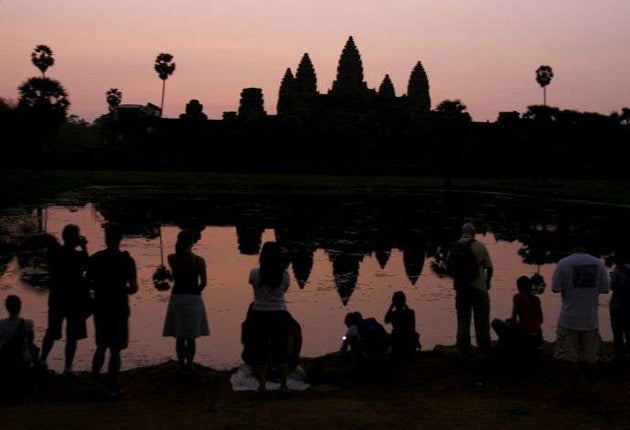
The magical temples of Angkor – already visited by around half a million tourists a year – could lure even more people if the Cambodian authorities go ahead with a controversial plan to open the 12th-century complex into the night.
In an effort to boost tourism at the site, officials at Angkor say visiting hours could be extended and lighting provided to give visitors a different experience. "We want tourists to see all views of the temple, even in the dark places where they may have not have seen some of the sculptures and statues," said an official, Bun Narith.
The plan is just one proposal being considered by officials who are trying to counter the first slump in visitors to Angkor, which for a decade has experienced a boom. Recent figures show a 14 per cent drop in visitors to the town of Siem Reap, where Angkor is located, compared with last year. The authorities have also called on hotel owners to reduce their prices.
Foreign tourism is hugely important to Cambodia, reportedly providing up to 75 per cent of its foreign currency earnings. Around 50 per cent of all tourists to the country end up visiting the temple complex, six hours' drive north of the capital Phnom Penh.
But the issue of tourist numbers is complex. Conservationists warn that boosting the number of people visiting Angkor, without doing more to control them when they are at the site, could have a detrimental effect.
"Angkor is colossal but the problem is that there is very little control over the movement of tourists," said John Sanday, country officer with the Global Heritage Fund. "It can handle the number of people that are there if they are co-ordinated – perhaps with tickets."
Already, there has been controversy about the installation of lights at Angkor. This week officials were forced to deny reports from tourists that the building's structure had been damaged by the lights. "This accusation that new holes were created simply is not true," said Phay Siphan, spokesman for the Cambodian Council of Ministers. "The installation will not involve any new holes being drilled."
Ahmed Bennis, a French lighting expert who was commissioned to install the new lights, said there would be no structural alterations made. "These new lights will use solar power and they will not be built into the structure of the temple," he said. "Because the lights are powered by the sun there will be no electricity cables at the site."
Angkor was removed from Unesco's World Heritage in Danger list in 2004, but conservationists remain concerned for its welfare. Last year, Unesco raised concerns about the impact that the growth of Siem Reap was having on Angkor's foundations.
The UN organisation said that a surge in demand for water had led to a massive increase in the amount of groundwater being pumped. Philippe Delanghe, the culture programme specialist at Unesco's Phnom Penh office, said: "There is a very important balance between the sand and water on which the temple is built. And if that balance is taken away then we might have trouble with collapse."
Angkor is believed to have been built as a funerary temple for King Suryavarman II to honour the Hindu god Vishnu. The sandstone blocks from which it was constructed were quarried more than 30 miles away and floated down the Siem Reap river.
Join our commenting forum
Join thought-provoking conversations, follow other Independent readers and see their replies
Comments