Warnings of nuclear disaster not heeded, claims former governor

For free real time breaking news alerts sent straight to your inbox sign up to our breaking news emails
Sign up to our free breaking news emails
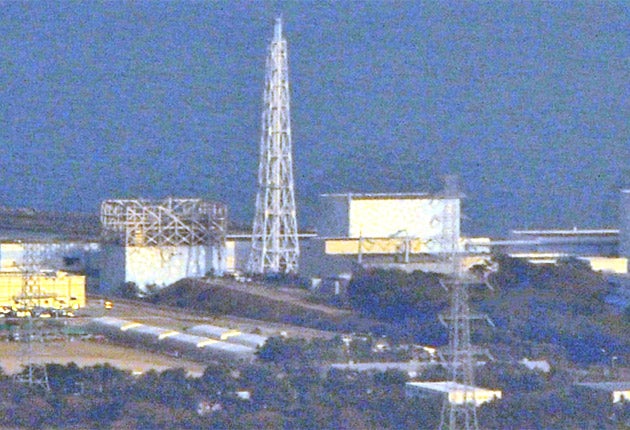
The former governor of Fukushima province has spoken of his frustration at the failure of the Japanese authorities to heed his warnings over the safety of the power plant that was stricken by the country's recent earthquake.
The story of Japan's epic disaster comes with a generous cast of Cassandra figures, the seismologists, conservationists and whistle-blowers ignored by the national nuclear planners. But 71-year-old Eisako Sato may be pre-eminent among them.
As governor of Fukushima Prefecture from 1988-2006 – "roughly half the life of the plant", he told journalists at Tokyo's Foreign Correspondents' Club earlier this week – he was initially an enthusiastic supporter of nuclear power, swayed like his predecessors after the government and utility giant Tokyo Electric Power Co. (Tepco) brought his prefecture jobs, subsidies and a chance to contribute to the national good.
In 1998 he conditionally agreed the controversial use of mixed oxide plutonium uranium (MOX) fuel at the plant. But he withdrew it after discovering a cover-up of reactor malfunctions and cracks. Later his doubts would grow.
"Between 2002 and 2006, 21 problems at the Fukushima plant were reported to my office," he said. The whistleblowers, including some employees at the plant, bypassed both Tepco and Japan's Nuclear and Industrial Safety Agency (NISA) because they feared, rightly, that their information would go straight to Tepco. Sato became an increasingly bitter critic of the plant and Japan's entire energy policy, directed by NISA's powerful government overseer, the Ministry of Economy Trade and Industry.
In 2006, he was forced to step down and was prosecuted and convicted in 2008 on bribery charges that he claims were politically motivated. Embittered, he wrote a biography called Annihilating a Governor explaining his concerns about nuclear power and how he was set up and wrongfully convicted by the prosecution. Largely ignored until March 11, the book is now at the top of the sales list. "Unfortunately, it took this tragedy to make it a bestseller," he laments.
Despite his new audience, he says Japan's big newspapers and TV companies continue to ignore him. "Those who say that nuclear power is dangerous, like myself, are treated as state enemies. This is a truly terrifying logic, is it not? Whoever it may be, be it a Diet [council] member or governor, no one has been able to fight such logic so far." He calls the national policy "nuclear absolutism." Sato says there was a dry run for the March 11 disaster last year after power stopped to pumps sending water to reactor 2 on June 17, 2010.
Tepco was repeatedly asked what would happen if the back-up diesel generators also failed but the company waived this concern away, he says. Last month's crisis was triggered when the magnitude 9 quake knocked out the plant's electricity and a 15-meter tsunami poured over the building housing the back-up generators which were only built to withstand a 5.7 meter wave.
Sato snorts at Tepco's famous statement immediately afterwards that the quake/tsunami was a "disaster beyond our expectations", pointing to the string of huge tsunamis that have battered Japan's eastern coastline for millennia and the steady stream of academic warnings about the probability of a seismic event beyond the capacity of the plant to withstand. "This was a disaster waiting to happen," he concludes.
And the lesson? Replacing Tepco's management won't solve anything, he says, because the logic of Japan's energy policies is that nuclear power generation is absolutely necessary. "So nuclear power must be seen as absolutely safe." Ordinary people must "take democracy into their own hands", he added. "If they do not, in 10 years time we will see another disaster. It's almost as though we are in a fascist country where information is hidden from the public. This is time for Japan to wake up and see what the situation is."
£30bn budget plan for reconstruction
Japan's government hasproposed a special 4 trillion yen (£30bn) budget to help finance reconstruction efforts and plans to build 100,000 temporary homes for survivors of last month's devastating earthquake and tsunami. The extra 4 trillion yen the Cabinet approved is expected to be only the first installment of reconstruction funding. About 1.2 trillion yen will go on fixing roads and ports and more than 700 billion yen will go to build temporary homes and clearing rubble.
"This is the first step toward rebuilding Japan after the major disasters," said the Finance Minister Yoshihiko Noda. Parliament is expected to approve the special budget next week. AP
Subscribe to Independent Premium to bookmark this article
Want to bookmark your favourite articles and stories to read or reference later? Start your Independent Premium subscription today.
Join our commenting forum
Join thought-provoking conversations, follow other Independent readers and see their replies