With the death of Boa Sr, her people and their songs fall silent forever
Final survivor of ancient tribe spoke of the sadness of having no one left to talk to
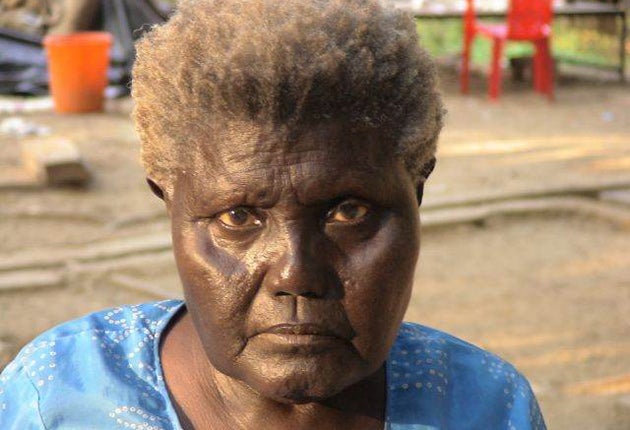
When Boa Sr sang in her own language, the result was gently hypnotic. "The earth is shaking as the tree falls, with a great thud," she sang, on a recording captured by linguists.
But the grey-haired, 85-year-old woman will not be heard again. And neither will her native tongue – Bo – aside from the recordings that have already been made. Campaigners revealed yesterday that the recent death of Boa Sr on India's remote Andaman Islands marked the end of the Bo tribe and the loss of a language.
"With the death of Boa Sr and the extinction of the Bo language, a unique part of human society is now just a memory," said Stephen Corry, director of the group Survival International. "Boa's loss is a bleak reminder that we must not allow this to happen to the other tribes of the Andaman Islands."
Boa Sr was the oldest member of the Great Andamanese, an indigenous group of the Andamans, a cluster of islands 700 miles east of the Indian mainland in the Bay of Bengal. The Great Andamanese once numbered more than 5,000 and were made up of 10 distinct groups each with their own language.
The Bo are believed to have lived on the islands for as long as 65,000 years, making them one of the oldest surviving human cultures. But today, after more than 150 years of contact with colonisers, the diseases they brought with them, and the disastrous impact of alcohol, the Great Andamanese number just 52.
Professor Anvita Abbi, a linguist at Delhi's Jawaharlal Nehru University, spent many years speaking with Boa Sr, usually in a version of Hindi spoken on Great Andaman. Her greatest sadness, said Professor Abbi, was that as the last of her kind she could not speak to anyone in her own language. "Boa was the last of the Bo tribe. That is what was so sad – that she had no one," she said.
According to Survival, when British colonial forces failed to pacify the tribes through violence in the 19th century, they sought to "civilise" them by capturing many and keeping them in an institution. But of some 150 children born in the so-called Andaman Home, none lived beyond the age of two.
Boa Sr, known for an infectious laugh, survived the Asian tsunami of December 2004. She told linguists: "We were all there when the earthquake came. The eldest told us 'the Earth would part, don't run away or move'. The elders told us, that's how we know."
The Great Andamanese are not alone in struggling for their survival. Another of the islands' tribes, the Onge, number no more than 100 after eight of their number died in late 2008 after drinking from bottles that had washed ashore.
The Jarawa tribe are threatened by a recently completed road that has joined several of the islands and brought in settlers, poachers and alcohol. Perhaps the most secure are the Sentinelese, who live on the island of North Sentinel and resist all efforts at communication by the outside world. In the aftermath of the tsunami, one of the tribe was famously photographed aiming a bow and arrow at an emergency helicopter. The Indian government's policy is to make no further contact with them.
Professor Abbi said that Boa Sr often told her how she envied the fact that the Jarawa and the Sentinelese had managed to avoid contact with outsiders. She recalled: "She used to say they were better off in the jungle."
Join our commenting forum
Join thought-provoking conversations, follow other Independent readers and see their replies
Comments