Captured on film: dolphin bloodbath Japan tries to hide
Documentary team – including the man who trained Flipper – aims to stop the annual slaughter
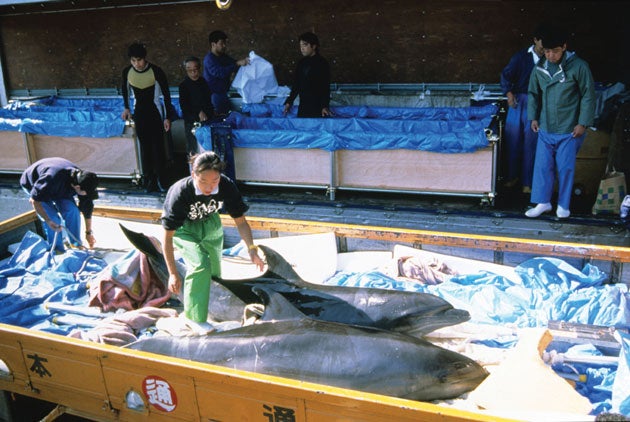
On Tuesday, in the Japanese town of Taiji, the killing will resume. Several dozen dolphins will be herded into a secluded cove, where a few will be selected for marine amusement parks. The rest will be speared with knives and harpoons. By the end of the day, the water in the picturesque cove will be crimson.
On Wednesday, the same gruesome sequence of events will unfold. And so it will continue for six months, until the dolphin hunting season concludes. Around Japan, about 20,000 of the gentle, intelligent mammals are killed every year, more than 2,000 of them in Taiji, which – according to a new film, The Cove – is the site of the world's largest dolphin slaughter.
The documentary, to be released in Britain in October, shines an unforgiving light on Taiji, "a small town with a big secret", according to its American director, Louie Psihoyos. He hopes it will help halt the annual bloodbath. Dolphins, he says, "are the only wild animal known to come to the rescue of humans ... and I thought it is about time somebody tried to rescue them."
Psihoyos embarked on the project after visiting Taiji with Ric O'Barry, an animal rights campaigner who used to train dolphins for the 1960s television series Flipper. Working undercover with a team of activists, they captured graphic footage which forms the award-winning film's deeply disturbing climax.
In Taiji, residents are fiercely protective of their hunting tradition, and the cove, surrounded by steep cliffs, high fences and razor wire, is heavily guarded. Tailed constantly by police officers, the film crew were challenged by fishermen whenever they approached the site. "The fishermen have told me they would kill me if they could," said O'Barry. "They just can't figure out how to do it quietly."
O'Barry is fired by the missionary zeal of the reformed sinner. After the Flipper series ended, he experienced an epiphany and since then has worked to free dolphins around the world from captivity. But he blames himself for the popularity of marine theme parks – a multibillion-dollar industry which he believes drives the annual cull. "I spent 10 years building the industry up and the last 35 years trying to tear it down," he says. "The fishermen get $500-$600 [£300-£370] for a dead dolphin, but more than $150,000 for a live show dolphin. It's only these live captures that keep the hunt going. Otherwise it would probably not be economically viable."
Why are the other animals not released, rather than being butchered? O'Barry claims it is "pest control", sanctioned by the Japanese government. The fewer dolphins, the less competition for dwindling fish resources. Those killed are sold for meat – often passed off as more desirable whale meat, and heavily laced with mercury, O'Barry alleges.
The documentary follows Psihoyos and his colleagues on their covert mission, as they dodge their minders to penetrate the cove and install hi-tech cameras and microphones on the ocean floor and inside fake rocks. What they acquire, after 14 secret forays, is highly disturbing footage. As the dolphins pass by, the fishermen surround them in boats and lower poles into the water, banging them to frighten their prey and confuse their sonar. The panic-stricken creatures are then herded into the narrow cove, trapped in nets and stabbed repeatedly. As the sea becomes a watery abbatoir, the dolphins flail and thrash for long, agonising minutes, giving the lie to official assertions that they die instantly.
Yet the Taiji slaughter is perfectly legal. Although dolphins belong to the same family as whales, they are not protected by the international ban on commercial whaling. O'Barry, director of a coalition of environmental groups, Save Japan Dolphins, claims the film shows "the Disney version" of what really happens. But he hopes it will galvanise the public. The Taiji fishermen, he says, told him that "if the world finds out what goes on here, we'll be shut down". If The Cove achieves that, O'Barry will have repaid his debt to the dolphins.
Join our commenting forum
Join thought-provoking conversations, follow other Independent readers and see their replies
Comments