'Demolition Man' appears in court a decade after Bali bombings
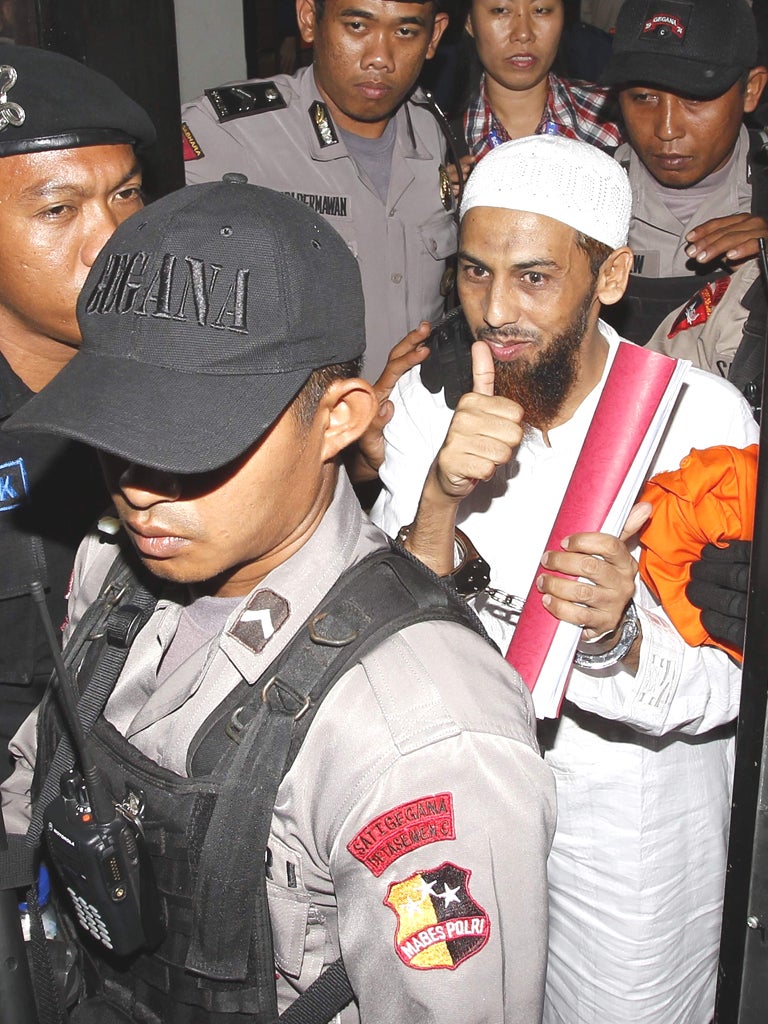
Indonesian police called Umar Patek "Demolition Man", such was his alleged bomb-making expertise. Yesterday Mr Patek went on trial charged with a string of terrorism-related offences, including assembling the explosives used to blow up two Bali nightclubs in 2002.
The 45-year-old – arrested last year in the Pakistani town of Abbottabad, where Osama bin Laden was killed by US commandos a few months later – is the last of the alleged Bali plotters to be brought to justice.
Twenty-eight Britons were among the 202 people, mainly foreign tourists, killed in the attack.
Most of Mr Patek's alleged co-conspirators were tracked down years ago; three were executed, three are serving life sentences and several were shot dead by police. Mr Patek not only evaded capture for nearly a decade, but pursued his terrorist activities, according to the lengthy indictment read out in the West Jakarta district court.
After fleeing Indonesia, he travelled to the southern Philippines, where he allegedly joined forces with the Islamic extremist group Abu Sayyaf, training militants and plotting attacks. He then moved to Pakistan, and was planning to continue on to Afghanistan, it is claimed, in order to fight US forces.
The son of a goat-meat trader, Mr Patek allegedly learnt bomb-making at training camps in Pakistan and Afghanistan in the early 1990s. He told police that he spent three weeks holed up in a rented house in Bali mixing the ingredients for the bomb – 700kg of potassium chlorate, sulphur and aluminium powder. For tools he used a rice ladle and a set of grocery scales.
The explosives were stored in plastic bags and stashed inside a set of plastic filing cabinets, which were loaded into a Mitsubishi L300 van, according to the indictment.
The van was detonated outside the Sari Club. Another bomb was carried into neighbouring Paddy's Bar in a suicide bomber's backpack.
Mr Patek is also accused of involvement in bomb attacks on Jakarta churches in 2000 which killed 15 people, and of setting up a paramilitary training camp in Indonesia's Aceh province. The US had offered a US$1m (£634,000) reward for his arrest.
The Bali bombing forced Indonesia, a moderate Muslim nation, to confront the presence of violent extremists on its soil. Hundreds of suspected militants were arrested, and Jemaah Islamiyah, the al-Qa'ida-linked network to which the bombers belonged, was significantly weakened.
Join our commenting forum
Join thought-provoking conversations, follow other Independent readers and see their replies
Comments