Park-keepers hope loud protests will outfox flying pests
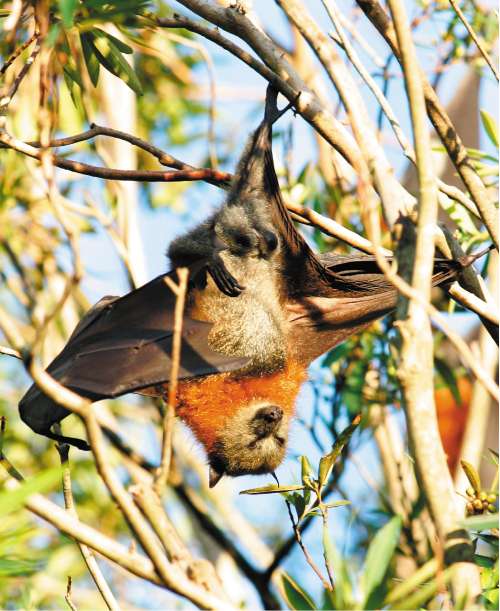
Animal lovers adore them. Tree lovers abhor them. They are flying foxes – giant bats with 3ft wingspans – and they are killing some of Australia's oldest and rarest trees.
For years, grey-headed flying foxes have been roosting in Sydney's Royal Botanic Gardens, a picturesque spot overlooking the harbour. From a few hundred, their numbers have swelled to 22,000, according to a recently completed census – twice as many as previously believed.
While the animals are popular with tourists and local people, park authorities said they were destroying the place. "They crash around in the trees and knock off the leaves and shoots," said Tim Entwhistle, executive director of the Botanic Gardens Trust. "In the past decade the bats have killed about a dozen of our mature trees from the 1850s. Sixty others are on the critical list, and expected to die in the next few years."
The problem facing park authorities is that the flying foxes, which are losing their habitat in New South Wales and Queensland because of large-scale land clearing, are listed as a threatened species.
Then there is the public relations factor. A cull of bats in 2002 at the Melbourne Botanical Gardens, which was faced with a similar problem, provoked a public outcry. Sydney officials are drawing up plans, in collaboration with animal welfare and bat experts, which they hope will prove more palatable. They intend to evict the bats by waging a noise campaign.
Loudspeakers mounted on buggies will travel through the gardens, emitting a sound similar to rubbish bin lids being banged together, or electrical equipment being started up.
The method proved successful 15 years ago, driving away a large colony of flying foxes that had taken up residence in the park. At that time, various strategies were attempted, including shining strobe lights in the bats' faces, discharging unpleasant odours in their vicinity, attaching plastic bags to trees, and playing taped distress calls. Only noise worked.
Dr Entwhistle said: "They are a large bat with big ears, and the dull, crashing noise causes them discomfort."
The bats stayed away for a few years, but later returned, and are now present in record numbers. "This is a problem that's not going to go away," said Dr Entwhistle. "It's not sustainable to have that number here. They are effectively destroying the botanic gardens."
Some of the trees under threat date back to the 1820s, soon after the gardens were established. As such, they are among the earliest trees planted in Australia by colonists. As well as having a value in terms of cultural heritage, they are scientifically important. Some specimens are rare, or even extinct, in the wild.
The flying foxes – Australia's largest bat species – hang upside down in tree canopies during the day. At night they cruise around, using their powerful sense of smell to search for fruit and flowers to eat.
The hope is that the population can be persuaded to relocate to one of several other colonies around Sydney. Before they can embark on the eviction, park authorities have to secure a licence from the state government.
Dr Entwhistle said: "It's a species under threat in its natural habitat. We don't want to harm them. There is a lot of concern for the bats' welfare, but they are trashing these wonderful, historic gardens."
Join our commenting forum
Join thought-provoking conversations, follow other Independent readers and see their replies
Comments
Bookmark popover
Removed from bookmarks