The cold, hard facts about Scott's last days
A new exhibition will reveal the explorer's true achievements
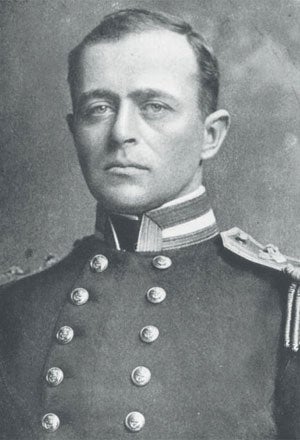
For more than 50 years he was Scott of the Antarctic, an indomitable British hero who perished after planting the Union Flag at the South Pole. In the 1970s, though, Robert Falcon Scott's reputation was battered by a series of books portraying him as a reckless bungler. Now a major international exhibition, planned to coincide with the centenary of his death, is expected to help to redress the balance.
Scott's Last Expedition – which has just opened in Sydney and will travel to the Natural History Museum in London next January – reveals the contribution that his team made to Antarctic science, an achievement often overlooked because of the drama surrounding his ill-fated final journey.
Indeed, as he and his four companions battled blizzards, hunger and exhaustion on their trek back to the Cape Evans base camp in early 1912, they paused to study the geology and collect 30lb of rocks, which were found in their tent, beside Scott's body. "Effectively, this man died for science," says Nigel Watson, executive director of the New Zealand Antarctic Heritage Trust.
The exhibition, launched at the Australian National Maritime Museum, brings together the human story of the assault on the South Pole – to which the Norwegian explorer Roald Amundsen beat Scott's party by 34 days – and the mission to understand the frozen continent. And while it leaves visitors to form their own view about Scott's legacy, Mr Watson says that "hopefully it will help inform and spark debate about what the expedition achieved". As far as Scott's public image is concerned, the pendulum had already started to swing back, following reappraisals by authors including the British explorer Sir Ranulph Fiennes. In his 2004 book Race to the Pole, Sir Ranulph – the first person to cross Antarctica on foot – rebutted claims that Scott was an incompetent leader who lacked foresight and judgement.
The exhibition unites for the first time some of the thousands of scientific specimens shipped back to Britain following the 1910-13 expedition and everyday objects such as the team's equipment, clothing and food stores. The former are housed in the Natural History Museum, while the latter are in Christchurch's Canterbury Museum in New Zealand.
The centrepiece of Scott's Last Expedition is a life-size replica of the Cape Evans hut, on Ross Island, where the men lived, slept, ate and worked. It included a galley where the expedition cook, Thomas Clissold, dreamt up ways of serving their main source of meat: fresh seal.
Among the specimens taken over from London for the exhibition are two stuffed adélie penguins. The large emperor penguin so fascinated the chief scientist, Edward Wilson, that he and two colleagues trekked 100 kilometres in the middle of winter to collect eggs from a breeding colony.
The scientists identified and described hundreds of new species, mapped new terrain, studied the formation of glaciers and gathered meteorological data that is still used as baseline information. Their discoveries were published in 80 separate papers, produced by 59 specialists.
"The scientific programme was absolutely immense," says Lindsey Shaw, the Maritime Museum's exhibition curator. "Any 'ology' you can think of, they measured it, weighed it, collected it, photographed it. Imagine what it was like to be working in those conditions 100 years ago, trying to further the advancement of science."
The conditions included temperatures of minus 50C and having to wash in cold snow. But the men kept their spirits up, playing cards, backgammon and football on the ice. They had a library, and organised musical evenings; among the objects in Sydney are Scott's gramophone.
There are also excerpts from letters and diaries. Scott recorded the final words of Lawrence Oates, who – during their trip back from the South Pole – walked out into a blizzard and never returned, apparently to give his companions a better chance of survival. The severely frostbitten Oates told them: "I am just going outside and may be some time."
Scott, too, was afflicted by frostbite. Mr Watson believes that negative views of the explorer, particularly those propounded in the 1970s by the author Roland Huntford, need to be balanced against his achievements. "I think that what he undertook was truly heroic," he says. "I don't think it's a coincidence that 100 years later, no one has completed the journey that Scott very nearly completed.
As he lay dying in his tent, Scott wrote: "Had we lived, I should have had a tale to tell of the hardihood, courage and endurance of my companions which would have stirred the heart of every Englishman. This rough note and our dead bodies must tell the tale."
Join our commenting forum
Join thought-provoking conversations, follow other Independent readers and see their replies
Comments