Body to be dug up to solve mystery of film-maker's killing
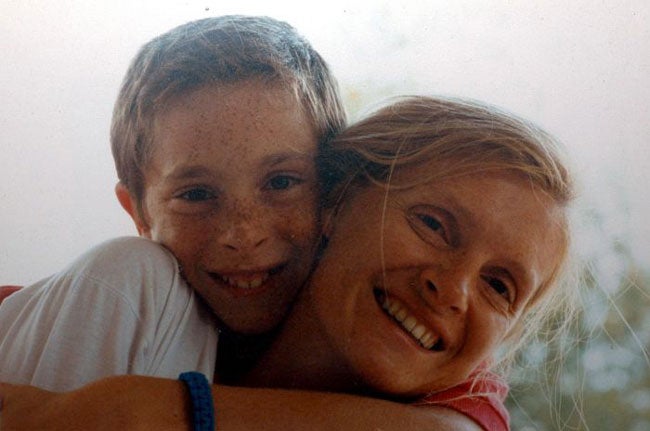
The body of a French woman who was murdered in Ireland 12 years ago is to be lifted from its grave in a village cemetery in south-west France today.
The remains of Sophie Toscan du Plantier, 39, is to be subjected to advanced forms of DNA testing, which did not exist at the time of her death in December 1996, following a ruling last week by an investigating magistrate.
The autopsy in effect re-opens one of the most controversial of cross-frontier "cold cases" in recent European judicial history. Despite a long and elaborate investigation, including interviews with more than 1,000 people, Irish police were unable to solve the apparently motiveless murder of the documentary film-maker in the grounds of her isolated holiday cottage near Schull in Co Cork.
Mme Toscan du Plantier's body, dressed in pyjamas, was found near the garden fence of the low, white-washed house on the popular holiday peninsula on 23 December 1996.
Her skull had been smashed, apparently by an axe, and then by a heavy lump of concrete.
Her hands and finger-nails still held traces of her attacker's skin and hair. She had been neither robbed nor sexually assaulted.
She was married to a French film executive, Daniel Toscan du Plantier, who died in 2003. Her French family and friends have fought to keep the investigation alive, persuading well-known figures in French cinema and public life to join a "Sophie Toscan du Plantier Truth Association". President Nicolas Sarkozy is expected to raise the case with the Irish government when he visits Dublin next week on European Union business.
An investigating judge, Patrick Gachon, has been appointed to explore an 11-year-old civil action, brought by the family under French law. The case is nominally against Ian Bailey, a British journalist resident in west Cork who was twice arrested for questioning by Irish police, in early 1997 and then in 2001. Mr Bailey, who has always protested his innocence, is no longer regarded as a suspect by Irish investigators.
The French investigation has limited jurisdiction. The Irish authorities have so far refused to respond to letters from the French judge asking for the complete police files on the case.
Dublin did agree, however, in May to release the report of the first autopsy on Mme Toscan du Plantier, which was carried out 36 hours after the crime (culpably late, according to her family). Judge Gachon is said to be dissatisfied with the report's contents and has ordered the body to be removed from its grave in Mauvezin in Haute-Garonne, near Toulouse.
The president of the association campaigning to keep the case alive is the woman's uncle, Professor Jean-Pierre Gazeau, a scientist. He said that the judge had not revealed to the family what the new autopsy might discover but that the family – although distressed by the disturbance of the body – were satisfied that some action was being taken.
The dead woman's family and friends have been critical from the beginning of the Irish investigation. They complained, amongst other things, that her body was left under a sheet at the scene of the crime for 36 hours before it was examined by a pathologist.
The former suspect, Mr Bailey, is now studying to become a lawyer. He was originally arrested after a witness came forward to say that he had seen him near the murder scene that night. The witness later withdrew the statement. Mr Bailey's solicitor, Frank Buttimer, said that he was no longer a suspect and had nothing to fear from the new French investigation.
Join our commenting forum
Join thought-provoking conversations, follow other Independent readers and see their replies
Comments