Cold, hunger and job losses ignite dissent in Russian town
Impoverished workers resort to eating salads of weeds and nettle soup
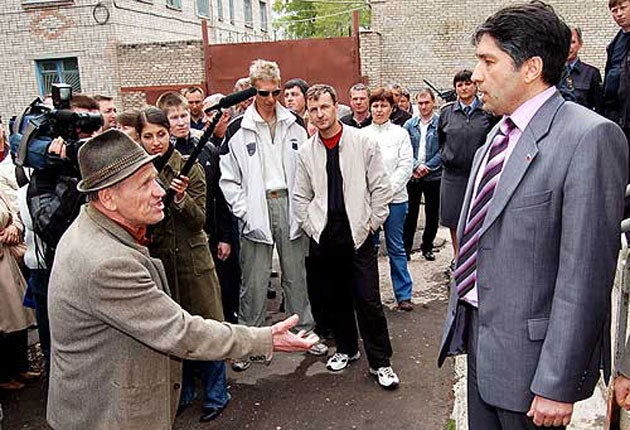
The Kremlin's worst fears are being played out in a small town outside St Petersburg, as angry residents of crisis-hit Pikalevo marched upon the offices of the local mayor and demanded improved living conditions.
The town, with a population of just over 20,000, has been suffering as its three major factories have hit hard times during the economic crisis. Two of them shut down several months ago, while the third has put its workers on shorter shifts. About half of the employees have been put on enforced leave and even those who are still working have not received their salaries for nearly three months.
The final straw came when the town lost its heating and hot water as the only local power station couldn't afford to keep running. Even kindergartens and hospitals were left without hot water. The town's gas supply was also cut off.
"I've worked here since 1976," Vladimir Folev, a shift manager at the power station, told Russian TV. "I couldn't have imagined this in my worst nightmares. This is the first time in history that the town has been left without heating and hot water."
According to a report in Moskovsky Komsomolets newspaper, the impoverished residents of Pikalevo have resorted to eating nettle soup and salads made from dandelions and weeds. The paper also notes that "suspiciously few cats and dogs remain on the streets". One rueful commentator on the town's online forum raises the possibility that shoelaces boiled with salt might taste like spaghetti.
As officials gathered to discuss the situation last Wednesday, locals began to mass outside the town administration's building. Eventually around 100 of them broke into the meeting room.
Dramatic footage captured by a local television station shows a large group of furious residents brushing aside police officers and shoving their way into the room to air their anger. "I want to work!" screams a hysterical young woman. "I want my child to be able to eat normally. I want to buy toys for my children, but I can't because I am not receiving my salary. We want to work, but we can't."
"We don't want war," said Sergei Voronov, another Pikalevo resident. "Let the government work something out. We want things to turn out well, but if they don't, I don't know... God alone knows what will happen."
One of the factories in Pikalevo is affiliated with the vast Basic Element company, which is run by Oleg Deripaska, the poster boy of the crisis-induced collapse of Russia's oligarch class. Last year, Mr Deripaska had a fortune estimated at $40bn (£25.2bn). This year, Finans estimated his net worth to be just $5bn. His company is engaged in a dispute over payments with the local authorities in Pikalevo, making the clash more complex than a simple "people versus government" issue.
Pikalevo is a typical monogorod – a town based entirely around one industry. There are hundreds of such towns in Russia, partly due to the Soviet planned economy legacy. Similar tensions are brewing in many other industrial areas across Russia. Just yesterday about 1,000 miners protested planned cutbacks in a street demonstration in the northern city of Vorkuta. Worried regional officials came to Pikalevo on Friday offering a package of economic aid.
"Given that there are several hundred similar towns across the country, we can expect this sort of thing to happen a lot more," says Dmitry Oreshkin, a political analyst in Moscow.
The protests are unlikely to turn into a popular, coordinated revolt, say most analysts, as opposition infrastructure has been crushed over the past decade.
"There won't be a revolution," says Mr Oreshkin. "But we may well see more of these incidents and they could turn violent."
Join our commenting forum
Join thought-provoking conversations, follow other Independent readers and see their replies
Comments