Expat cash for Kosovo stops flowing
Independence day marked by fears for Europe's poorest state
The footballers shouted and cheered in Albanian as they passed the ball around a wet, slippery pitch on a rainy winter's night in Brussels. Belgium is home to one of the largest communities of Kosovar Albanians in Europe and until now, its 40,000 migrants have played a vital role in helping to prop up Kosovo's fragile economy, regularly sending back money to feed and house their families.
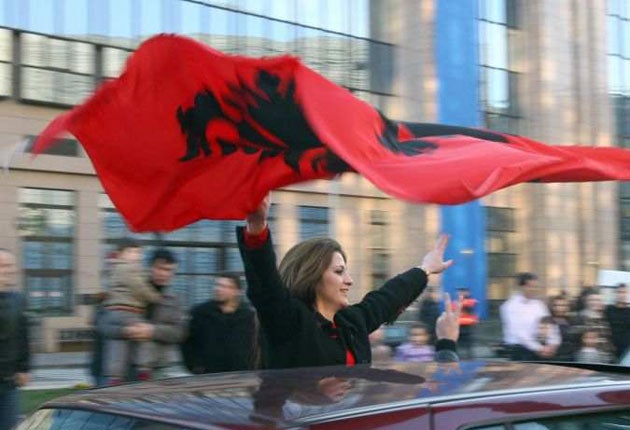
But as it celebrates one year of independence today, fears are being raised about the future stability of the tiny Balkan country. Its prospects are being overshadowed by a dire economy that is getting shakier as revenues from the one-million strong diaspora dotted around Europe dries up.
"It's getting harder for me to send money back home to my dad, even though I know he can't manage without it. He lost everything overnight during the war. But I also have my own family here in Belgium now and we have our own job worries," said Ciprim Hamzaj, a trainer with FC Kosova.
The team members concurred. "It's not like before when I'd give money every month to my aunts and cousins. Now we go over there just once a year with cash, that's all we can afford," said club secretary Afrim Gashi.
Kosovo, Europe's poorest nation, has relied heavily on remittances since the first wave of migrants fled to Germany, Switzerland and other European countries in the early 1970s, a dependence that grew with the mass exodus that fled the Yugoslav wars in the 1990s. But many of these migrants have since been forced to return home or now have their own families in their adopted homeland.
"Only if you have economic development will you have lasting stability in Kosovo. But now this lifeline is being cut and there is nothing to take its place," says Gerald Knaus, a Kosovo expert at the European Stability Initiative, a Berlin think-tank. "Most people are subsistence farmers who have to feed the largest families in Europe, with six or nine members. But there are no jobs, no real economy to speak of and most of them cannot meet their most basic needs without these hand-outs from abroad."
"There needs to be dramatic change because it is only a matter of time before the young and the unemployed get restless and things turn sour."
Only around 10 per cent of women of working age and 30 per cent of men hold jobs, and although the country's two million inhabitants have been helped by large donations from the United States and the European Union, analysts say this has not generated sustainable growth.
"Getting the economy right is our priority," said Pieter Feith, the EU's special envoy to Kosovo. "We have a global recession, which will impede foreign investment and that will reduce the amount of money that Kosovars abroad send home."
Like Pieter Feith, the members of FC Kosova believe that giving their newly independent country a European perspective by paving the way for EU membership talks is the only hope. Mr Hamzaj said: "Every time I go back, it breaks my heart to see all this poverty, families who do not even have electricity or plumbing and no hope of a job. It makes me worry a lot about Kosovo's future."
Join our commenting forum
Join thought-provoking conversations, follow other Independent readers and see their replies
Comments