Farming policy: an end to French hypocrisy?
Sarkozy makes historic move to divert European subsidies from rich cereal ranches to small traditional farms
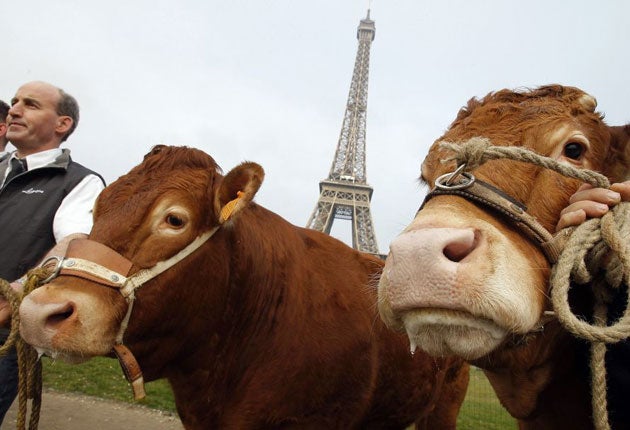
After 46 years of shovelling farm subsidies to its richer, more polluting farmers, France yesterday took a historic step towards a greener and fairer European agriculture policy.
Paris announced that from next year it would confiscate over 20 per cent of the billions of euros of European taxpayers’ money paid to its ranch-like cereals farms and divert the cash to hill farmers, grazing land, shepherds and organic agriculture.
The announcement brings to an end almost half-a-century of official hypocrisy in which French governments have talked about protecting “family farms” and “quality food” but allowed the bulk of European largesse to flow to chemical-assisted, hedge-free, cereals-ranching in northern, central and eastern France.
Although Brussels first encouraged governments to “rob” rich farmers to subsidise small, traditional farms four years ago, Paris remained the only European government to insist that large cereals farms should receive their full, traditional EU payments. The Agriculture Minister, Michel Barnier, announced yesterday that this policy would end from next year.
The largest French cereals farms – which can receive up to ¤800,000 (£700,000) in annual subsidies – will lose 20 per cent of their EU cash. Others will be “taxed” at a lower rate. Overall, a total of ¤1,400m a year will be transferred from big farms to traditional farms and schemes to promote biodiversity.
The money will be used, above all, to help struggling beef, sheep and goat farmers and to encourage the slowly gathering movement towards “bio” or organic agriculture in France.
President Nicolas Sarkozy believes this historic shift in French attitudes is essential to preserve what remains of traditional farming communities in the Alps and in central, western and southern France. His government also recognises that a change from an increasingly indefensible policy of “big farmers first” is essential if the Common Agricultural Policy (CAP) is to survive. “This is the price we must pay to defend the CAP,” M. Barnier said.
A radical re-examination of the CAP is due in four years. President Sarkozy recognises that he can no longer do what President Jacques Chirac did: defend the CAP as a shield for small, traditional farms and quality food while the bulk of subsidies went to wheat, barley and rice ranches.
Under the present rules, the 10 largest French farms receive an average of ¤500,000 each. The smallest farms receive an average of ¤500 each.
Yesterday’s policy shift does not presage a weakening of French support for the CAP. A cynical interpretation might be that France is preparing a more logical and eco-friendly argument to hold on to the ¤10bn it receives each year from the CAP budget.
Small farmers’ groups complained that the reforms did not go far enough. Régis Hochart of the Confédération Paysanne said: “This is an important advance but those with the highest revenues should still be contributing more.”
On the other hand, the change in French attitudes does suggest that it may be easier to rebuild the CAP in 2013: moving away from subsidies for mass production of food and towards aid for small rural communities, traditional livestock farming and organic agriculture.
While criticising the very existence of the CAP, successive British government have also tended to defend the flow of payments to larger cereals farms and have resisted the movement towards direct subsidies for smaller, more “traditional” forms of agriculture.
Although France already has the fifth-largest acreage of non-chemical, or organic farms in the EU, it lags behind other European countries in terms of percentage of “bio” production. Only two per cent of French farm land and vineyards is officially regarded as “organic”: i.e. free of chemical fertilisers, herbicides and insecticides.
During a visit on Saturday to the Paris agricultural show, President Nicolas Sarkozy announced that a wind of change was about to blow through the French countryside.
“We have animal rearing farms which are suffering. We have hill areas which are suffering,” he said. Farm subsidies must be reallocated to make the payments “more equitable”, he said. “And because they are fairer, they will be permanent.”
Join our commenting forum
Join thought-provoking conversations, follow other Independent readers and see their replies
Comments