Georgia's Rose Revolution wilts
Protesters take to the streets as President is blamed for economic woe
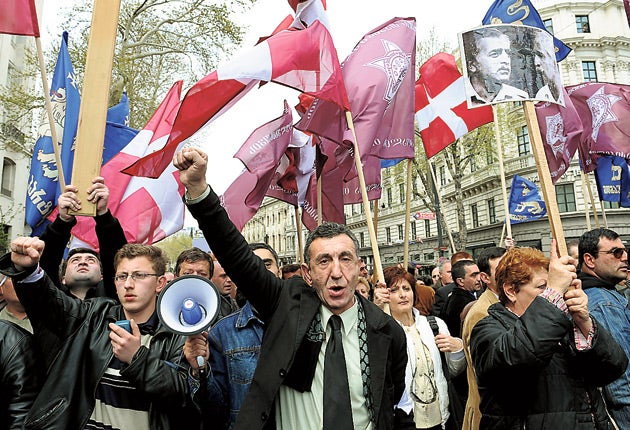
Tens of thousands of Georgians rallied on the streets of the capital Tbilisi yesterday, demanding the resignation of the President Mikheil Saakashvili.
Leaders from Georgia's fractured opposition, including people once close to Mr Saakashvili when he led the socalled Rose Revolution which brought him to power, united to address the crowds and promised to rally every day until the Georgian leader stepped down.
Unlike a similar protest in 2007 which was dispersed by riot police, the atmosphere appeared peaceful as the authorities and opposition leaders promised not to let things get out of control.
One opposition party claimed early in the day that 60 of its activists had been arrested before the protests; the authorities denied this.
Mr Saakashvili is under attack for the dire condition of the economy but he is also paying the price for his role in provoking last summer's war with Russia which led to thousands of Georgians fleeing their homes and both South Ossetia and Abkhazia, two Russian-leaning enclaves declaring their autonomy from Georgia.
The opposition claimed there were well over 100,000 protesters but observers said these claims were wildly inflated and some analysts in Tbilisi said the turnout showed that the opposition didn't have the support to force a change of government.
Nino Burjanadze, who stood with Mr Saakashvili during the Rose Revolution, addressed the crowd. Until she resigned last year, she was one of the President's closest advisers, sticking with him even after the crushing of protests in 2007. She now leads an opposition party. Many in the crowd booed her when she took to the microphone. "I understand those who are upset about me," said Ms Burjanadze in response.
"I apologise for failing to protect you ... We came here to say to the President: 'Resign', and he will resign because we are standing united. I promise that together with you, I will fight to the end to achieve this goal."
Other speakers included Irakli Alasania, the former Georgian ambassador to the UN and now also part of the opposition coalition.
"It is time for you to depart, schedule a free election, and allow people to express their will and demands," he said.
In a possible reaction to the role that social networking sites played in organising protesters during the "Twitter Revolution" in Moldova earlier this week, the Georgian government, which is assisted by a team of Western PR advisers, set up a Twitter account giving updates as the day went on.
Mr Saakashvili came to power during the Rose Revolution in 2003, promising to integrate Georgia with Europe and end Soviet-era corruption and authoritarianism.
Initially he was popular but critics soon began to allege that his government, mainly made up of young, Western-educated ministers, was becoming heavy handed and opaque.
Last summer's disastrous war with Russia lost the President further support. While most Georgians blame Russia for the conflict, they were far from impressed with Mr Saakashvili's leadership during the crisis period.
The turnout yesterday meant the opposition may need to rethink their strategy, however. "Far fewer people came onto the streets than everyone expected," said Alexander Rondeli, a leading Georgian political analyst. "This suggests it's time for the opposition to come up with a Plan B, and negotiate with the government."
Up to now, the opposition has said the only thing they have to discuss with the President is his resignation.
European leaders will be relieved that violence has been avoided for now in Georgia. Feelings for Mr Saakashvili have cooled in many European capitals but the West is still wary of Russian intentions in Georgia.
The Russian President Dmitry Medvedev has called Mr Saakashvili "a political corpse" and said he will happily negotiate with a new Georgian leader but will never speak to Mr Saakashvili.
Join our commenting forum
Join thought-provoking conversations, follow other Independent readers and see their replies
Comments