Houellebecq's first venture into movies ends in farce
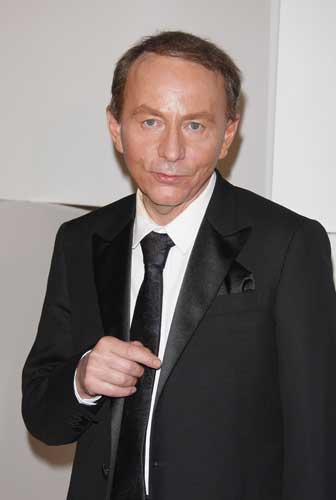
As a novelist, Michel Houellebecq has long been the enfant terrible of French literature. As a film director, according to initial reactions to his first movie, he is simply terrible.
Several film critics walked out of a showing of the first full-length film written and directed by Houellebeck at the 61st Locarno movie festival. Others giggled or made rude remarks.
Houellebecq, perhaps sensing a hostile audience or perhaps just unpredictable as usual, failed to turn up for a press conference. He also failed to say a few words to introduce his movie as festival etiquette demands.
His film "La Possibilité d'une île" (The Possibility of an Island) was dubbed by the Swiss newspaper Le Temps as "the possibility of a shipwreck". The French newspaper Le Figaro said that the advance showing of the much-awaited movie, which opens in France in September, had "turned into a farce".
The film is based on Houellebecq's novel of the same name, published to a mixture of acclaim and consternation three years ago. A student of film-making in his youth, he insisted on directing and writing the screenplay for the movie version. Both book and film tell the story of an enigmatic future world in which the great monotheistic religions – which Houellebeck famously detests – have been replaced by cults. The hero, Daniel 1, comes face to face with himself in the shape of a clone, Daniel 2, who has been created to continue his spiritual work after his death.
Most of the movie appears to have been filmed in a quarry (actually on location in Lanzarote in the Canary Islands). The costumes, characters and gadgets resemble those from a science fiction B movie from the 1950s or an early black and white episode of Doctor Who. The desultory action takes place against a sound-track mostly taken from Ravel's "Bolero".
Houellebecq's four novels, notably Atomised and Platform, have enjoyed world-wide critical acclaim and success – more so than those of any other living, French novelist. They present a bitter but comic vision of a Western world sunk into hypocrisy and joyless eroticism.
As a writer, he has been hailed by some literary figures in France as a genius and condemned by others as a fraud. The film critic for Le Temps, Christine Salvadé said that the movie had shrunk Houellebecq's "philosophical vision" to a "simplistic futurism". The only character with any human characteristics, she wrote, was the hero's dog. Houellebecq's sense of humour, which saves his novels, had deserted him on the film set.
Le Figaro said that the movie critics' consensus after the showing in the "experimental section" at Locarno was that the film was "catastrophic, ridiculous, full of cheap, street philosophising."
A blog on the Swiss TV website said: "The writer never turned up for his press conference. He apparently got lost in his car... As lost presumably as his film. Both he and the movie come from another planet."
None of this is likely to disturb Houellebecq, who thrives on controversy and loves to consider himself an artistic martyr. In the leaflet presenting the film, he describes himself as "sincerely detested by everyone who is anything in French culture".
Join our commenting forum
Join thought-provoking conversations, follow other Independent readers and see their replies
Comments