Ikea and loathing: What's in a product name?
Is there a chauvinistic sub-text to the product names at the world's most famous self-assembly furniture store? Claire Soares investigates a saga of doormats and wounded national pride
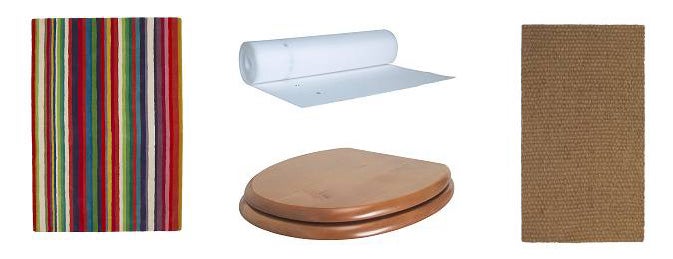
Once you've resigned yourself to navigating the obstacle course that is any Ikea store and got your tongue around the Scandinavian vowels, purchasing the Oresund lavatory seat is an annoying but pretty inoffensive experience.
Unless, that is, you're Danish.
Like every product in cosy Ikea-land, this £6.99 throne – available in a natural birch wood finish or with an antique stain – is known by a chummy name rather than a randomly generated stock number. Only this less-than-salubrious product has been named after the strait of water separating Sweden from Denmark, the scene of much territorial tussling between the two Scandinavian rivals over the centuries. Oops.
"What's in a name?" the Swedish furniture designers might counter. But it seems that this is not the only example of alleged neo-imperialism lurking within the pages of the seemingly anodyne home furnishings bible.
In fact, an anthropologist browsing through the Ikea catalogue might well conclude that Danes are – at least in the minds of the Swedes – the doormats of Scandinavia. From the Niva lining to the striped Strib rug to the beige Sindal coir mat, most of Ikea's floor coverings derive their names from places in Denmark.
The Ikea names are nothing new. The 583 million customers who visit its 273 stores worldwide have been struggling to pronounce them for years. But Denmark now seems to have woken up to its humble place on the home furnishings pecking order. "Is Ikea bullying Denmark?" blared the Danish freesheet Nyhedsavisen on its front page recently.
Naturally, Swedish names grace the more prestigious products – the sleek leather sofas called Stockholm .... ("Super-fancy quality for everyone," reads the billing for the range on the Ikea website.) And it's not hard to see why the Danes might feel like they're being trampled underfoot when Norway gets sleek black bedroom furniture like Mandal (Pictured below, with 'Stockholm), Finland gets solid wood dining tables and chairs, but they get mats to wipe your feet on.
The Danish paper's editor, Simon Andersen, is the first to admit that there was a strong element of tongue-in-cheek to the headline. "It was mostly meant as a joke. It's funny that there are these fancy, delightful and good-looking things named after Swedish places and we get these lousy carpets," he said yesterday. "The Swedes are so perfect at everything, so when we got the chance to poke fun and get our own back we did."
No one is suggesting there will be a repeat of the Scandinavian Seven Years' War that had Sweden and Denmark at each other's throats in the 16th century. Nor are the cobbled-stone alleys of Copenhagen likely to erupt in an orgy of blue and yellow flag burning. Danes joke that they could stage a boycott of Ikea stores, except for the fact that there's nowhere else as affordable to furnish one's home. Others have suggested that the Danish brewer Carlsberg start calling their light beer after a Swedish town in retaliation.
Troels Mylenberg, a communications expert at the University of Southern Denmark, explained: "There's always been conflict between the Nordic countries as to who's the brightest, the funniest, the sportiest. In the past we were killing each other; now it's brotherly teasing. The Danes see themselves as more charming and funnier than the Swedes. If someone is being dull, you might quip, 'Stop being so Swedish!' In return, the Swedes give toilet seats and door mats Danish names."
The final irony, of course, is that had history taken a different course, Ikea could have ended up a Danish company. Its founder, Ingvar Kamprad, grew up in the village of Agunnaryd in Scania. That region used to belong to Denmark until 350 years ago, when Swedish troops invaded the provinces of Halland, Skane and Blekinge, and conquered them for King Karl X. Even today, right-wing Danish populists still want to see the region across the other side of the Oresund strait reunited with Denmark.
When asked whether sinister motives lurk behind Ikea's choice of chirpy product names, Klaus Kjoller, a professor at the Institute of Nordic Studies at the University of Copenhagen, says: "It's 350 years ago that the Swedes took away regions of our country, so I suppose today you could say we're seeing a kind of cultural imperialism, with them giving things of low value to us. Really, it's not a big issue."
And that's how Ikea wants to see it, too. The company freely admits its doormats are named after Danish places, in the same way that garden furniture is named after Swedish islands. "We have done that to make it easier for the customers so they don't have to remember a long stock number," said Charlotte Lindgren, a spokeswoman at Ikea headquarters.
In fact, she says: "If I were a Dane, I would be very proud because a carpet gives a space that something extra. It is the jewel of the room."
Join our commenting forum
Join thought-provoking conversations, follow other Independent readers and see their replies
Comments