Italy's credit rating downgraded
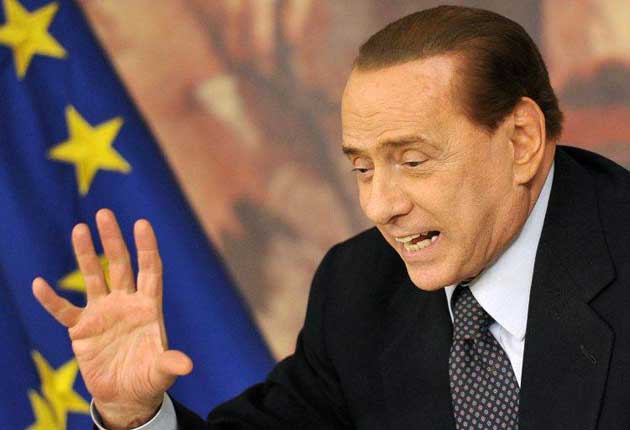
Italy criticised Standard & Poor's for downgrading its credit rating, saying the decision seemed politically motivated and out of touch with reality at a time when the government was working to boost growth and reduce its debts.
The Business Secretary Vince Cable admitted the gloomiest scenario is that Britain could plunge into a new financial crisis prompted by the collapse of the Greek and other eurozone economies at The Independent fringe meeting.
Late Monday, S&P cut Italy's credit rating by one notch to A from A+ in light of what it sees as the country's weakening economic growth prospects and higher-than-expected levels of government debt.
Markets, which were buoyed by hopes that Greece will not be allowed to default, took the surprise move in stride. But the downgrade is likely to reinforce fears that the eurozone's third largest economy is getting sucked into Europe's debt crisis, which has already seen the bailout of three countries.
Premier Silvio Berlusconi's office said in a statement Tuesday that S&P's evaluation "seems dictated more by behind-the-scenes reports in newspapers than reality and seems contaminated by political considerations."
Though S&P's rating is still five steps above junk status, it is three below that given by rival Moody's, which is currently assessing Italy.
Italy's debt burden of 120 percent of GDP is the second highest in the eurozone after Greece. It has carried heavy debts successfully for years because bond investors have always been willing to loan more money as bonds came due.
But bond markets began to look more skeptically at Italy after Greece, Ireland and Portugal needed bailouts and the government has had to pay more to borrow as a result. That threatens a vicious circle in which rising interest costs threaten to sink government finances and the country finds itself cut off from bond markets. In that case it either needs a bailout loan from another source or must default.
The government insisted it had a solid majority in parliament, which recently passed measures to get a tighter grip on the public finances through a package of tax increases and budget cuts.
It said the government was working on growth measures, had pledged to balance the budget by 2013 and said the fruits of its growth and austerity plans "will be seen in the near-medium term."
S&P warned that it may downgrade Italy again, slapping a negative outlook on its ratings. It anticipates that political differences will likely limit Italy's ability to respond decisively to its debt crisis.
"What we view as the Italian government's tentative policy response to recent market pressures suggests continuing future political uncertainty about the means of addressing Italy's economic challenges," S&P managing director David T. Beers said.
Markets largely brushed off the downgrade as investors hoped for progress in ongoing Greek debt talks.
Milan's stock market was trading 1.2 percent higher while the yield on the country's ten-year bond was up only 0.08 percentage point at 5.61 percent.
Last week, Italy's Parliament gave final approval to the government's austerity measures, a combination of higher taxes, pension reform and spending cuts that the government says will shave more than (euro) 54 billion ($70 billion) off Italy's deficit over three years.
The planned cuts and taxes sparked street protests in Rome similar to those in other European countries trying to come to grips with the economic crisis.
The European Central Bank had demanded stiff austerity measures to calm markets roiled for weeks over doubts about how serious Italy is about dealing with its debts.
Italy is widely-considered as too big to save. The big worry in the markets is that the country will find it increasingly costly to borrow.
"Italy is now struck in a self-fulfilling downward spiral from which it is unlikely to be able to extract itself without external help," said Sony Kapoor, a managing director of Re-Define, an economic think-tank.
"Without full confidence in the credit-worthiness of Italy, it's impossible to have full confidence in the solvency of the European banking system," he added.
Concerns that Italy might be locked out of bond markets was the main reason why the European Central Bank has splashed out billions of euros over the past month buying up Italian government bonds on the open market.
Doing so has helped get Italy's ten-year bond yield down below the 6 percent level, which is considered unsustainable. However, it's started to edge higher again over the past couple of weeks as investors fret about Europe's debt crisis spreading.
The S&P downgrade, however, could lead to higher borrowing costs for Italy because it implies that investors face greater risks when buying Italian debt.
S&P said that weaker economic growth will likely limit the effectiveness of the government's economic plan.
"We believe the reduced pace of Italy's economic activity to date will make the government's revised fiscal targets difficult to achieve," S&P said.
The firm projects that Italy's economy will grow at an annual average of 0.7 percent between this year and 2014, down from an earlier projection of 1.3 percent growth.
Italian officials have reportedly held talks with China's sovereign wealth fund in an effort to persuade Beijing to buy Italy's government bonds or invest in its companies. The nation's financial crunch also has prompted Rome to consider selling stakes in major state-owned companies such as power utility Enel or oil and gas supplier Eni, according to news reports.
AP
Join our commenting forum
Join thought-provoking conversations, follow other Independent readers and see their replies
Comments