Mediterranean resorts menaced as stinging jellyfish arrive early
News in pictures
News in pictures
On Facebook
From the blogs

More than half of Afghanistan’s families live in extreme poverty

Leila is watching her baby intently, as his mouth moves trying to swallow the small blob of yellow p...

Time for a new approach to alcohol

Ambulances were called and three drunk teenagers were brought to my care. One was so drunk we had to...

Bahrain: One year on

I am used to endless lies and criticism from the BNP and its favourite blogster, as well as Islamist...

Paul Volcker stands tall against the banking lobby

Why is Europe, which likes to present itself as an opponent of speculative "Anglo-Saxon" finance, li...

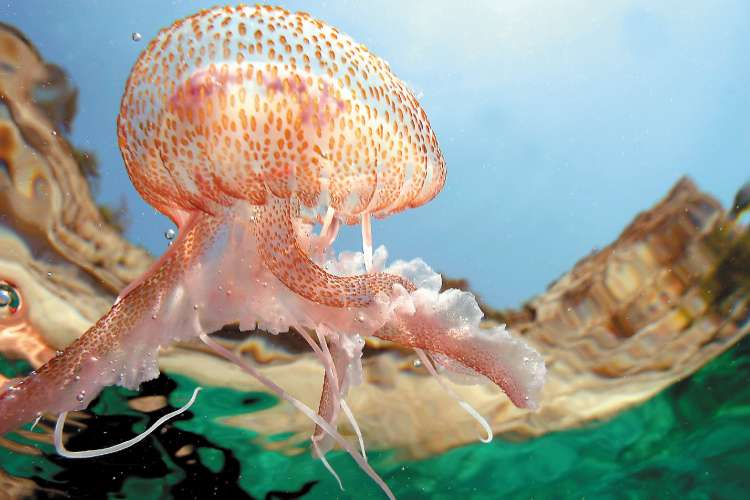
For the eighth successive year, the resorts of the north Mediterranean coast are threatened by a monstrous-looking primeval creature from the depths, the jellyfish.

Although injuries to bathers have been rare, marine biologists have spotted vast shoals of "mauve stingers" or Pelagia noctiluca in the waters between Corsica and the French mainland. From next week, the town of Cannes will erect booms and nets around its most popular beaches to try to protect bathers from the nasty, but rarely fatal, burn-like sting of the invaders.

An aerial survey, Jellywatch, is also under way off the Italian and Greek coasts to try to monitor the movements of the jellyfish, which are not fish but a a kind of giant plankton. Scientists say the large eruption of Pelagia noctiluca this summer is final proof of a radical, and possibly irreversible, change in the ecology of the Mediterranean.

For centuries, plagues of jellyfish have come inshore every 10 or 12 years and lingered along the Côte d'Azur for periods of about four years. This pattern has now changed. The jellyfish have appeared each year for the past eight years in far greater numbers than before. Some scientists and ecological campaigners point to a rise in sea temperature, linked to the warming of the planet. Others blame a shortage of natural predators such as the bluefin tuna and the turtle, which have been driven almost to extinction by overfishing and pollution.

Professor Gabriel Gorsky of the Observatoire Océanographique at Villefranche-sur Mer, also points to changes in the wind and current patterns, changes which may also be linked to global warming. Jellyfish live deep in the sea during the day but rise to the surface at night to feed. Abrupt changes in wind and current can then carry them onshore. Denis Ody of the World Wildlife Fund, based in Marseilles, said: "I was on the sea between Corsica and the mainland two weeks ago and for several hours we passed through immense areas where you could count 60 jellyfish a minute."

This year's jellyfish invasion coincides with a row between the European Commission and the French government and fishermen about alleged overfishing of bluefin tuna in the Mediterranean. Brussels ordered the fishery to close last week after calculating that the whole of the 2008 quota for European boats had already been caught. Paris is pushing for an "emergency" reopening of the fishery. Marine biologists warn that this could not only threaten the survival of the tuna; it could also prove uncomfortable for holidaymakers.

Independent Comment
blog comments powered by Disqus
Career Services

Day In a Page

How an abortion divided America

How an abortion divided America

Single mother who took a pill to end her pregnancy is now fighting a landmark prosecution in a conservative state
Can you master a language in a weekend?

Can you master a language in a weekend?

Ed Cooke insists he can use his techniques as a memory expert to help novices learn even the hardest tongues.
The 10 best heaters

The 10 best heaters

From the DeLonghi Retro Fan Heater to the Dimplex MicroFire
Coming soon to a shelf near you: The publishing industry has gone mad for film-style trailers

Coming soon to a shelf near you

The publishing industry has gone mad for film-style trailers
Mad, bad and delightful to know: How Lord Byron became a cultural superstar

How Lord Byron became a cultural superstar

As the poet takes centre stage in the West End, Boyd Tonkin looks into the life of the outspoken champion of the poor
Did they all live happily ever after? That's up to you...

Did they all live happily ever after? That's up to you...

New digital novel will overturn centuries of literary tradition by allowing readers to choose how they would like story to end
How to look good for less – Primark in copycat row

How to look good for less – Primark in copycat row

With London Fashion Week starting tomorrow, designers are closeted in studios putting finishing touches to their collections
James Lawton: Arsène and Arsenal are living in the past

James Lawton

Arsène and Arsenal are living in the past
How Docherty's resurgent Reds beat Dutch greats

How Docherty's resurgent Reds beat Dutch greats

United have met Ajax only once before in Europe, in 1976. The key performers recall an electric occasion
Civil war at Ajax

Civil war at Ajax

A rift between two club legends has torn the Dutch giants apart
Lewis Moody: For an idea of where England are headed, look at Wales now

Lewis Moody column

For an idea of where England are headed, look at Wales now
Geoff Toovey: Little gem with huge incentive to become king of the world

Geoff Toovey interview

Little gem with huge incentive to become king of the world
Picture preview: Portrait of London

Portrait of London

Picture preview
No secularism please, we're British

No secularism please, we're British

Arguments about the role of religion in national life have recently acquired a new urgency
Harold Tillman: 'Chinese tourists can save the high street – if we let them'

Harold Tillman interview

'Chinese tourists can save the high street – if we let them'