New Russian law revives sweeping KGB powers
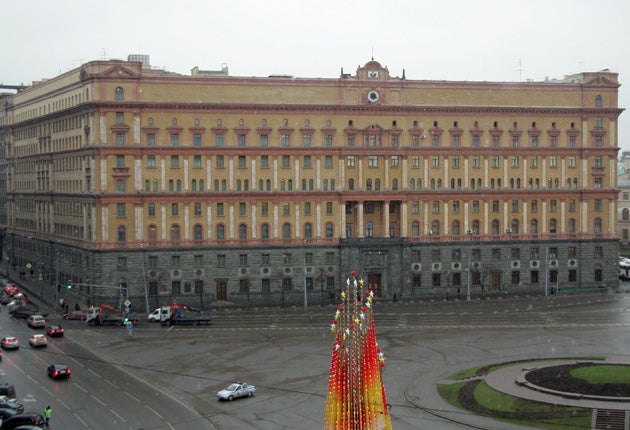
A new law which gives Russian security services sweeping powers to question people about crimes that have not yet been committed is being criticised by human rights activists as a dangerous return to the era of the KGB.
The bill, passed yesterday by the upper house of Russia's parliament, allows the FSB, the successor to the notorious Soviet-era spy agency, to issue warnings to people suspected of planning crimes. Another provision in the bill allows for fines or short jail sentences to be imposed on anyone who obstructs the work of FSB agents.
The bill was first suggested in the aftermath of the terrorist attacks on the Moscow underground in March, and is ostensibly aimed at cracking down on insurgents in the North Caucasus and those who aid them. But the fear is that the law will be wielded as an instrument to threaten anyone who is in opposition to the Kremlin, as well as to journalists investigating sensitive stories.
The human rights organisation Memorial said that the law was "partly pointless and partly dangerous for social freedoms". It said the bill was reminiscent of KGB "prevention" techniques which did not prevent actual crimes but instead were used as an excuse to crack down on political opposition to the Soviet regime.
After a public outcry, the bill was watered down from an initial draft that would have forced those whom the FSB wanted to "warn" to present themselves for an interview, with the penalty of a jail sentence if they did not comply. The revised version says that the FSB can warn a person that they are "on the boundary" of committing a crime, but does not specify what further measures can be taken.
President Dmitry Medvedev is now expected to sign the bill into law.
Andrei Soldatov, a journalist and expert on Russia's security services, said he was worried about the impact of the new legislation. "Previously the FSB needed a legal reason to talk to journalists; now they don't need this – they can just say that they are making enquiries as a preventative measure," he said. "It could be especially dangerous in the regions, where journalists are still very much controlled by the local administrations. This could make things very hard for local journalists and human rights activists."
A source in the FSB told Vedomosti newspaper that the powers were required so that the service could have a new method of exerting pressure, especially when recruiting informants. Previously, said the source, the FSB could only put pressure on someone if they were dealing with state secrets, but now if the service wants to recruit informants in local governments, major companies, and so on, they can use the new law as a way to threaten their targets.
Supporters of the bill in the United Russia Party, which is led by the powerful Prime Minister Vladimir Putin, insisted that there was nothing to be worried about. "The legislation measures up to the highest and most humanistic standards of a state governed by the rule of law," said Vladimir Vasiliyev, the chairman of the State Duma's Security Committee, and an MP from United Russia.
Under the eight-year presidency of Mr Putin – himself a former head of the FSB – the security agency's powers and prestige were boosted. Mr Putin positioned many former KGB and FSB agents in top governmental posts. Mr Medvedev, however, does not have a background in the security services and has spoken on many occasions about the need for a more free and open society in Russia.
Few of his actions while in power have matched his lofty words, however, and in this case he insisted that the changes were justified. The Russian President brushed off criticism of the bill, and insisted that it was instigated on his own initiative and that foreigners had no right to criticise it.
"Every country has the right to improve its legislation, including laws concerning the special services. And we are going to do that," he said last week, when asked about the controversial bill during a press conference with the German Chancellor, Angela Merkel.
Join our commenting forum
Join thought-provoking conversations, follow other Independent readers and see their replies
Comments
Bookmark popover
Removed from bookmarks