Party over: Catalonia bans happy hour
Crackdown could soon be nationwide in battle to curb youth drinking
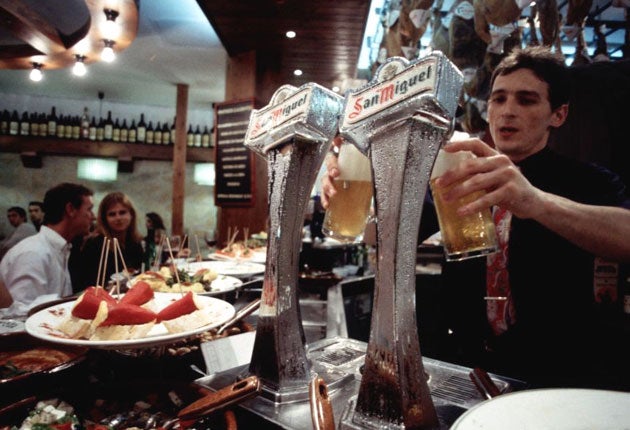
The Catalan government has some sobering news for stag party-goers, football fans and other British holidaymakers who dream of cheap drinks on the beach: it has outlawed "happy hour" and other special offers that entice thirsty tourists to the Costa Brava and Barcelona.
The cocktail crackdown is part of a vast and surprisingly uncontroversial public health law which was passed unanimously this week by the Catalan regional parliament.
The national Health Minister, Trinidad Jimenez, announced yesterday that she would consider introducing a similar ban nationwide.
The aim of the prohibition is to curb youth alcohol consumption. It is one of many preventive health measures outlined in the new law which also makes provisions for government subsidies to help people quit smoking.
"We must protect citizens and we want to impede... the uncontrolled consumption of alcohol," the director of Catalonia's public health, Antoni Plasencia, said.
It is not clear how the campaign against cheap cocktails will be enforced. But the offending practices are strictly defined. They include promotional offers, prizes, lotteries, promotional parties and deals such as "all you can drink", "two drinks for the price of one" and the like. Any establishment defying the ban could be fined between €3,000 and €10,000 (£2,750 and £9,200).
The measure will surely sit like a watered-down Mojito with the throngs of British holidaymakers who flock to Barcelona, Girona and Sitges for wild weekend getaways.
A war on discount drinks may seem unlikely in a country like Spain, where a generous glass of Rioja wine is often cheaper than bottled water and where alcohol is an important element of traditional outdoor festivals, from the running of the bulls in Pamplona to the carnival of Cadiz.
But the prohibition is in keeping with efforts throughout Spain to stamp out outdoor drinking jamborees known as botellones, in which university students crowd public squares and drink themselves stupid, disturbing the peace.
The new law is also supported by many bars, restaurants, discos and other nightclubs in the region. They say the cheap promotions lower the standards of their trade.
"The spirit of the happy hour is not what we want for our sector," said Gloria Cabrera, from the Catalan Federation of Nightclubs.
"It is bad for our business to give away drinks. We want to offer quality and attract quality clients. We believe in responsible consumption." While the Catalan legislation ostensibly targets Spaniards, many of the bars and discos that depend on these promotional gimmicks appeal to foreigners, Ms Cabrera said.
"Abroad people think of Spaniards as partying with the tambourine, but in reality, consumption by Spaniards is more social, more rational, more about having fun than getting drunk than it is in other countries." The average Spaniard had only 1.5 drinks during a night out clubbing, she said.
It is not surprising that Catalonia should lead Spain in devising such sobering legislation. Various cities and seaside towns in the region have tried to impose greater decorum on the rowdy masses.
Barcelona passed an anti-nuisance ordinance in 2006 that made behaviour associated with inebriated football fans a civil offence. Under that law, anyone caught urinating on doorsteps, drinking beer in the street, or shouting in a quiet neighbourhood could be fined up to €1,500.
Join our commenting forum
Join thought-provoking conversations, follow other Independent readers and see their replies
Comments