Peacemaker Sarkozy in mission to Moscow

For free real time breaking news alerts sent straight to your inbox sign up to our breaking news emails
Sign up to our free breaking news emails
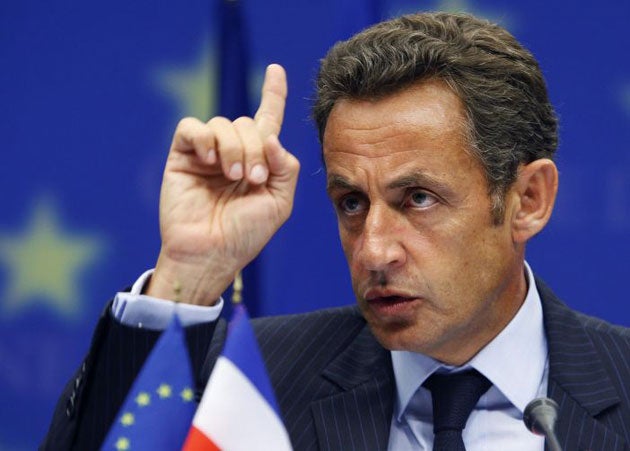
The French President embarks on a high-risk mission to Moscow today, buoyed by support from the EU but with few guarantees of a major breakthrough.
Nicolas Sarkozy will struggle to persuade the Russians to withdraw troops from South Ossetia as part of a French-brokered peace plan between Georgia and Russia. He will also need to secure Moscow's backing to deploy an EU observer mission to the region of conflict.
"I doubt very much the crisis will be over by Monday," said Sweden's Foreign Minister Carl Bildt. "But by Monday evening we'll at least know whether Mr Medvedev is as good as his word," he added, referring to the Russian President's pledge to honour the truce.
Speaking at a gathering of the EU's foreign ministers in Avignon at the weekend, the Foreign Secretary, David Miliband, said it would be "wrong to feel optimistic" about the outcome, given that Russia had been stalling for weeks on complying with the peace plan.
"President Sarkozy needs to make clear that while Russia may score military victories, in the long term it faces political and economic isolation if it does not abide by its international commitments," he said.
The EU, which has threatened to suspend talks on a new partnership deal with Russia, sharpened its rhetoric against Moscow over the weekend and carved out a bigger peacekeeping role for itself in the Caucasus.
It plans to launch a 200-strong civilian mission within a fortnight to monitor the truce. It also wants to deploy the mission to the buffer-zone currently closed off by Russia forces.
Germany has called for a full inquiry into the outbreak of the war on 7 August, while Britain wants to investigate allegations of war crimes, including Georgia's use of cluster bombs.
Aside from the need to clinch Russian co-operation for these plans, M. Sarkozy's biggest test will be to sway Mr Medvedev to pull back his soldiers to pre-conflict positions, instead of tinkering with the wording of the ceasefire deal.
Moscow says there are several versions of the document floating around and that the Russian translation differs crucially from the Georgian version, signed in Tbilisi several days after it was rubber-stamped by the Kremlin.
European security officials have also criticised M. Sarkozy for his haste and clumsiness in drafting the agreement, which they say is so vaguely worded that Russia can argue that it is fulfilling its obligations under the pact.
"We expect Russia to respect the engagements of the [peace] plan," the French Foreign Minister Bernard Kouchner said on Saturday, insisting that the six steps set out in the truce were crystal clear "in any language". But he refused to set Moscow a fixed deadline for the pull-out.
He would also not be drawn into what the EU would do if Russia failed to heed its demands. "Let's just see what happens Monday," he shrugged.
"Whatever happens, we want to solve this through diplomacy, not sanctions."
But during debates in Avignon's papal palace, some ministers disagreed with this approach.
"The problem is, we have no plan B, we have no tough tools to bring the Russians into line," said one senior official.
M. Kouchner, meanwhile, dismissed claims that Russia's recognition of the breakaway Georgian regions of Abkhazia and South Ossetia was in breach of the ceasefire, saying that the document called for an end to hostilities and the opening of peace talks. But the recognition question remains a long-term stumbling block, as the move is seen by many as an effort to further destabilise the Caucasus.
Subscribe to Independent Premium to bookmark this article
Want to bookmark your favourite articles and stories to read or reference later? Start your Independent Premium subscription today.
Join our commenting forum
Join thought-provoking conversations, follow other Independent readers and see their replies