Russia's 'economic shock therapist' dies aged 53
Post-Communist reforms introduced by Yegor Gaidar blamed for 1990s hardship
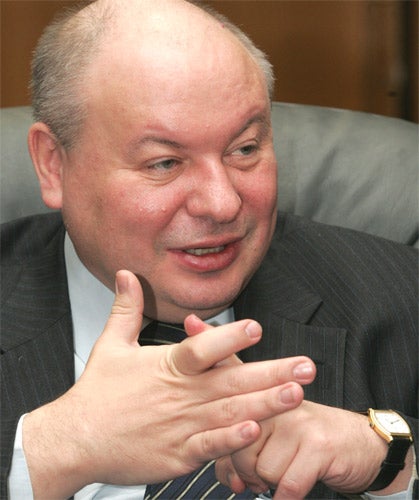
The architect of controversial reforms that dragged Russia out of its Soviet economic system died yesterday in Moscow. Yegor Gaidar, 53, was a divisive figure blamed by many Russians for the years of chaos and economic hardship that the country endured in the 1990s.
However, many believe that without the radical "shock therapy" reforms instituted by a team of young economists led by Mr Gaidar during the early days of Boris Yeltsin's presidency, Russia's fate could have been much worse.
Yesterday, figures from across the fractured Russian political spectrum offered condolences and appreciation for the role Mr Gaidar played in Russia's difficult transition from communism to something resembling a market economy.
President Dmitry Medvedev described Mr Gaidar as a "bold, honest and decisive" person, saying: "In a period of cardinal changes, he took responsibility for unpopular but necessary measures."
Mr Gaidar graduated from the economics faculty of Moscow State University in 1978 and spent the 1980s working in a series of dreary Soviet economic institutes. As Soviet leader Mikhail Gorbachev's period of perestroika, or "restructuring" kicked in, Mr Gaidar and other young economists were given various assignments to come up with models to improve the Soviet economy, but began to think more and more outside the box. When the Soviet Union itself began to disintegrate, they were called on by Mr Yeltsin to draw up plans for a liberal revolution.
In the autumn of 1991, Mr Gaidar, along with Anatoly Chubais and other young hotshots, holed themselves up at a dacha and begun work on some of the most sweeping reforms ever implemented: the transition of the largest communist country in the world to a market economy.
One of the key policies was the abandonment of state control over prices, a major tool of the centrally planned Soviet economy. The legacy however, was crippling hyperinflation, which destroyed people's savings and plunged a good deal of the Russian population into poverty.
Another earth-shattering reform was the introduction of private property and the privatisation of Russian industries. This led to a few cunning men, who would become known as the oligarchs, to scoop up the lion's share of the wealth while much of the population was starving.
The tumultuous events of those years are one of the key reasons why Russians are happy to accept the trade of democratic freedoms for economic stability that has been enacted by Vladimir Putin over the past decade. Mr Gaidar and the other architects of "shock therapy" became hate figures among the general public.
"It could have been done differently," said Irina Demchenko, a journalist who at the time worked on the economics desk of the newspaper Izvestiya.
"The economic and business background of the population was very poor and more explanation was needed. A lot of the people around Gaidar used the reforms to make personal financial gain."
Others said the young reformers took the better of two bad options. "Gaidar... saved Russia from rivers of blood," said the opposition leader Boris Nemtsov on Ekho Moskvy radio. "I know a lot of people hated Gaidar, but the truth is he had a choice of either civil war or painful reforms, and he chose the path of peace."
Despite his relatively young age, Mr Gaidar's death is not being treated as suspicious. An aide said he died of a blood clot in the early hours of the morning as he worked on a new book.
Mr Gaidar was, however, involved in a bizarre incident three years ago. The day after the former KGB spy Alexander Litvinenko was killed by polonium poisoning in London, Mr Gaidar was apparently struck down with similar symptoms during a trip to Ireland. He collapsed after giving a speech, and witnesses reported he had blood coming from his nose and was vomiting blood. He was later flown back to Moscow. At the time, family members said they suspected he had been poisoned, but no light was ever shed on the case.
Mr Gaidar is survived by three sons and a daughter, Maria, who has been arrested several times for her role as leader of a prominent opposition youth movement.
Join our commenting forum
Join thought-provoking conversations, follow other Independent readers and see their replies
Comments