Sarkozy stirs revolt against Mandelson
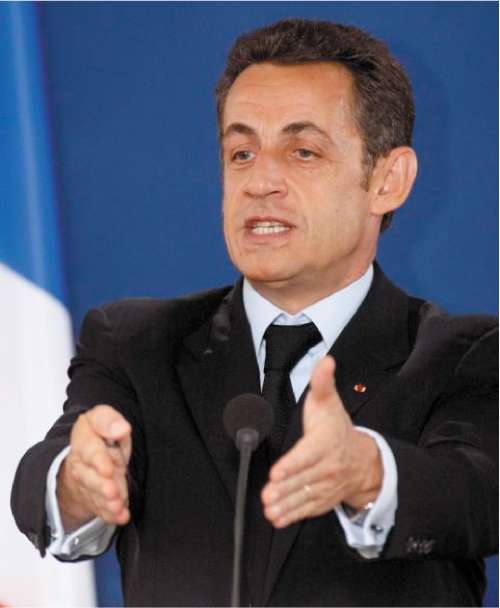
The explosive clash of personalities, and policies, between the French President, Nicolas Sarkozy, and the European Union's trade commissioner, Peter Mandelson, is threatening to detonate another European crisis.
France, which takes over the EU presidency for six months on Tuesday, announced yesterday that it has convened an unscheduled meeting of the 27 governments to – in effect – call into question Mr Mandelson's negotiating position in the stalled world trade talks.
Although M. Sarkozy will not be present at the meeting in Paris, it will inevitably be overshadowed by his outburst at the Brussels summit last week when he accused Mr Mandelson of provoking the Irish "no" vote in the referendum on the Lisbon Treaty on EU reform because his proposals for freeing world trade were so unpopular.
President Sarkozy said that "only" Mr Mandelson thought that it was sensible to offer a 21 per cut in European food production when "a child dies of starvation every 30 seconds" in the Third World.
In fact, Mr Mandelson's approach to the World Trade Organisation's (WTO) "Doha Round" – reduced farm protection in Europe in return for concessions on European exports of goods and services – is based on a mandate for the liberalisation of world commerce agreed by all EU governments.
The meeting called by Paris signals an attempt by M. Sarkozy to impose his own more protectionist approach to global trade, and especially trade in food. It also signals a wider drive by the French President to abandon the "abstract, distant, technocratic" approach of Brussels in favour of policies closer to the concerns, and prejudices, of ordinary people.
Such an approach in the French presidency of the EU could bring M. Sarkozy into head-on conflicts not just with Mr Mandelson but with a "free-trade" majority of European leaders, including Gordon Brown and the German Chancellor, Angela Merkel.
The foreign ministers' meeting in Paris – to be chaired by Bernard Kouchner of France – will take place in the week before the WTO meeting of 30 leading countries in Geneva on 21 July. The Geneva talks, which could last a week, are intended to make one last heave to attempt to break the trade deadlock between Europe, the US, newly industrialised countries and the developing world.
The Paris meeting could be interpreted as merely a prudent re-examination, pre-Geneva, of the joint EU position in the seven-year-old trade negotiations. But Paris wants to challenge what M. Sarkzoy insists on calling the "Mandelson" approach. The French minister for European affairs, Jean-Pierre Jouyet, said: "Europe cannot be inactive on the WTO [talks], which were a great cause of trouble [with farmers] in Ireland, as they are in France." France accuses Mr Mandelson of being too ready to make negotiating concessions, relaxing European barriers to food imports from Brazil, the US and other non-EU countries, and de facto subsidies to exports, without gaining serious concessions on exports of manufactured goods and financial services.
The European Commission says any weakening of Europe's offers on food trade would provoke the collapse of the negotiations – with serious consequences for the world economy.
One Brussels official accused M. Sarkozy of adopting a "simplistic, populist approach". Mr Mandelson's office did not comment on the unscheduled Paris meeting but said that the European Union would be pushing in Geneva for reciprocal trade concessions from other countries.
Join our commenting forum
Join thought-provoking conversations, follow other Independent readers and see their replies
Comments
Bookmark popover
Removed from bookmarks